
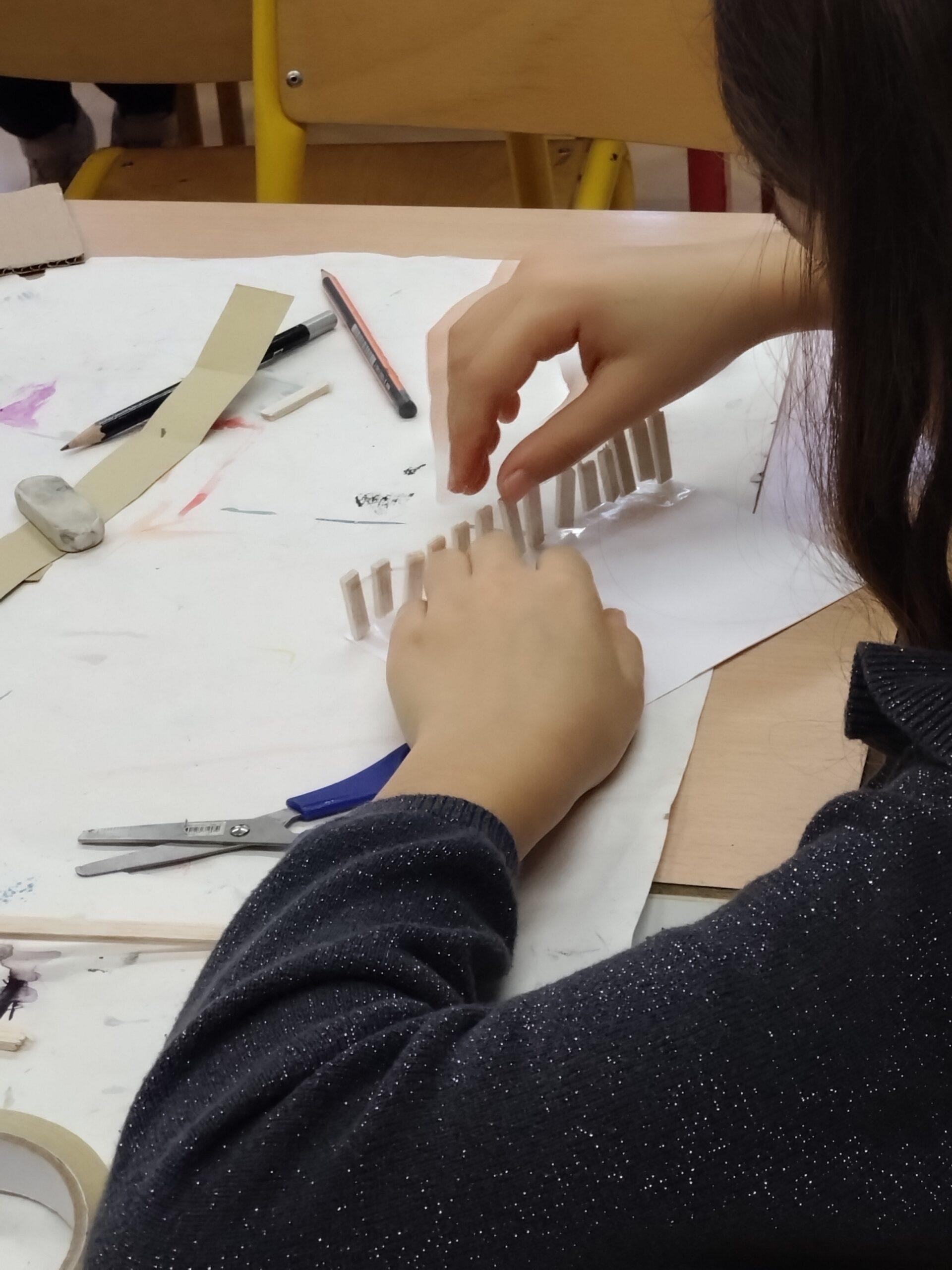
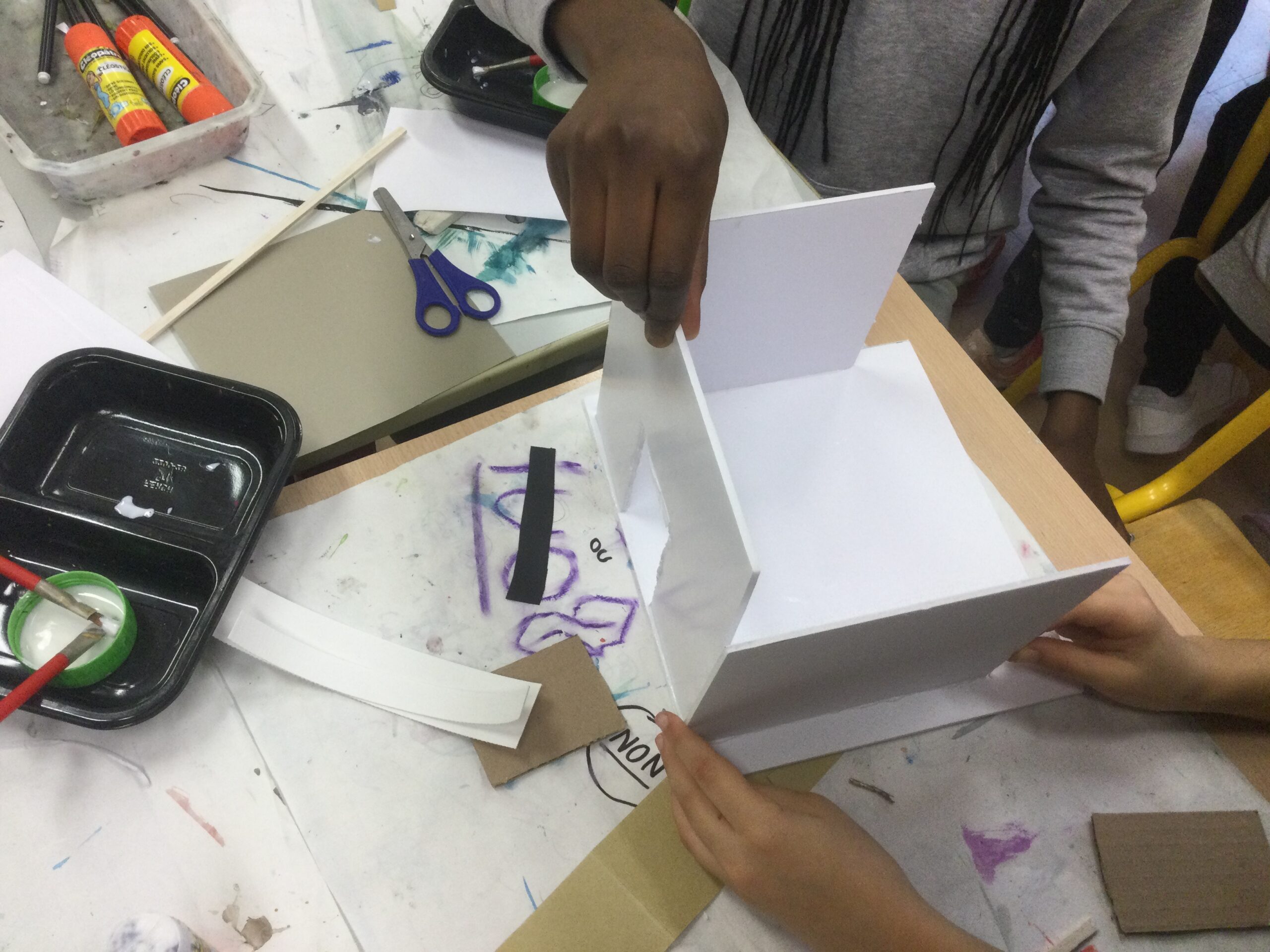
Activity in Brief
Making Together employs imagination, collaboration, and discussion to encourage participants to create collectively. Participants begin by individually imagining responses based on an open stimulus and specified conditions for a product or goal. Then, working collaboratively in pairs or groups, they communicate, co-design, and co-create tangible outcomes. Finally, participants present their creations, discuss their processes, reflect on their experiences, and explore possibilities for broader application. This collaborative approach fosters creativity, teamwork, and critical reflection.
Detailed instructions
Preparation (5 minutes)
Clearly present an open task, problem, or inspiration to the participants.
Display or distribute necessary information about available materials, conditions, and final product requirements.
Individual Modelling (10–15 minutes)
Invite participants to individually envision the product, solution, or process through sketches, models, or verbal descriptions. Encourage them to express their personal perspectives and experiences related to the task.
Guiding questions: “What could this product or solution look like? How might the process unfold? Why does this task matter to you personally?”
Making Together (20–25 minutes)
Form pairs, small groups, or gather participants altogether.
Facilitate open communication and sharing of individual ideas, sketches, or experiences.
Participants collaboratively engage in co-designing and co-creating, optionally using assigned roles.
Support this stage with strategies such as brainstorming techniques, clear role distributions, or communication platforms.
Sharing & Connecting (10–15 minutes)
Participants present and explain their collaborative prototypes or solutions to the group or facilitator. Facilitate reflection on the process, outcomes, and decisions about further elaboration or application of their creations.
Encourage discussions around how their solutions might connect to broader contexts or be transferred metaphorically to other situations.
Conclude by summarizing the task’s broader relevance and potential real-world implications.
This activity is best presented as an open task, for which there is no right or wrong answer and no requirement to come up with the best model or solution.
We tried it during a professional development course with a mixed group of teachers from different settings. The purpose was to reflect on what it means to engage in curriculum-making as opposed to curriculum design by working with materials. In this way we were able to give meanings to potentially conflicting ideas through concrete experiences which could be observed and shared with others.
Participants were given three sets of materials: play-goh; lego blocks and clay.
With the first set of instructions they were invited to ‘make a man with a leg standing up’; they could choose which materials they wished to use and they were encouraged to try them all in order to compare the different experiences and they responded to the affordances and characteristics of the different materials. The task was left deliberately open to allow personal interpretations as well as make personal choices about how to make use of the materials.
In the second phase of the activity, we asked participants to work in pairs; in silence they were invited to work together on making a clay figure each time by modifying and changing parts until they felt satisfied with the final product, at which point they could stop.
Practical Details
Duration
60 min to several days. Allow at least 1 hour for participants to adequately imagine, communicate, and co-produce. Extend the duration to several days if working on a larger-scale project, ensuring sufficient time for reflection, collaboration, and completion.
Space requirements
Most ideal in a spacious, comfortable, and distraction-free area. Arrange furniture to enable participants to concentrate, work collaboratively in pairs or groups, and move freely without disturbance. Provide sufficient space for visualization, modelling, or building, based on the specific activity. Open indoor or outdoor spaces with appropriate stimuli to inspire creativity are recommended
For whom
This activity is suitable for small to medium groups of both children and adults capable of imaginative thinking and effective communication. It applies to generic audiences (schools, youth groups, adult workshops, community initiatives), specifically designed to actively overcome constraints such as language barriers, resource limitations, or professional backgrounds.
Recommended Feedback tools
We found that giving space for a flashlight feedback is a refreshing way of ending the session. Try to use it at the start to better understand what the attendees want to do or what skills they have. You set the focus!
Resources needed
Provide sufficient hands-on materials so each participant can actively engage and clearly express their perspectives. Materials should be chosen thoughtfully, keeping in mind sensitivity, inclusivity, accessibility, and adaptability. Ensure a diverse range of materials suitable for visualization, modeling, building, sketching, and verbal expression.
Visual Stimuli:
- Printed images, photographs, or visual prompts relevant to the task.
- Picture cards, concept maps, or thematic posters.
Modeling & Prototyping Materials:
- Construction paper, cardboard, colored paper, foam sheets.
- Recycled materials (plastic bottles, boxes, fabric scraps).
- Modeling clay or Play-Doh.
Creative Tools & Supplies:
- Markers, colored pencils, crayons, paints, and brushes.
- Scissors, glue sticks, sticky tape, sticky tack, string.
- Craft sticks, pipe cleaners, paper clips, binder clips, rubber bands
Consider your participants
Sensitive Materials: When we designed the Making Together activity, we carefully considered the materials used to make sure that everyone taking part is safe and comfortable. It is important to be aware of any allergies or sensitivities, and to make sure that the environment is safe and comfortable for everyone. To make sure everyone can take part, the people leading the sessions offer other choices for materials that might be upsetting, so that nobody feels left out.
Inclusivity and Access: The Making Together experience is carefully designed to be suitable for a wide range of backgrounds and abilities. By creating a welcoming environment where everyone is included, participants are encouraged to share their ideas and contributions, knowing that their opinions are important. It is very important that everyone can use it. The materials and instructions are designed to be understood by people who speak different languages, learn in different ways, and have different physical abilities. This means that everyone can take part in the group’s activities.
Adaptability: One of the strengths of the Making Together framework is that it can be adapted to suit different situations. The activity can be changed to suit different age groups and skill levels, making sure that the tasks and materials are the right difficulty for the people taking part. If you are running the process, you can change it based on what people tell you and what the group needs. This means that you can learn in a way that works for you and that you can express your creativity in a way that feels right for you.
Keep the conversation going
Encourage Questions: Get people interested by letting them ask questions at any time during the activity. Make it clear that they can ask about anything, no matter how small or unimportant it might seem.
Prepare questions in advance to get people talking and thinking, and to help them explore their thoughts and ideas more deeply.
Invite Personal Stories: Ask people taking part to talk about things they have done in their own lives that fit with the activity’s theme.
Set aside time for storytelling, where people can connect their experiences to their creative work, building a sense of community and shared understanding.
Keep It Moving:
- Design the activity with time limits for initial brainstorming sessions to maintain energy and momentum, allowing ideas to flow rapidly before delving into deeper discussions.
- Incorporate dynamic breaks or interactive elements, such as quick brainstorming rotations or storytelling rounds, to keep participants engaged and prevent stagnation in the creative process.
Related Case Studies
-
Between Making and Design
STEAM Lab GEYCCase Study in Brief This activity engages participants with making and designing, two complementary dimensions of the creative process. While making invites a responsive and ... Read more
-
Bearing Walls (Model-Making)
STEAM Lab Musée de LouvreCase Study in Brief Description We use this workshop to explore how to create imaginary architectural spaces by building physical models. Working in pairs, participants ... Read more
-
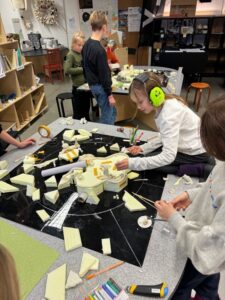
Snow City Ideation
STEAM Lab VelvetCase Study in Brief Description This was a hands-on creative workshop for children and early teens, aimed at imagining and prototyping a real-life snow-based city installation ... Read more
-
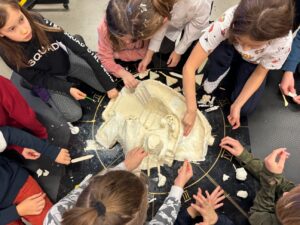
Snow City – Making Together
STEAM Lab VelvetCase Study in Brief Description This was a hands-on design workshop where children aged 9-13 collaboratively built a final model for a Snow City to ... Read more
-
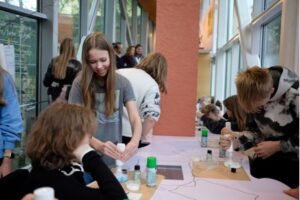
Goldberg Machine
STEAM Lab VelvetCase Study in Brief Description This was a multi-session creative engineering workshop for primary school students (ages 8-13), where five different age-based groups collaboratively designed ... Read more
Please note that this activity is provided for personal educational, informational and convenience purposes only, is general in nature and is not intended as a substitute for professional, legal, or medical advice.