What is Space

Space is Everything

“Space” can mean many things.

We often describe a place with 4 walls around and a roof above as “a” space. But “space” can also be everything around us.

In this open definition, there is no difference between an open landscape and, for example, a classroom. And, of course, a classroom can become a landscape, and the landscape can become a classroom.

There is no place without space.

Space is the physical environment!

“Space” can be understood as a description of the components thant surround us, including furniture, materials, light, colour, doors etc. In this sense, “space” serves as an umbrella term for what we also describe as the physical environment

For instance, an educational “space” may refer to a classroom, complete with its defining features like desks, a blackboard, and the scent of boredom…..

Space describes a geometric configuration

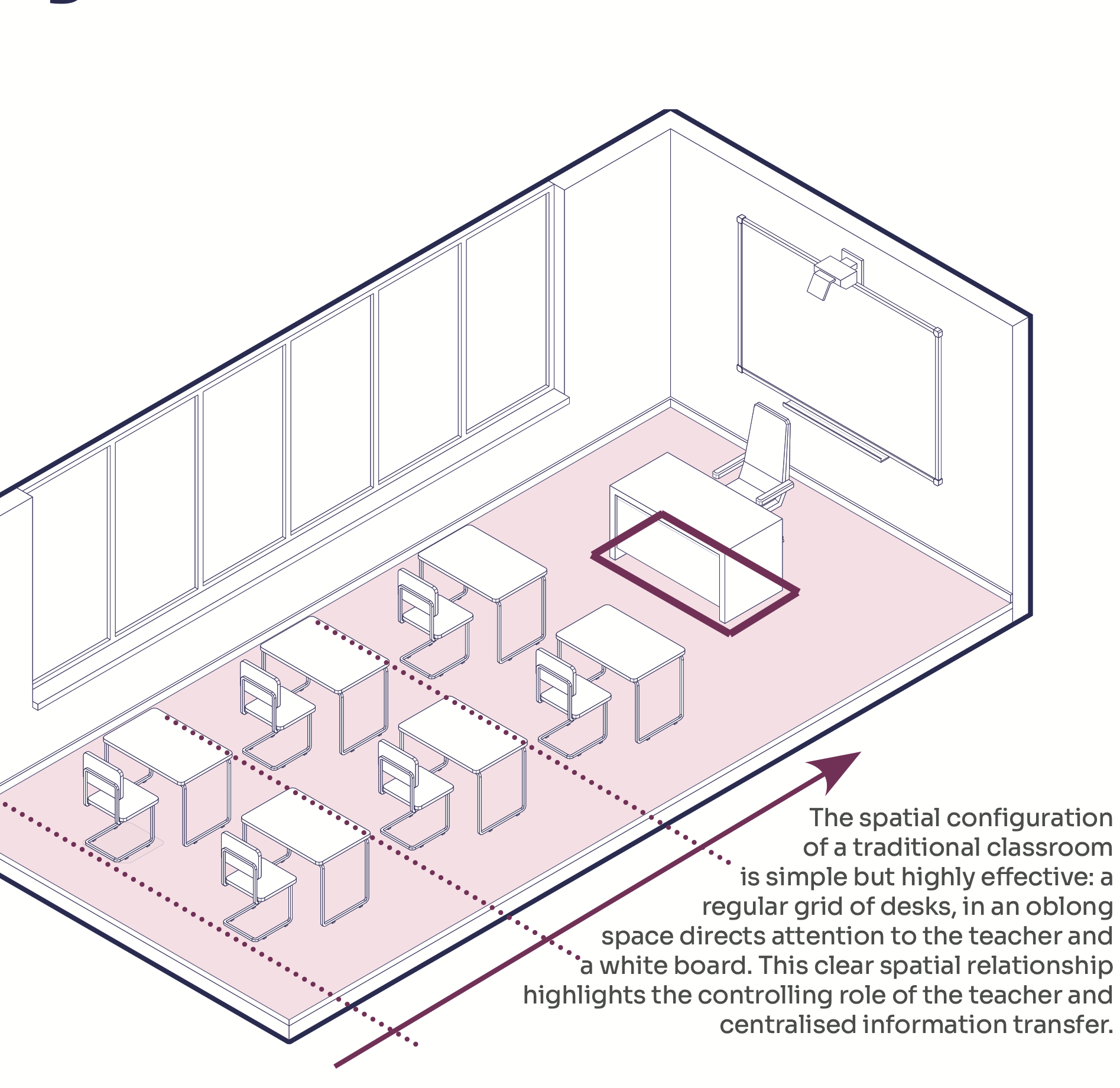
For a more accurate understanding of the learning environment, we might want to differentiate between space as a synonym for the “physical environment” (i.e. everything) and its more precise definition as a “geometric configuration”: How (and to what effect) do objects, walls, and people relate to each other? How big is the space? What can be seen from specific points? Where is the furniture placed?

Space is a relational category.

Space is NOT a machine

A common misunderstanding is that the impact of space is predictable, meaning there is standard recipe for creating
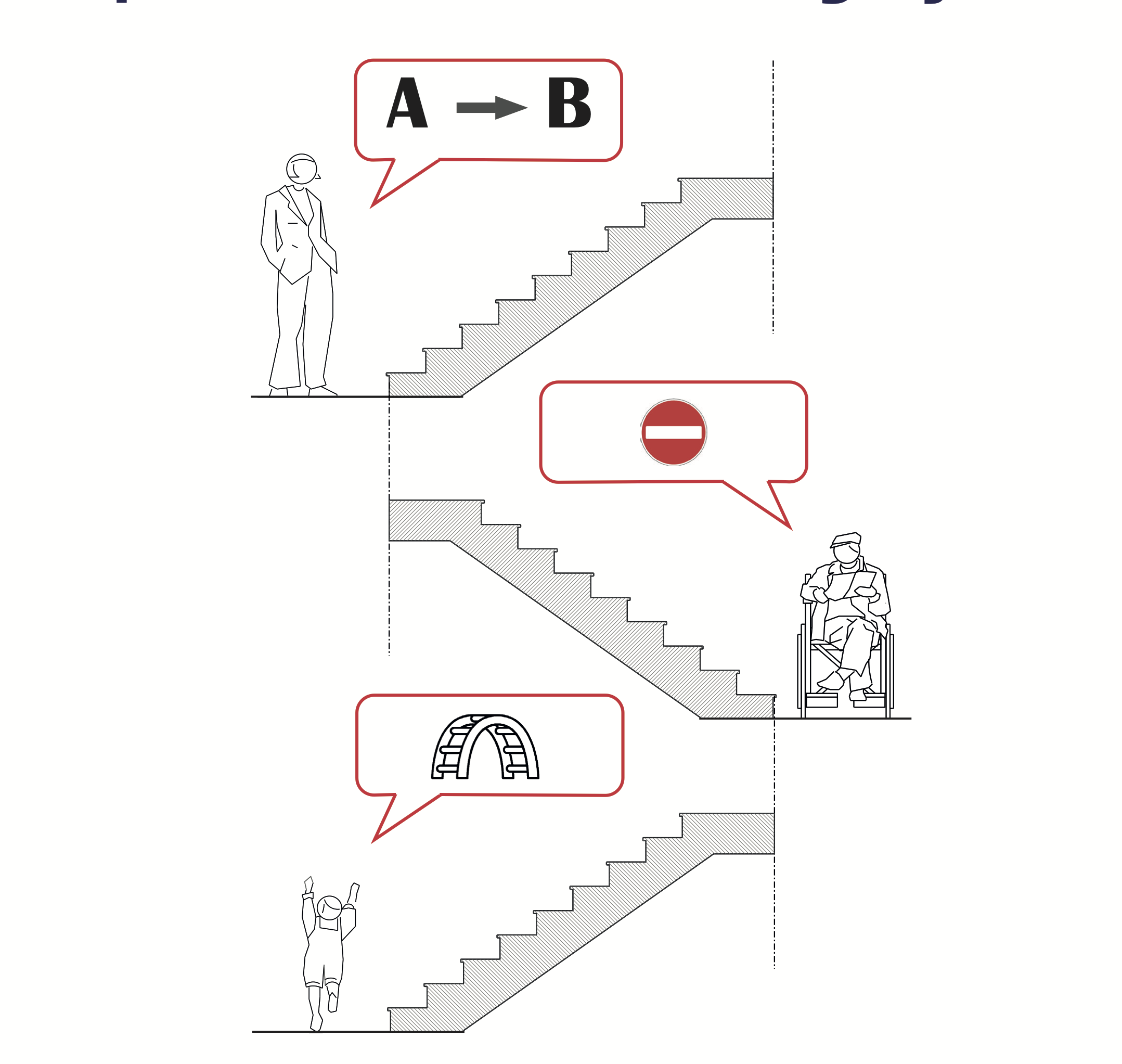
a “good” learning environment, that will automatically lead to “good” outcomes. However, A does NOT always lead to B. Maybe it is B, but that is not certain. Space is not a machine.

We have to disappoint you: There are no universal solutions for the design of learning environments.

Space is a relational category

How we use space is determined by what its geometrical configuration offers to the human body.

A stair can be a means of vertical transport, a cul-de-sac or a climbing frame – depending on your type of body. Space is constituted through physical relations and action options.

It is all about informed decisionmaking

By analysing the component of a traditional classroom it becomes quickly evident how each of these elements perfectly serves the purpose of teacher centred pedagogy.

Not that we like the traditional classroom — but it’s fascinating how it works!

The classroom needs large windows for ventilation and good natural lighting. However, blinds are essential to prevent glare and overheating.

The material wood of the teacher desk highlights his specific role.

The whiteboard is an essential equipment for centralised information transfer. Without it, many lessons would not work.

The classroom needs to be a directional space to support the focus on teacher and white board.

The teacher desk breaks this directional order, i.e. it is turned by 45 degrees, to create spatial hierarchy and enable optimal visual oversight.

When deciding the overall strategy for arranging a STEAM learning environment, you might want to consider:

  1. Define your specific objective! What exactly do you want to achieve? How does it relate to STEAM?

  2. Which aspects of the learning environment support this objective best? What has the most STEAM impact?

  3. What is the key component in the physical environment? Everything is relevant, but clear priorities lead to the best outcomes, allowing you to focus on what is truly important.