
The Art of Science. Expanding imaginative potential with making and creating.
One of the ways in which SENSE.STEAM was approached across the Consortium was through its being an opportunity to connect curriculum content with personal experience and real-life events. For example, VilVite science centre (Norway), HVL and Trelleborg (Norway and Sweden), Velvet (Estonia), Musée du Louvre (France) and Hawkins/Brown architects (UK)while conducting different activities, converged into a rationale for choosing those which enabled participants to engage in hands-on task, based on design, imagine and make, including modelling. Across all labs, the impetus came from the need to address the needs expressed by key stakeholders to expand on outcomes in the educational curriculum around sciences or the expressive arts. The preferred choice was to use structured, ready-made activities which could be seamlessly integrated within an existing provision; yet all activities engaged with imaginative thinking supported by making with materials, to move from outcome-driven teaching to purposeful and playful interaction with resources and with spaces allowing to produce something new. Across all labs in this group the core message was to challenge assumptions about capabilities or gender destinations and give more attention to making education more relevant to today’s needs.
Extra-terrestrial life in Norway
VilVite science centre organised for school classes to visit their premises and designed in collaboration with HVL an activity “Extra-terrestrial life”, in which participants imagine the conditions for life on other planets and make physical representations of the life they created there. Over the course of 1-2 hours participants worked together in small groups, negotiating what they believed life would be like based on the physical conditions, and also exploring how they could use the materials they had available to them to make physical representations of that life.
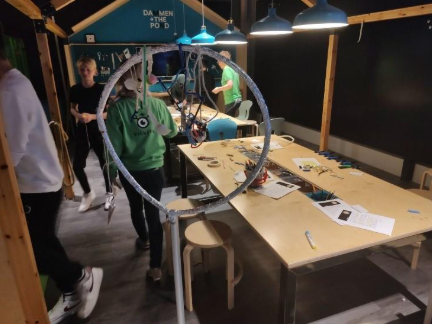
This was an adaptation of the activity “Article for the future” that was available from the original bank of activities but was expanded to include a dimension of making, thus engaging further with the senses by working with 3-D models as well as increasing awareness of how space that allows for a range of movement and personalisation can promote creativity and confidence on themes of future-making skills and visions.
Playing with Light at the Musée de Louvre
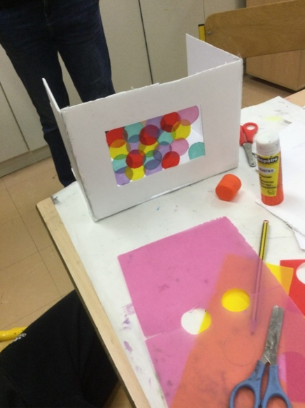
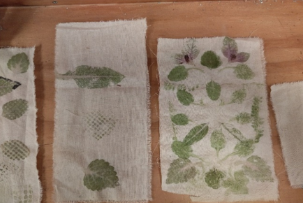
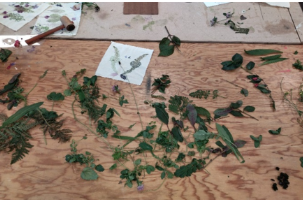
The activities conducted by facilitators from the Musée du Louvre were largely focussed on involving participants in creating and making with materials, such as painting with pigments extracted from plants, building walls using various resources or create light ambiences within own designed models. on involved groups of children. Facilitators worked with groups of primary school children and their teachers using concepts such as light as cross-disciplinary ideas that could connect with different areas of the curriculum (e.g. physics, art) but could also afford the possibility for children to see how these concepts may have relevance for professional architects, designers and visual artists, thus connecting with the world of work. Characteristically, working with materials produced a very different engagement with the space of the classroom and the perception that children had about messiness or dust as being part of the creative process.
The Art of Science. Expanding imaginative potential with making and creating.
One of the ways in which SENSE.STEAM was approached across the Consortium was through its being an opportunity to connect curriculum content with personal experience and real-life events. For example, VilVite science centre (Norway), HVL and Trelleborg (Norway and Sweden), Velvet (Estonia), Musée du Louvre (France) and Hawkins/Brown architects (UK)while conducting different activities, converged into a rationale for choosing those which enabled participants to engage in hands-on task, based on design, imagine and make, including modelling. Across all labs, the impetus came from the need to address the needs expressed by key stakeholders to expand on outcomes in the educational curriculum around sciences or the expressive arts. The preferred choice was to use structured, ready-made activities which could be seamlessly integrated within an existing provision; yet all activities engaged with imaginative thinking supported by making with materials, to move from outcome-driven teaching to purposeful and playful interaction with resources and with spaces allowing to produce something new. Across all labs in this group the core message was to challenge assumptions about capabilities or gender destinations and give more attention to making education more relevant to today’s needs.
VilVite science centre organised for school classes to visit their premises and designed in collaboration with HVL an activity “Extra-terrestrial life”, in which participants imagine the conditions for life on other planets and make physical representations of the life they created there. Over the course of 1-2 hours participants worked together in small groups, negotiating what they believed life would be like based on the physical conditions, and also exploring how they could use the materials they had available to them to make physical representations of that life.
This was an adaptation of the activity “Article for the future” that was available from the original bank of activities but was expanded to include a dimension of making, thus engaging further with the senses by working with 3-D models as well as increasing awareness of how space that allows for a range of movement and personalisation can promote creativity and confidence on themes of future-making skills and visions.
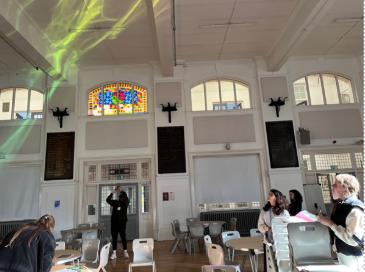
Hawkins\Brown architects visited schools in England and Ireland and conducted sets of 2–3-hour activities. The main focus was usually a structured exploration of play with light and shadows with the main intention that participants would understand how space plays a role in determining social and cognitive behaviour, along with explorative freedom to go in new directions.
This activity may be used in teaching children about light and shadows in physics or general science, for example by using pinhole camera boxes or modelling and testing lengths and appearance of shadows in different conditions. However, in this context, with architects as facilitators, these activities went in many different directions, while exploring themes of how to explore space like an architect, among other disciplinary fields, or one’s personal response to what might be a surprise effect.
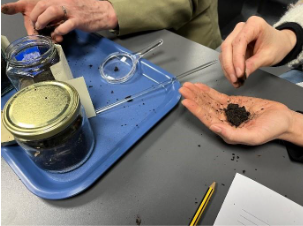
HVL conducted several STEAM lab activities, such as developing a taxonomy of stones, painting with soil, writing an article that comes from the future, or artistic representation of falling leaves and involving groups of newly graduated trainees from various companies in Bergen as well as student teachers and families with children. Characteristically the falling leaves activity and painting with soil are both a scientific experiment showing the curved trajectory of leaves falling from an altitude or the ways in which different soil absorb water and release pigments, but also an artistic one, by producing immediate observations of variation of movement or color and observing with immediacy a natural process in which participants themselves are a part.