Case Study in Brief
Description
This activity invites students to explore the diversity of soil and organic matter while investigating their local environment. It combines close observation, sensory exploration and classification as part of scientific inquiry.
By making compost, students take an active role in caring for their surroundings. The activity encourages them to see themselves as environmental stewards, building a connection between everyday action and global responsibility.
Dispatch From the Field
We begin the activity with a group reflection on what compost is and what materials can be composted.
We follow this with a a 10 minutes theoretical presentation on composting and its benefits.
We display three different soil samples. One comes from the top layer of a forest and contains a high amount of organic material, visible mycelium and living organisms. The other two samples come from urban environments.
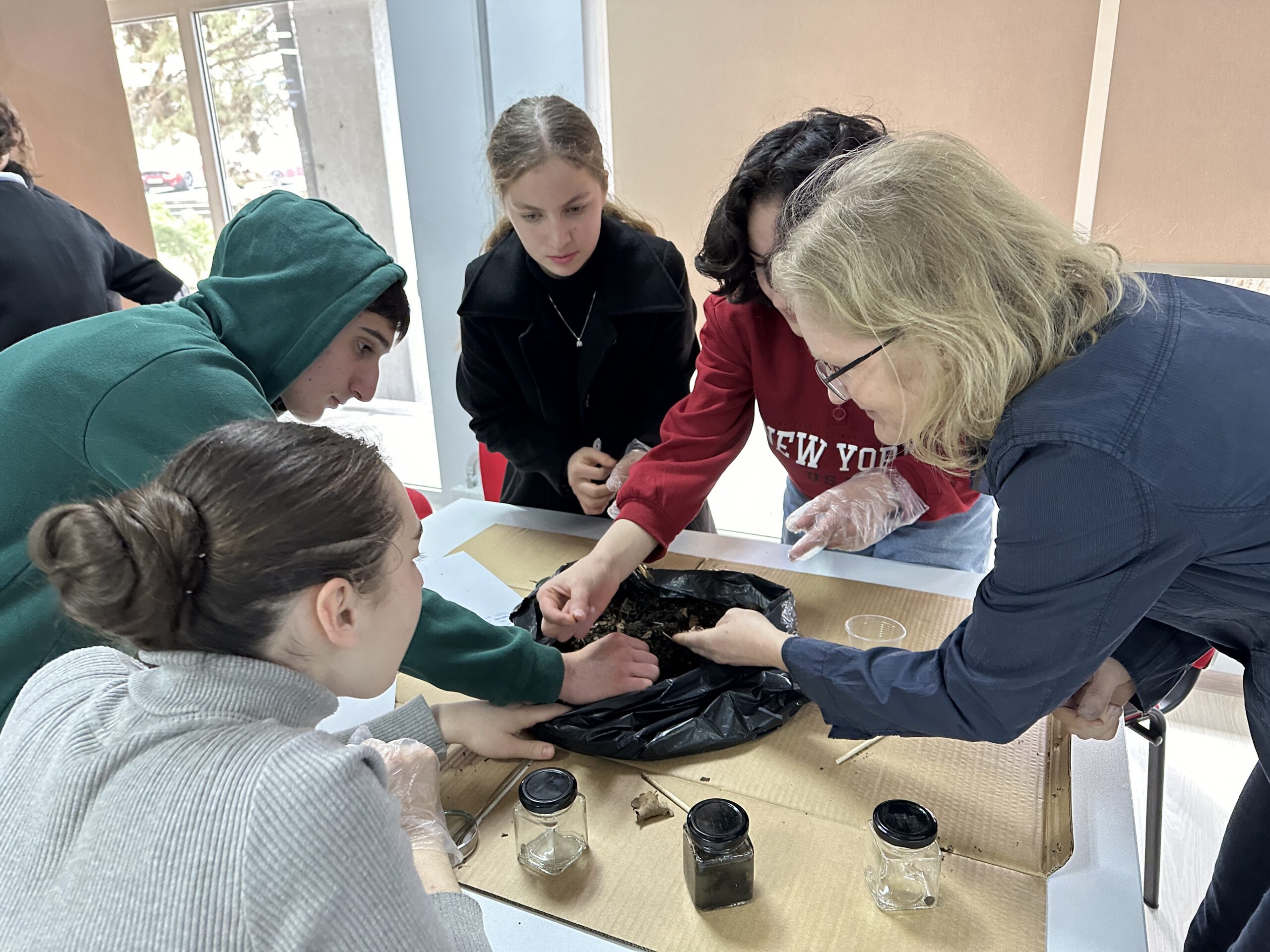
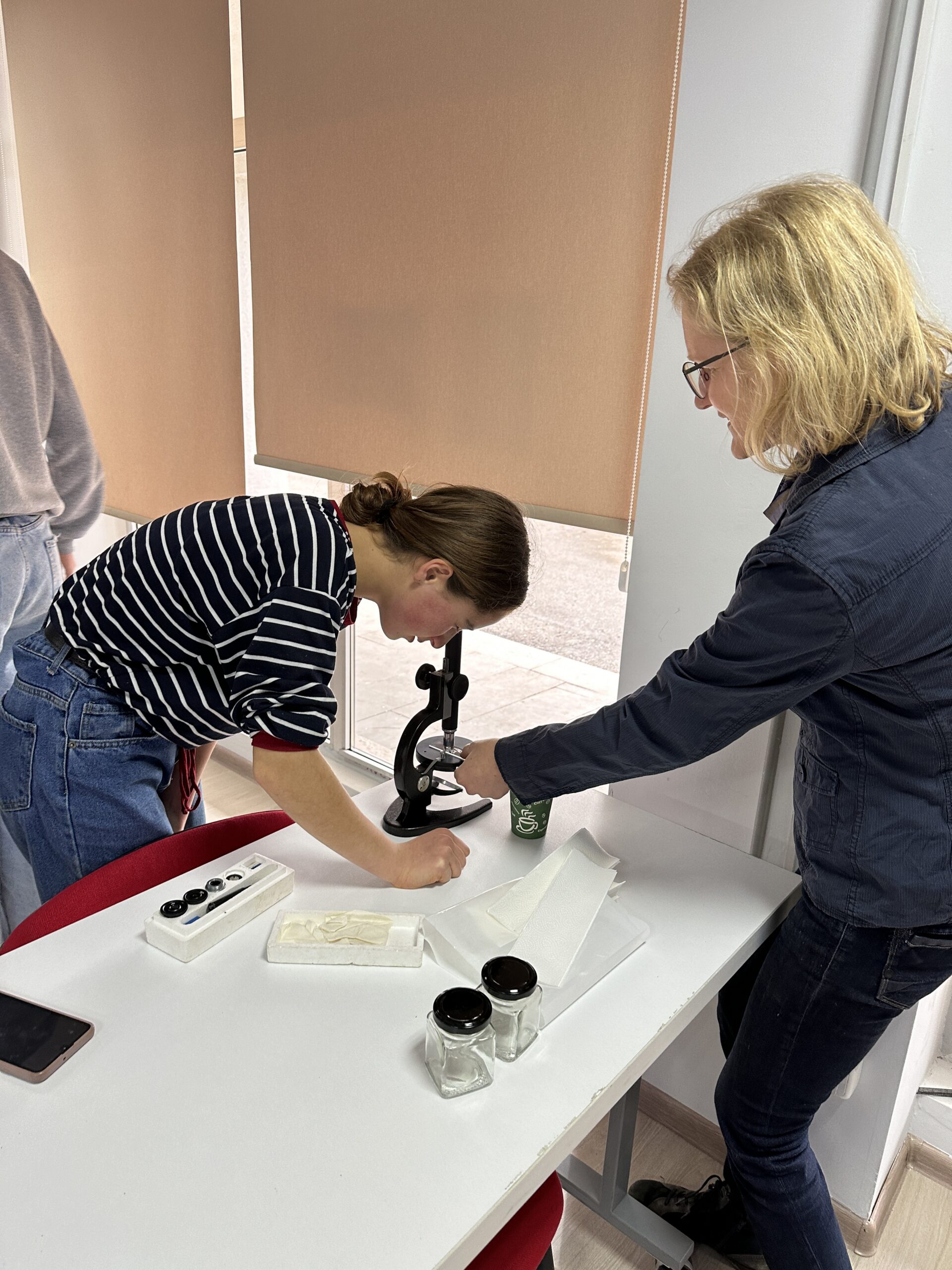
Students work in groups and rotate between the samples. At each station, they reflect on properties such as moisture, texture, color, smell and visible life forms. They also have the chance to examine the samples under a microscope.
Using their homemade sensors, students measure the soil’s moisture content. The forest soil shows the highest level of humidity.
They also perform a jar test to explore soil composition.
We then discuss the results together. Students recognize the importance of organic matter in maintaining soil quality.
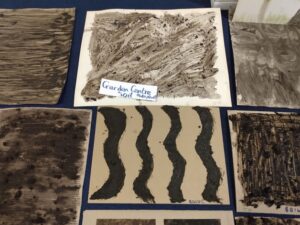
Due to time constraints, we do not include a soil drawing activity.
Practical Details – Facilitator’s Notes
How did you modify the activity?
We add a composting component to the activity, which increases the overall duration by about one hour.
We include composting to explore the role of organic matter in soil. The group shows interest in soil humidity, and we explain how adding organic material can help retain moisture.
This activity works especially well in autumn, when leaves fall and often end up in landfills or are burned. Instead, we use them as a learning opportunity.
How did you organize the space?
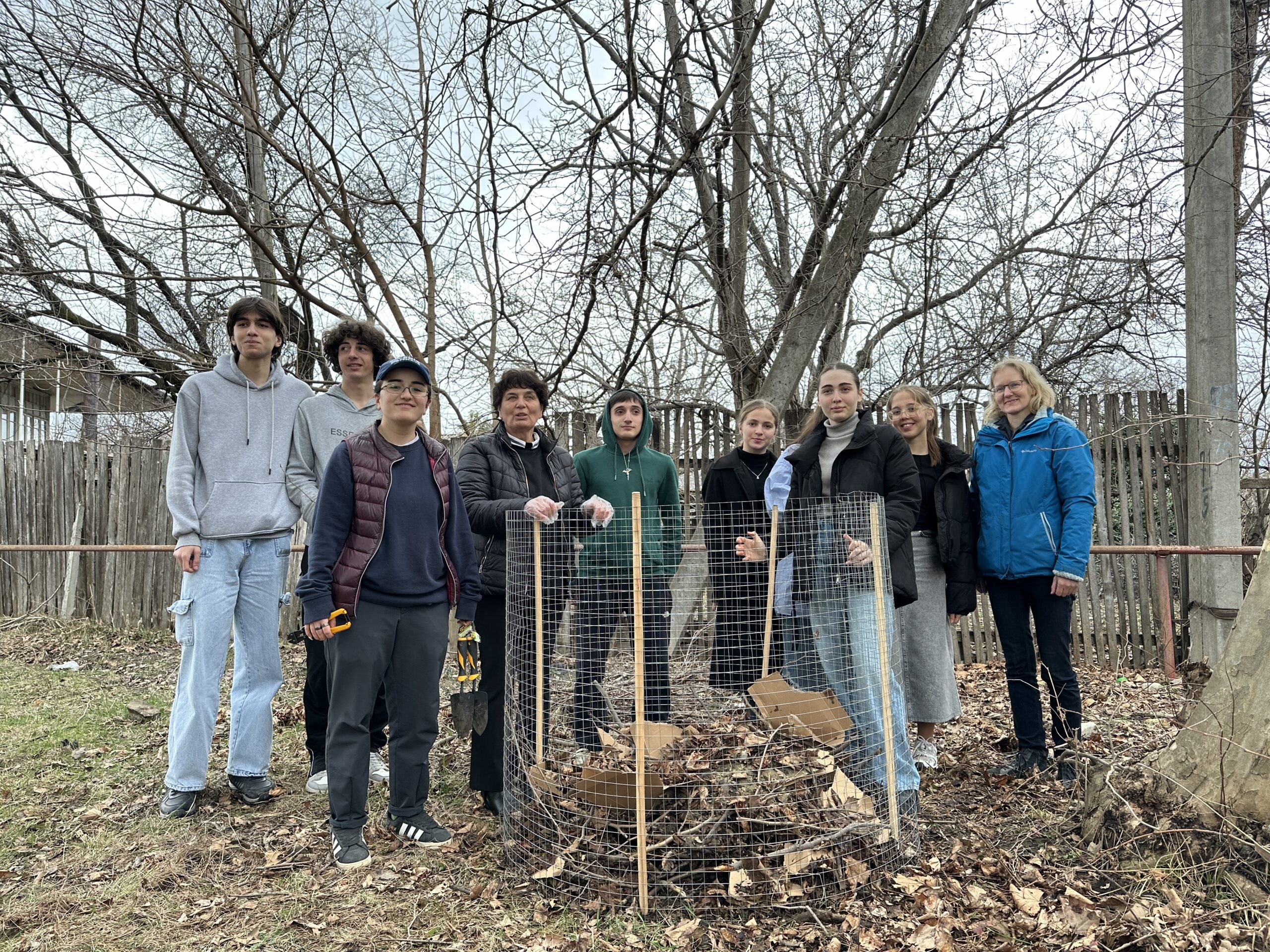
We conduct the theoretical part and soil sample work indoors at tables. We make the compost pile outside.
Who did you work with?
The activity takes place with a group of girls aged 14 to 18 from the Akhmeta Girls Tech group. They live in a rural area and take part in the Akhmeta Technology and Innovation Center. The group is very STEM-oriented. Earlier, they built a device to measure soil humidity. Later, a few boys also join the session.
What resources did you use?
Additional equipment needed:
- A space and materials to build the compost pile outside (mesh, wood or other options)
- Gloves
- Organic materials such as fallen leaves, kitchen scraps and weeds
- A microscope to study the soil and its organisms
What did you learn?
The microscope becomes a valuable tool for exploring soil structure and composition. Participants are surprised to learn that soil contains tiny rocks. They also get to see insects up close, which adds an unexpected element of curiosity and appreciation.
Making compost is instructional, but since there are many ways to do it, we pay close attention to keeping participants engaged throughout the process.