Case Study in Brief
Description
Intercultural Portraits is an interactive activity that uses photos, collage, and discussion to explore stereotypes about international pioneers, that stem from diverse socioeconomical and ethnic backgrounds. Participants receive pictures of male and female international pioneers from various backgrounds and a variety of everyday objects. They create new “portraits” by attaching objects, revealing assumptions about who can succeed in innovative endeavors regarding science, technology, arts, politics and social impact. Afterwards, they reflect and modify one aspect to imagine a more inclusive future. This arts-based approach fosters critical thinking, empathy, and greater awareness of international contributors in STEM.
Dispatch From the Field
Preparation (5 minutes)
We first gather 10–12 pictures of international pioneers and place them on walls or on the floor where participants could see them.
We then set up a central table with 40 everyday objects selected from the explicitly violent (e.g. gun, bullet, knife) to the seemingly benign (e.g. a feather, a rose; a loaf of bread); from explicitly domestic (e.g. an apron; a spoon; a nappy; a drill; a nail) to the commonly professional (e.g. a pen; a beacker; a computer; a book; a jacket; a pipette; a surgeon’s knife; a dental drill).
On the table we also laid out a box with glue sticks and sticky tack for attaching objects to the pictures.
Introduction (10 minutes)
We briefly introduce the purpose of the activity, which is to explore how we imagine extraordinary individuals and their daily lives.
In order to stimulate openness in a creative enviroment, we encourage participants to keep an open mind and be creative when choosing objects for each portrait.
Collage Creation (20-25 minutes)
Each participant (or small groups) picks a portrait and selects objects that, in their view, represent that person’s life, work, or personality. Using the objects available in the room, they can decide how they wish to associate them with the portrait in any way they like. At this point we facilitate the choice by providing guiding questions such as: “What does this person need? Where might they work? What tools or symbols matter most to them?”
Gallery Walk & Short Writing (10–15 minutes)
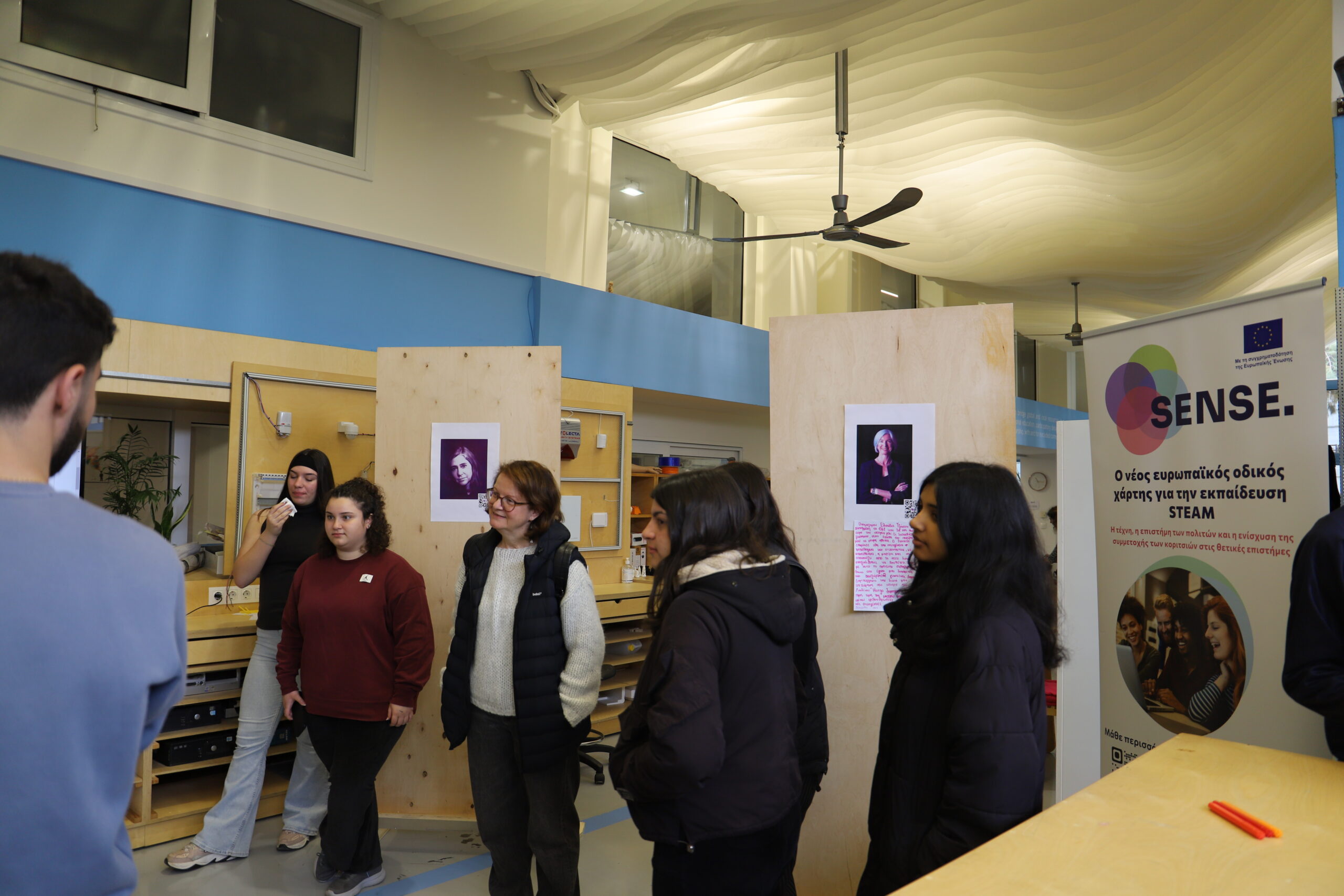
Once the collages are finished, participants are invited to view the different portraits displayed around the room. This part of the activity is important to enable everyone to respond to the displays. By working in pairs or small groups, they are invited to write a short, 1–2 sentence “bio” for one portrait, based on what they see.
Reflection & Modification (15 minutes)
After the gallery walk, we reconvene the group and open up a discussion to invite everyone to share one surprising or revealing aspect of a portrait. This phase will raise awareness of stereotypes, but it also opens up the opportunity to consider how things might be different in real life. We thus encourage the group to modify one feature (e.g., remove a “violent” object or add a new positive symbol) and reimagine what the contxt might be like as a result.
We conclude the activity with a group discussion on how stereotypes affect our perceptions and what an inclusive view could look like.
Practical Details – Facilitator’s Notes
How did you modify the activity?
Duration: 60-70 minutes.
When it comes to this specific target group, the duration may vary depending on the language proficiency of the participants.
How did you organize the space?
A spacious, well-lit room works best. It should allow participants to walk around comfortably, view the portraits, and attach objects without feeling crowded. c
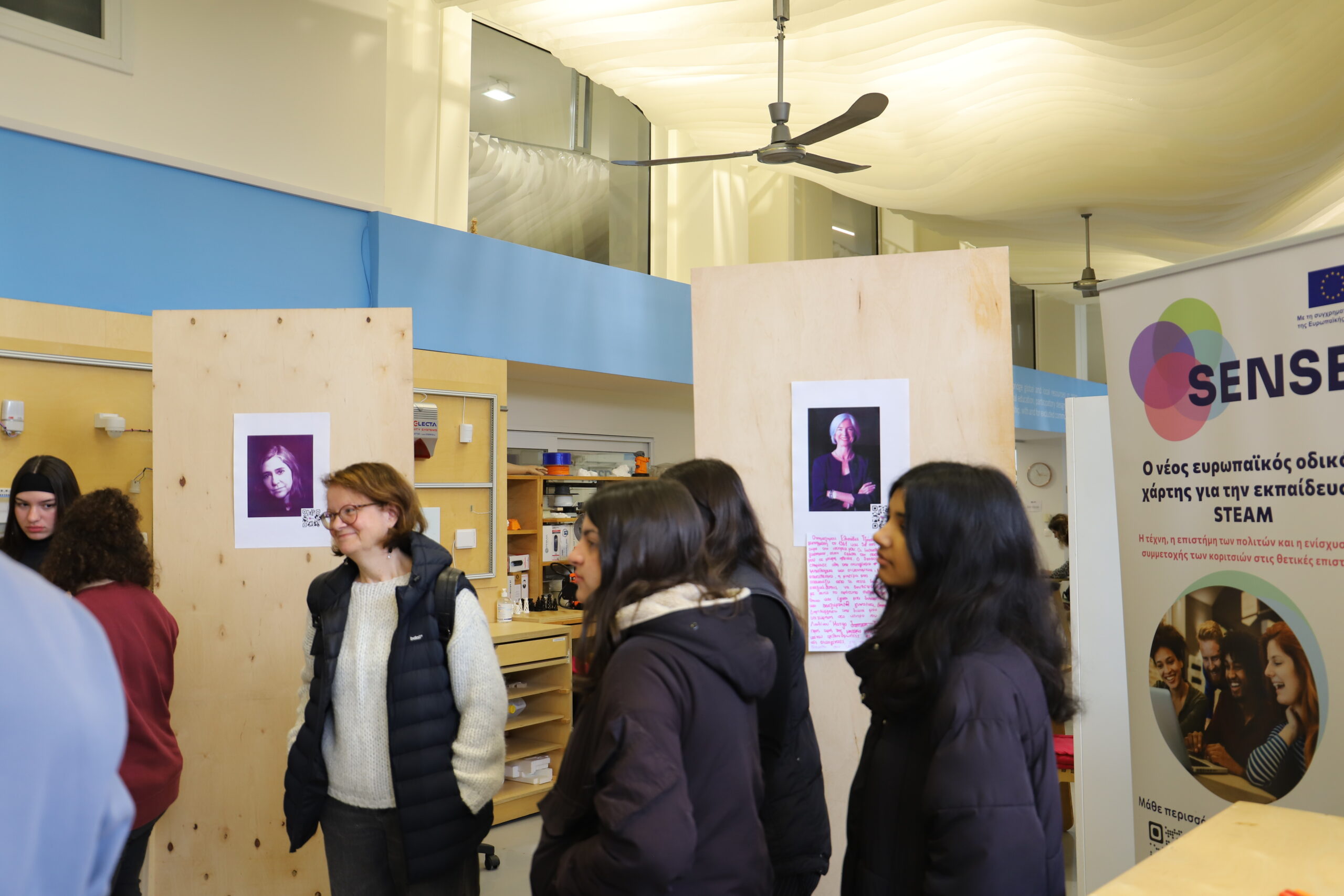
We used 2 large tables without chairs and used the surrounding walls to create the gallery of the portraits as if it was a museum exhibition.
Who did you work with?
Age Range: The activity participants were unaccompanied refugee minors aged 16-18
Group Size: Works best with 8–12 participants but can be scaled up or down as needed.
What resources did you use?
International pioneers Pictures: 10–12 photos of men and women ,that contributed significantly in science, technology, arts, politics and social impact from various ethnic backgrounds.
Everyday Objects: 40 items selected from the explicitly violent (e.g. gun, bullet, knife) to the seemingly benign (e.g. a feather, a rose; a loaf of bread); from the explicitly domestic (e.g. an apron; a spoon; a nappy; a drill; a nail) to the commonly professional (e.g. a pen; a becker; a computer; a book; a jacket; a pipette; a surgeon’s knife; a dental drill.
Adhesives: Glue sticks or sticky tack (Blu-Tack) to attach objects to the pictures.
Writing Tools: Pens or pencils for creating brief bios or notes.
Instruction Sheet: A short guide with prompts/questions (e.g., “What does this profession need?”).
What did you learn?
The activity had a very high level of engagement. The participants had little to no knowledge of the figures in the portraits, however their intuition led to a relatively accurate assignment of items, indicating that perhaps the level of bias is lower when it comes to representatives of populations that often fall victims of discrimination themselves. The participants showed great interest in learning about the lives of the figures and continued to express inquiries, even after the conclusion of the activity.