Case Study in Brief
Description
This workshop explores the intersection between artistic and scientific drawing through the creation of a collective herbarium of imaginary plants. It begins with a presentation of historical botanical illustrations. Guided observation of real plant specimens allows participants to identify plant structures. An initial phase of observational drawing of real plants allows participants to capture their formal and sensory characteristics. In a second phase of imaginative drawing, each participant invents a plant that does not exist (or is not yet known to botanical science), allowing them to reinforce their drawing and colouring techniques. This activity stimulates creativity, deepens understanding of plant anatomy and encourages a broader rethinking of the relationships between humans and plants, introducing some initial notions of ethnobotany.
Dispatch From the Field
This activity combines different types of botanical drawing, inviting participants (children aged 6 to 9) to explore plant structures and stimulate their imagination by creating a collective herbarium of imaginary plants.
It is designed to be completed in approximately one and a half hours.
1: Observation and Inspiration
We start the activity with an introductory phase showing a selection of local plants that have been collected from nearby gardens. In this phase we guide participants in the detailed observation of each plant specimen; we give some notions about the general structure of a plant and we invite them to appreciate its sensory dimensions, as well as notice particular characteristics that may be helpful for identification (e.g. the shape of leaves; the number of petals on the flower; the presence of hairs or spikes).
The aim is to arouse curiosity and to encourage interaction with the plants.
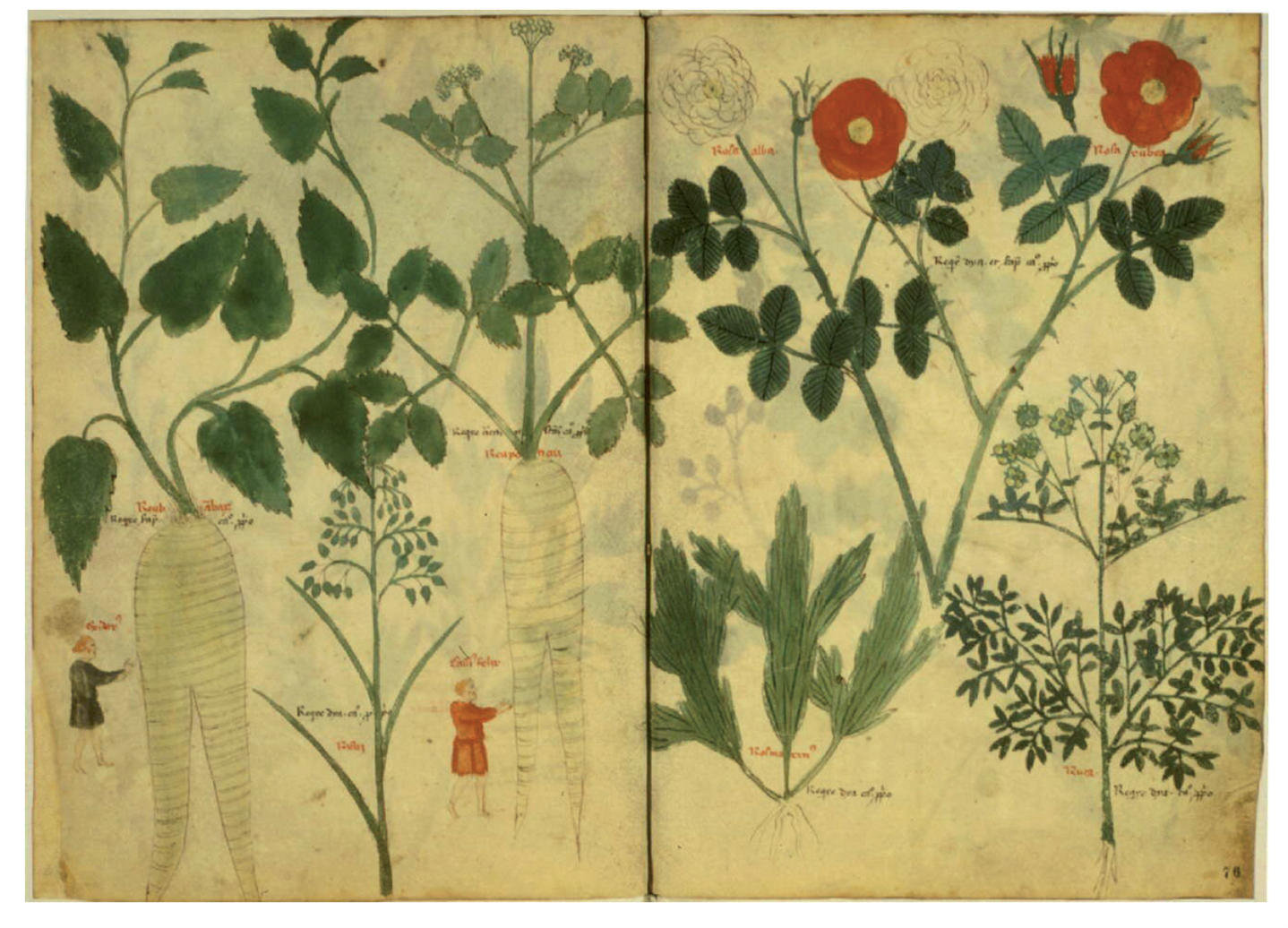
To support the observation we also used a series of images such as the reproduction of historical herbarium plates and pre-modern and modern botanical illustrations.
We discuss together the concept of the herbarium and describe the different types that may be found as well as the connections between botany and medicine. It is important to take the time to address the different uses and functions of drawing in the natural sciences and in artistic practices, and the idea that both artists and scientists use drawing to understand the world.
2: Observational Drawing
Each participant chooses a plant specimen (this can also be done in pairs) to observe carefully and draw in pencil in a rigorous and objective manner, as they see it, trying to capture as many details as possible.
3: Imaginative Drawing
After observing and drawing real plants, participants move on to creating their own imaginary plants. They are invited to invent a species not yet known to science, reflecting on its characteristics: shape, structure, smell, taste and the possible relationship between these aspects and its function (culinary, medicinal, ornamental, ritual, magical, etc.).
They can draw inspiration from the real plant they drew previously (playing with the idea of variation or mutation) or design a completely new one. The drawing should be as detailed and accurate as that of a real plant, representing all its parts with precision. Participants are also encouraged to consider the habitat, functions and even a possible ‘scientific’ name for their plant.
Once the pencil sketch is finished, it is coloured with watercolours, paying special attention to the mixing of colours to create new shades. This part of the session focuses on the expressive use of colour and seeks to encourage chromatic experimentation.
4: Group Sharing and Further Reflection
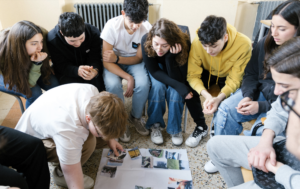
At the end of the session, all participants’ creations are displayed (vertically on the board or a wall, or horizontally on a table or the floor) where they can gather to observe and comment on them.
In this part, we facilitate the presentation of plant drawings to the group, inviting participants to describe the characteristics of the plants they have invented (e.g., “This plant grows in the clouds,” “This plant absorbs metals from the soil,” or “Its leaves glow in the dark”). This modality of collective sharing allows for feedback and interaction so that each member can evaluate their work and that of others and express their ideas.
A final objective of the activity is to collect all the individual works of art in a collective herbarium, which can then be bound (for example, using a simple Japanese binding technique). As an extension, participants can write short descriptive texts to accompany each plant, developing their linguistic and expressive skills. This workshop can also be linked to a gardening or urban farming project, reinforcing learning through practical, cross-curricular experience.
Practical Details – Facilitator’s Notes
How did you modify the activity?
Duration: Between 1 hour and 1 hour 30 minutes
This workshop shares its basis in botanical observation but focuses on the practice of botanical drawing, in its dual scientific and artistic aspects. The aim is to bring into creative dialogue two modes of drawing and stimulate sensory engagement with plants.
How did you organize the space?
The ideal setting for this workshop is a venue with an indoor workspace equipped with large tables and natural lighting, as well as access to a water source to facilitate logistics. It would also be helpful to have an outdoor space, such as a garden, orchard or park from where to collect local plant specimens.
Who did you work with?
We implemented this activity extensively in various primary schools in Paris with pupils aged 6-9, as part of the national education programme content that encourages the development of disciplinary bridges and cross-curricular skills between the visual arts and natural sciences.
What resources did you use?
Cultural and artistic references: images from historical herbaria (for example, Dioscorides De Materia Medica 1st century, Vienne version or Codex Anicia Juliana, 6th century.), early modern scientific illustrations (for example, botanical drawings by Leonhart Fuchs)
Thick white paper, 24 x 32 cm – Pencils – Eraser – Watercolour paint tablets / coloured pencils / coloured felt-tip pens, etc. – Fine paintbrushes – Water + cups – Paper tissues
What did you learn?
Combining observational drawing and imaginative drawing around the theme of plants in a single activity helps to strengthen representational precision, sensory acuity, and creative and narrative imagination.