
Case Study in Brief
Description
The activity engages participants from different backgrounds and stakeholder groups to explore the needs and interest of other groups and accordingly design a new map of their community or municipality. The activity encourages imagining oneself in someone else’s situation, inclusion, building empathy and insight into others’ needs regarding community spaces and services.
Dispatch From the Field
Introduction of the activity (10 min)
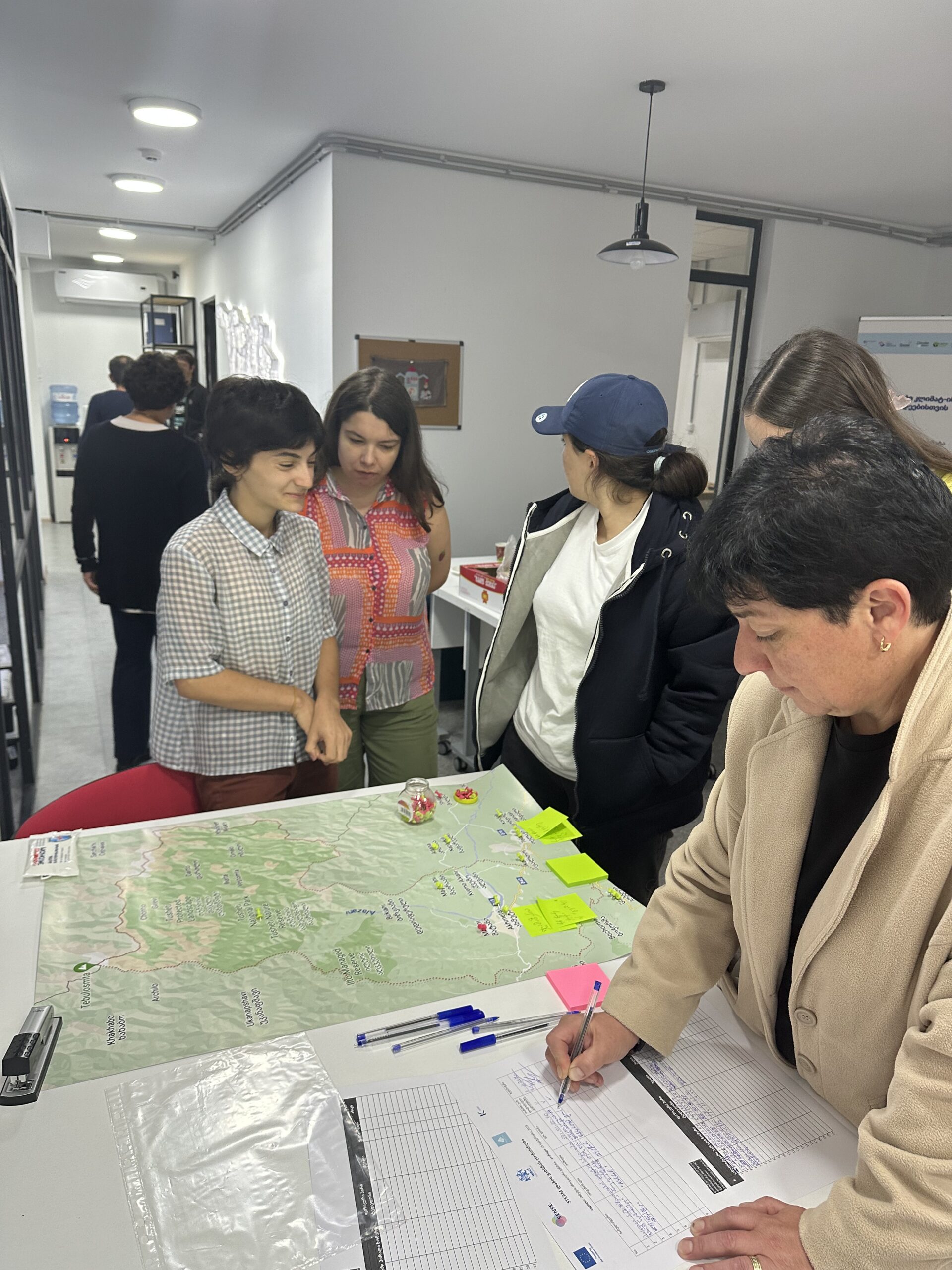
We prepare a large A2 or A1 base map of the local area, printed from OpenStreetMap or a similar source. We mount it on cardboard for stability and cut it into as many pieces as there are groups.
We divide participants into 3 or 4 groups. Each group takes on the role of a different stakeholder, one that is not their own.
Examples include:
- Students (played by municipality representatives and teachers)
- Local government (played by students and museum or art school members)
- Teachers (played by students)
We explain the objective of the activity: to explore and improve the community from another group’s perspective by designing a new version of the municipal map.
Discussion within groups (20 min)
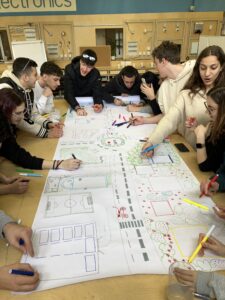
Each group uses a large table or a wall where they can work on their piece of the municipality map.
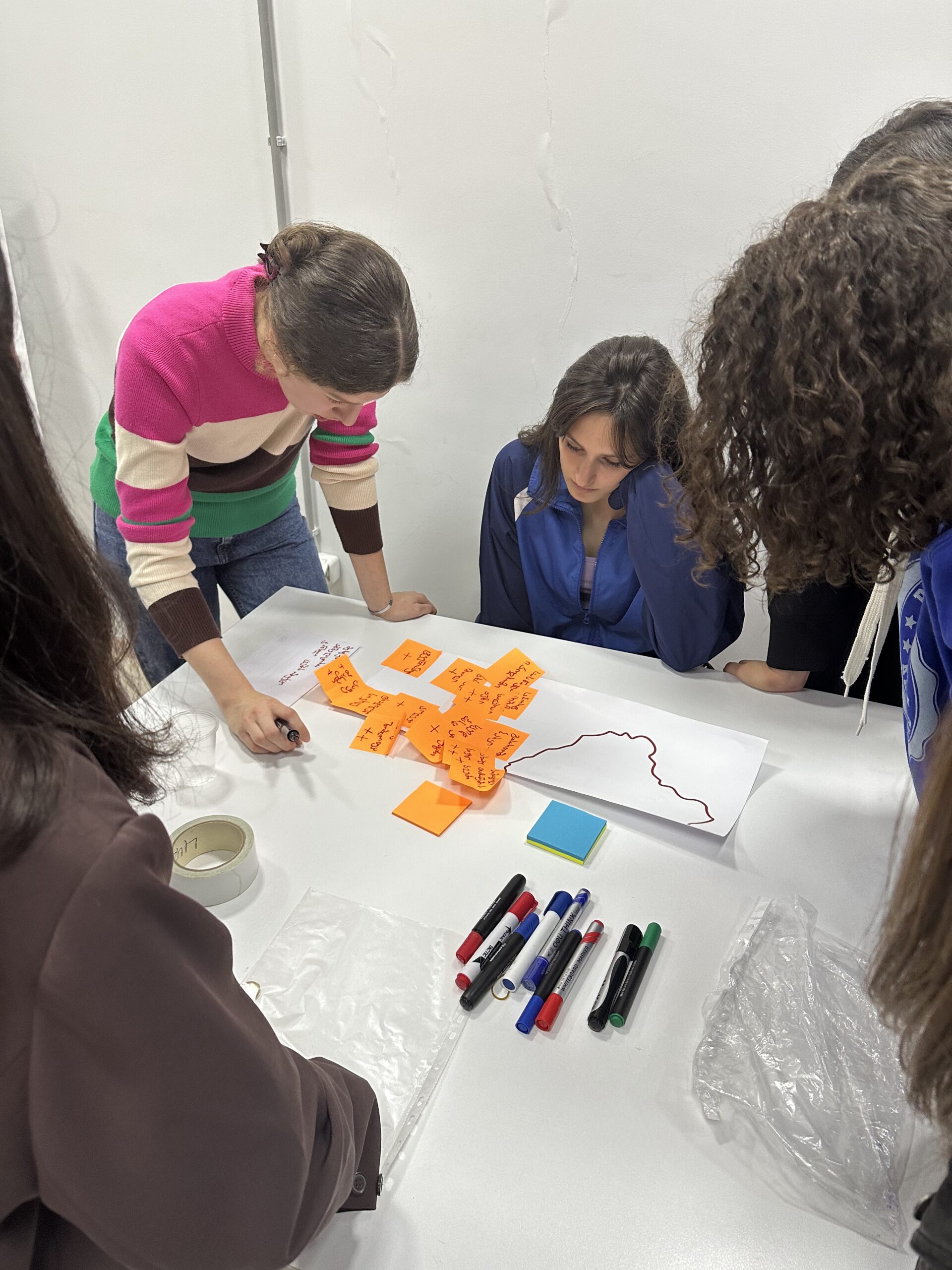
Participants create a new version of the map based on their assigned group’s interests, needs and priorities.
Each group selects three key locations or initiatives that they believe should change. They mark or paint these on their piece of the map and explain why. They also mark favorite locations that should stay the same. All decisions are made from the perspective of the assigned stakeholder group.
Negotiation Session (20 min)
Before finalizing the marked locations, the groups rotate and negotiate with other groups working on other parts of the map.
Using a rotation technique every 5 minutes, students, teachers, municipality and museum members share their choices and explain their reasoning. These short exchanges help all participants understand different views.
Designing new map (20 min)
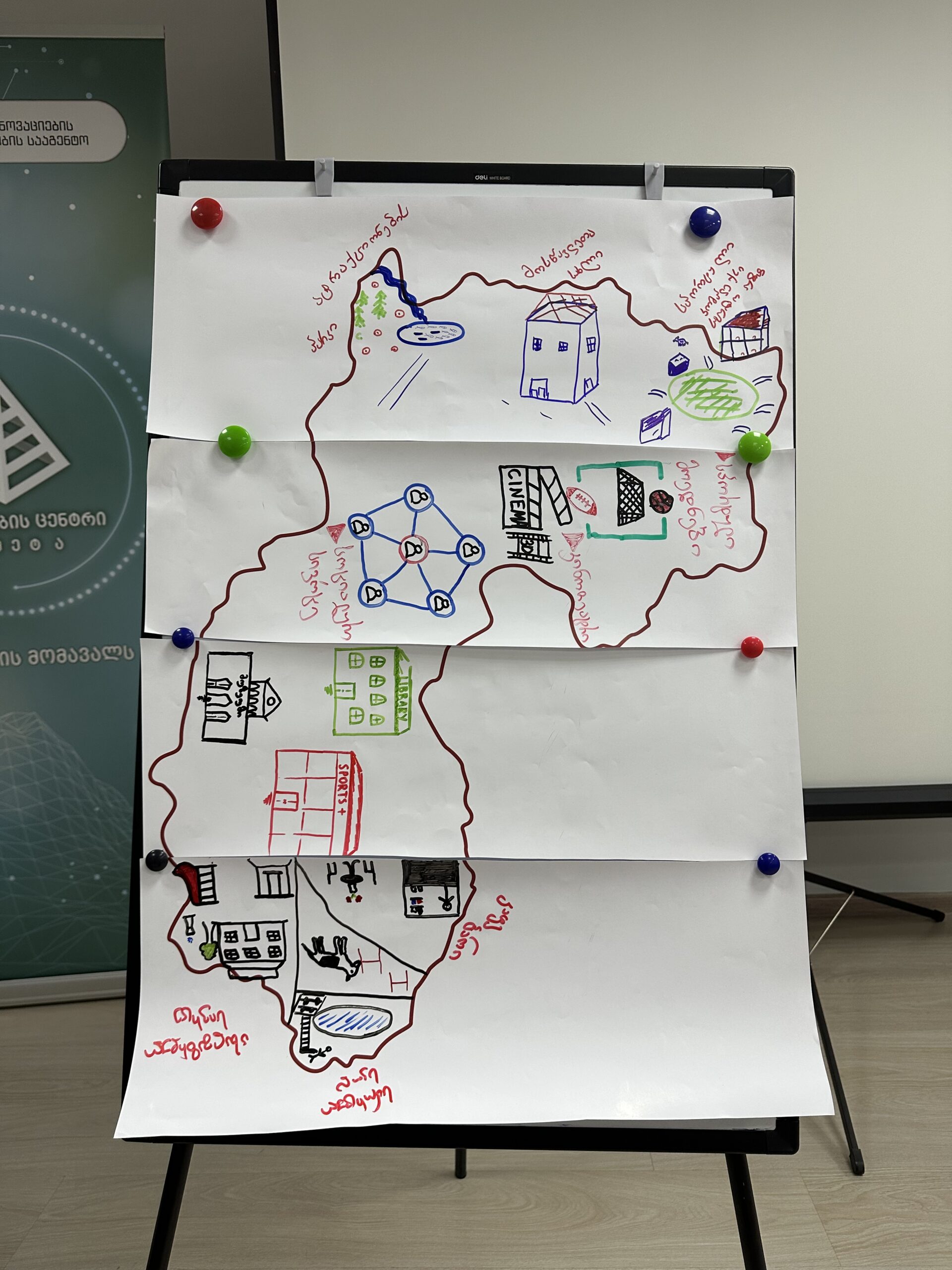
After the negotiation rounds, each group returns to its own piece of the map. They finalize the design or painting based on what they learned from the other groups.
Presenting group work (15 min)
Each group presents their section of the map and explains their decisions. We help assemble the pieces on the wall to form one complete map of the municipality.
Discussion (15 min)
Once the full map is complete, we hold a group discussion to reflect on the process and share key insights.
Practical Details – Facilitator’s Notes
How did you modify the activity?
The element of rotation and negotiation takes at least 40 minutes more but can take an afternoon or several sessions.
How did you organize the space?
We use a big room with enough tables available where participants can easily switch to negotiate.
Who did you work with?
We implement the activity during the launch meeting of the local LAB, to engage municipality members, teachers, students, artists and museum representatives in a meaningful way.
What resources did you use?
We use a big map of the municipality cut into 3 pieces, pins, sticky notes, colors and a wall to display the results.
What did you learn?
Taking another person’s perspective works well and opens up valuable discussions, insights and new ways of seeing. It helps bring together stakeholders who hold different levels of power, which might otherwise limit participation from those with less influence.
Related Case Studies
-
Mapping Favourite Places
Activity in brief “Favourite Places” engages participants in identifying and discussing their favorite and least favorite places on a map using colored pins. Participants examine ... Read more
-
Favourite Places
Activity in brief “Favourite Places” engages participants in identifying and discussing their favorite and least favorite places on a map using colored pins. Participants examine ... Read more
-
Heat Walks
Activity in brief Participants will explore urban heat challenges through citizen science. The activity includes interactive discussions about participants’ local neighborhoods, the role of public ... Read more