
Why?
Knowledge creation is not linear – it never was and never will. In the STEAM.SENSE project, we try to reinstate the parallel, the crossover, the diagonal, and the multiple connectivity: knowledge generation is an act of creative, associative perception.
When Newton saw the apple falling, it was a moment of creative perception.
We often force our knowledge and thoughts into the 2-dimensional format of the written book with all its linearity. Although tools like whiteboards with post-its and graphics can promote innovative thinking, they still primarily utilize two dimensions. By embracing all dimensions to organize and relate our thoughts in a dynamic array of sensory interconnections, we open ourselves to unexpected connections and possibilities.
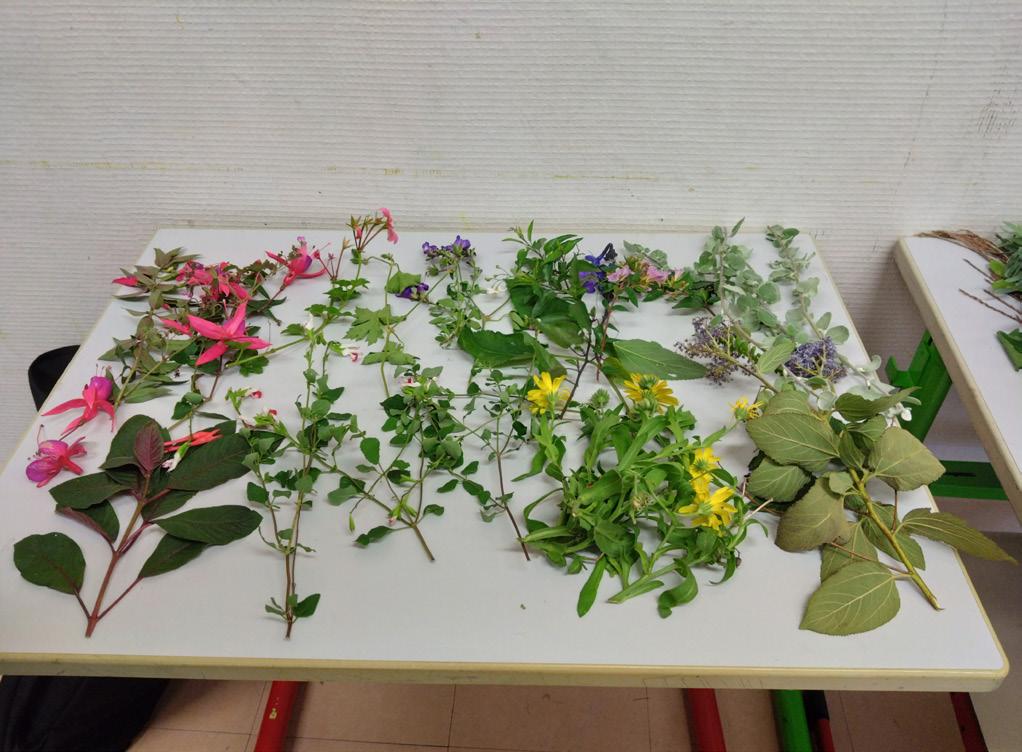
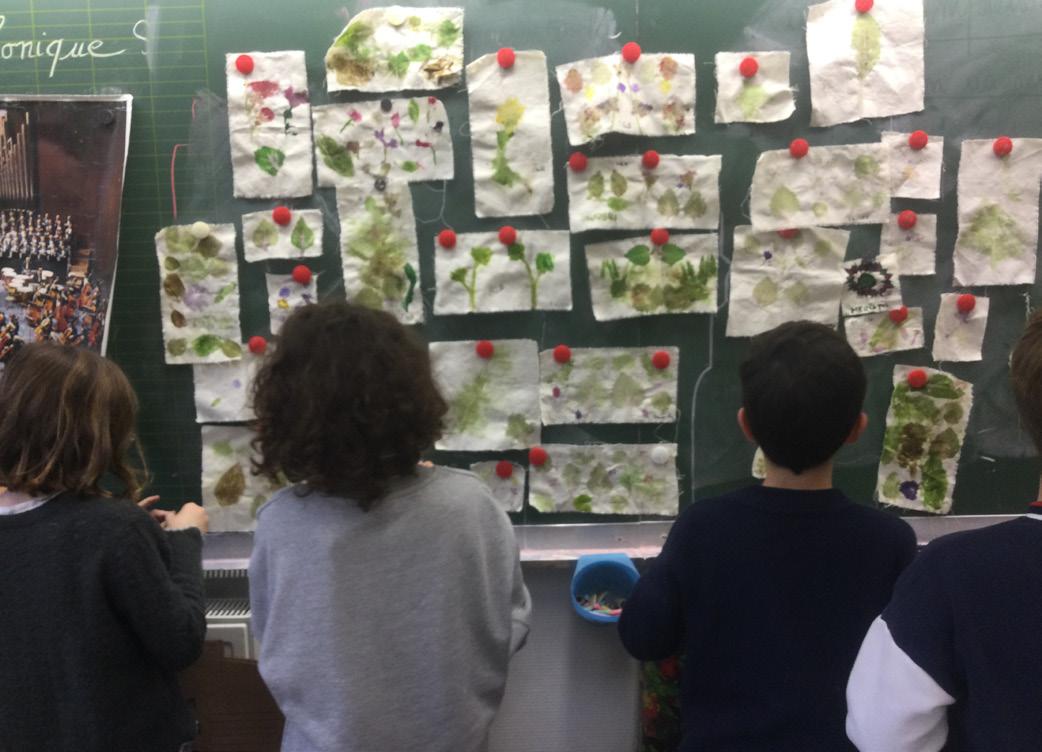
The activity focused on creating images and producing colour from the direct printing of fresh plants. A first workshop involved reproducing the real shades of plants’ colours as accurately as possible and representing them through observational drawing. Another session introduced the use of a traditional technique of hammering plants to create images of the very chromatic materiality of plants. The activity was supported by a carefully curated display of the selected plants and final products displayed prominently, allowing participants to immerse them- selves into the transformation process from nature to art.
How?
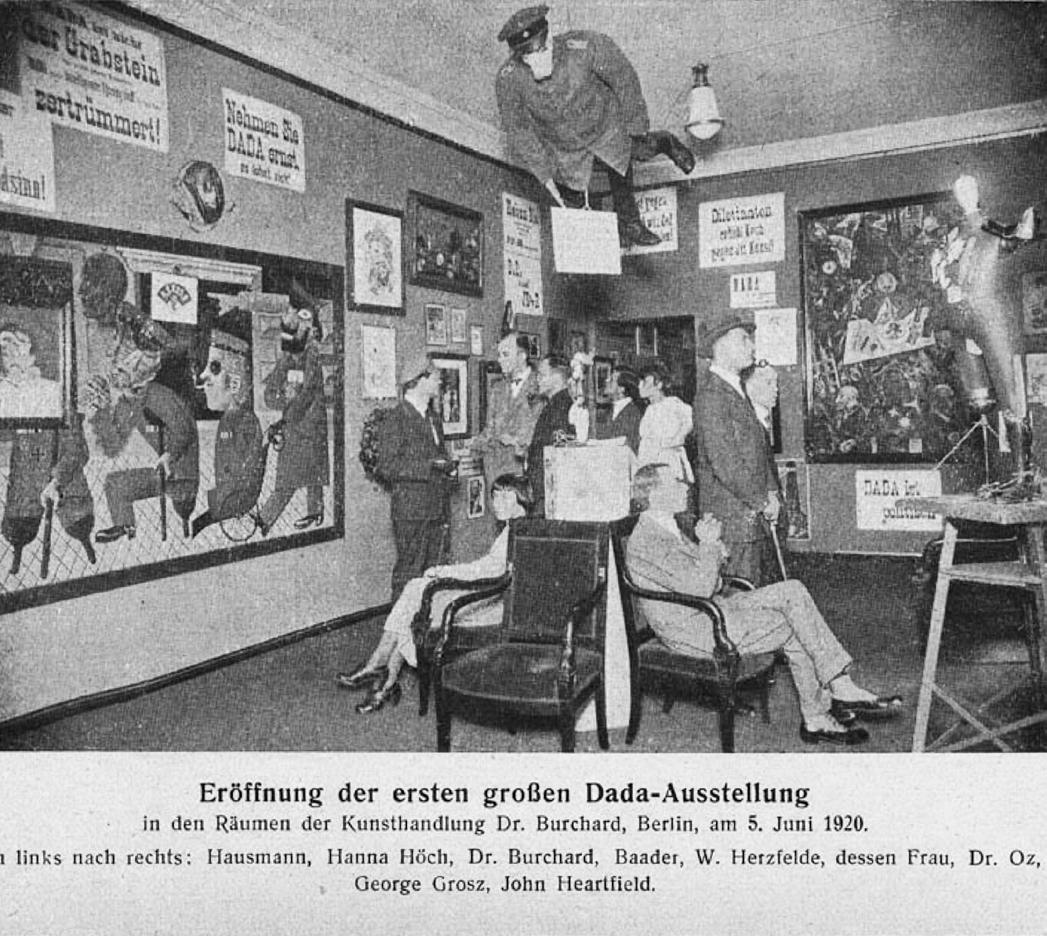
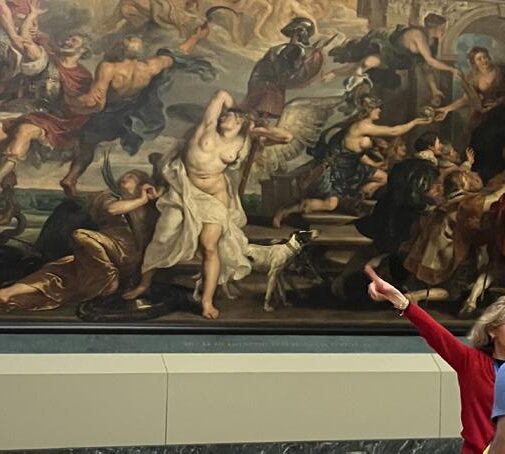
Of course, we are talking about curating an exhibition. Exhibitions are great knowledge connectors. For instance, when we go into a museum, we never look at one exhibition exhibit only. We move through a relational space where many artefacts are visually talking to each other, allowing us to forge associations. Good exhibitions combine and create through relating artefacts within space.
So why not use this principle for an educational activity? But not to present a static final “result” of knowledge but to curate a constantly developing process or creative inquiry.
If many participants do this in one place in parallel, all exhibits will start to interact with each other, presenting a mace of intertwined thoughts. Take any theme: Explain Einstein, Roman history, or explore coding technologies, but display them in three-dimensional form.
For this, you need: yes, boards, vitrines, displays, paper, clay (why not?) – Anything that can be used to create an exhibit piece is welcome! And yes, the ceiling and the floor are underused resources. Use them!
Display equipment is what you need. Space will come.
Further Suggestions
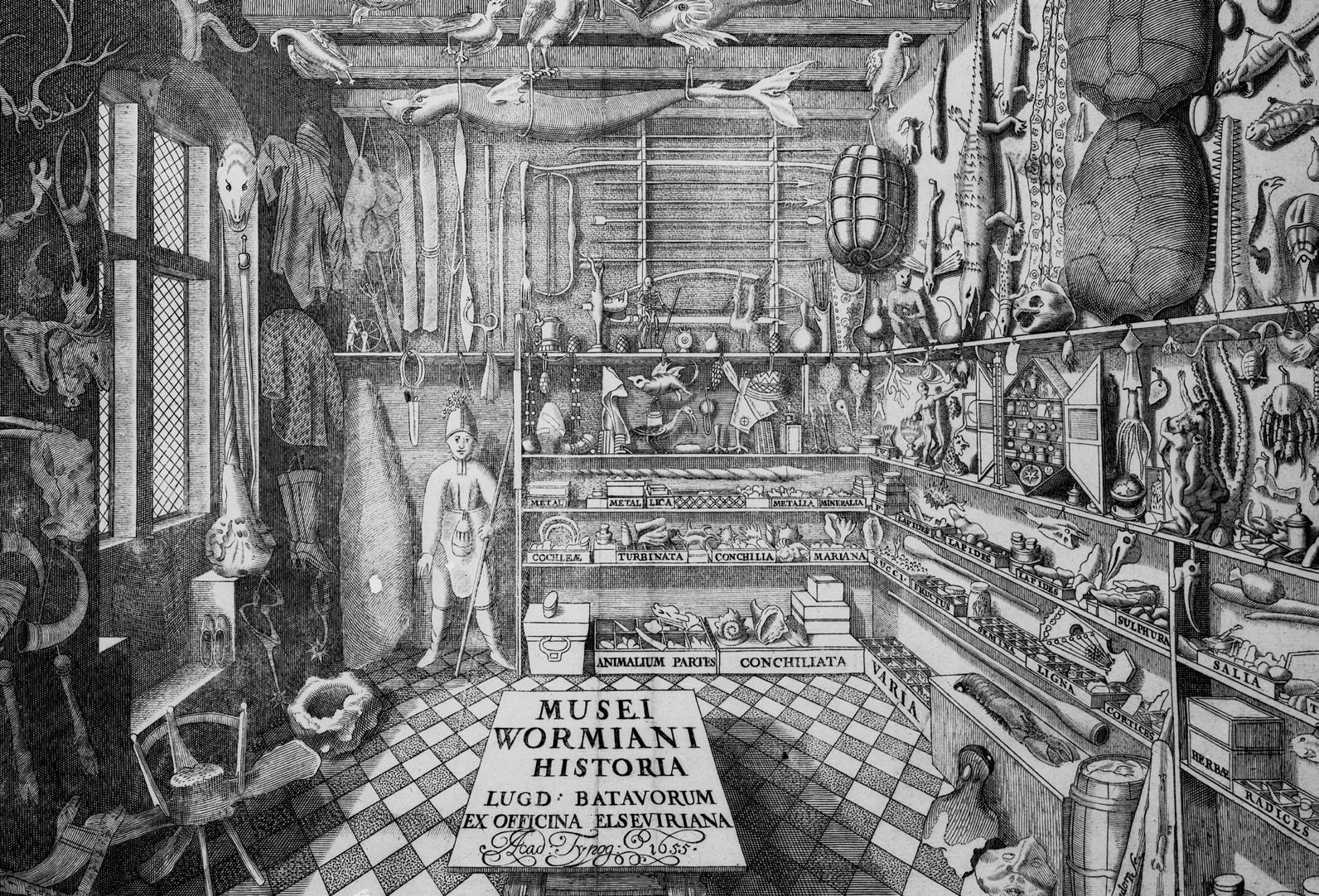
Humans have tried to explore and understand the world through a collage of natural phenomena and artefacts for centuries. For example, the famous Cabinets of Wonder presented an attempt to explain and capture nature through the combination of many exhibits. Historically, these cabinets were often dismissed as mere “follies,” but many scholars now view them as sophisticated, creative, and even subversive predecessors to Darwin’s ideas of evolution by simulating the complex nature of our ecosystems.
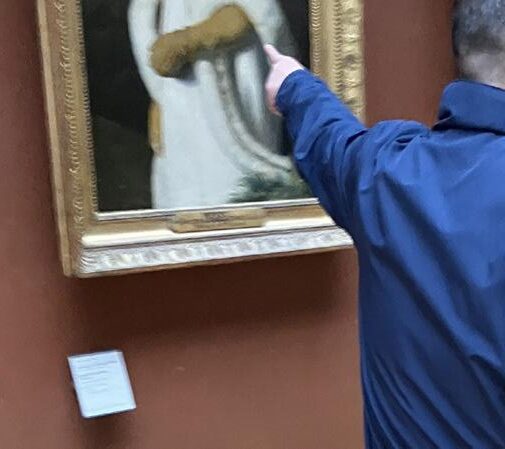
The first exercise might be for all participants to visit a museum and try to comprehend this as a three-dimensional vessel of artefacts that talk to each other. What do we learn from this? How would you rearrange it? What role do the visitors play? Do we find interesting meanings that evolve from spatial relationships?
The next task will be to create artefacts that represent what participants wish to display. For instance, if we continue with the coding example, how would you illustrate how programming a computer works? What would a “Loop” (a common coding element) look like when visualized in three dimensions? What are the components of a computer? Can an algorithm be employed to organize a space?
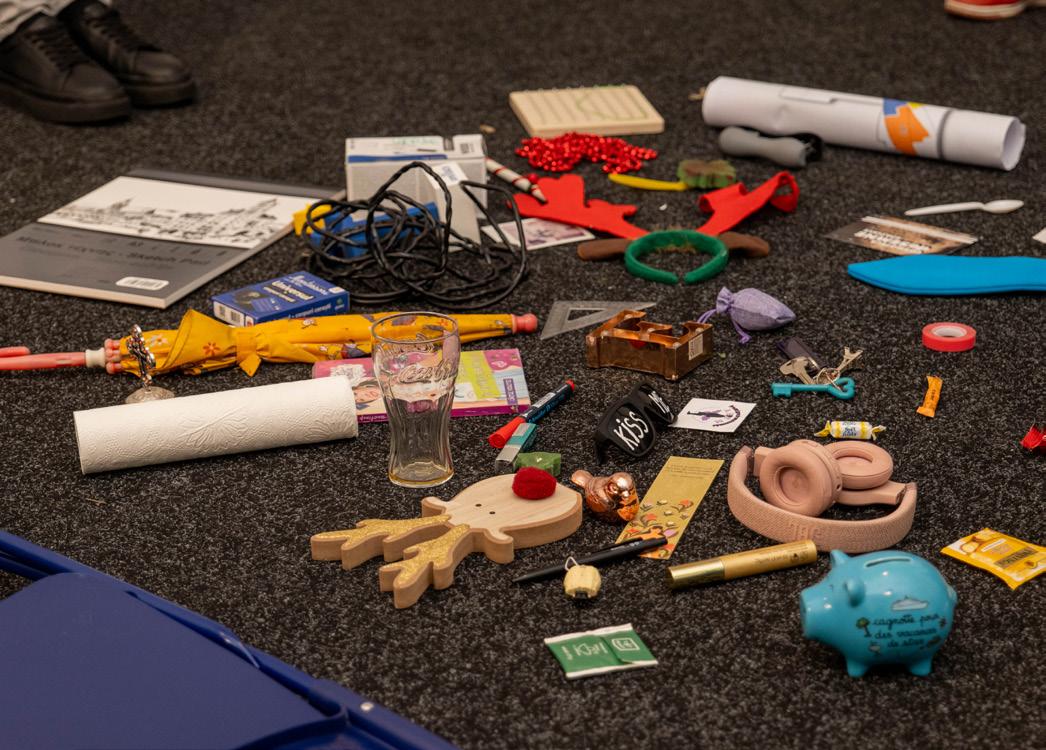
The process of artefact creation is an important translation process of immaterial ideas and thoughts into the physical world. That’s where the creative transformation of information leads to a deeper understanding.
You can start with easy exercises, like arranging information on large sheets of paper, boards etc. on a large display. Beginning with a two-dimen- sional medium is an easy way in.
In the next step, hang and display those 2-dimensional artefacts wherever you can, but arrange them consciously with visual relations in mind. The group can agree on one overarching strategy, or each participant can start with a personal curation strategy in parallel.
And then go wild: there is no limit to arranging things in 3 dimensions, adding artefacts all along the way.
But don’t forget: change, develop and reflect – and discover. The active exploration of the exhibition is as important as creating the exhibition.