

Why?
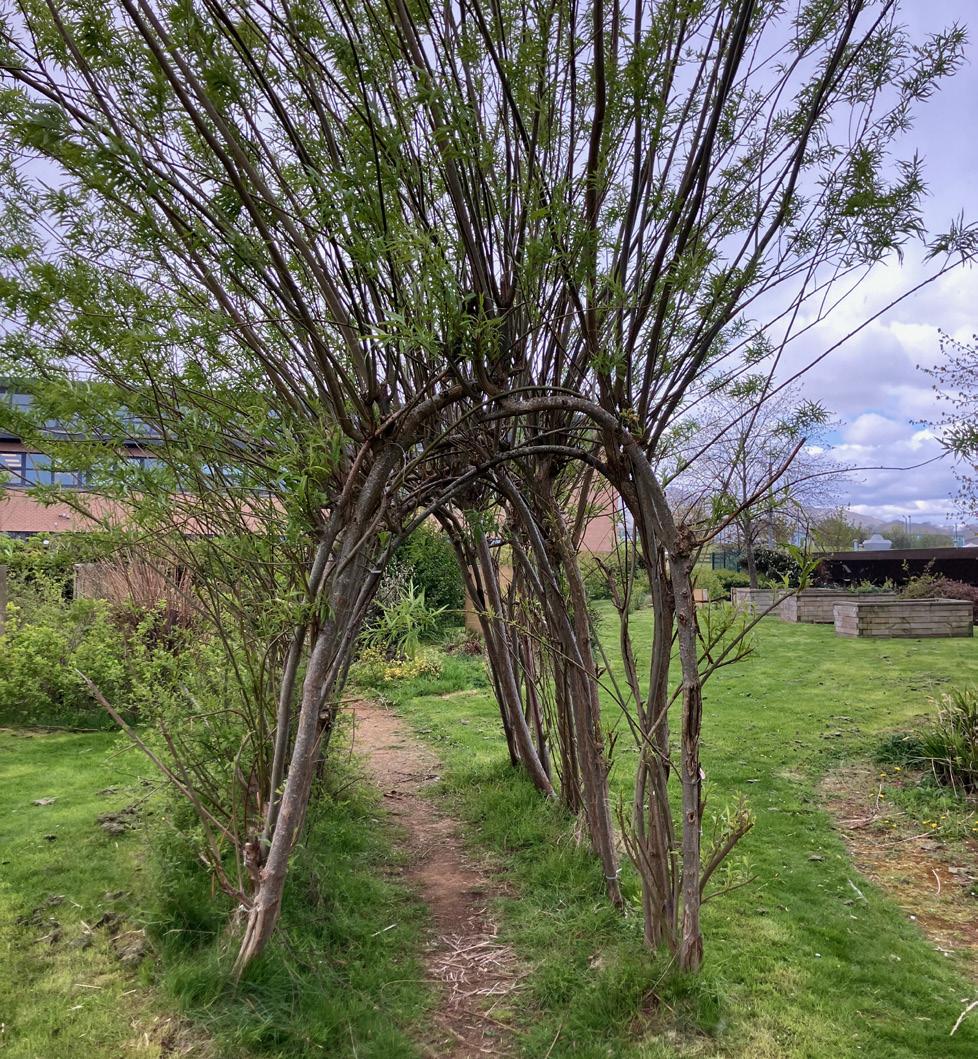
This experiment aims to use spatial means to facilitate group working dynamics. Creating niches in a big space allows us to experience how important sight is for our educational practice.
Usually, the facilitator of an activity, the educator or teacher, can see all participants simultaneously. Certain forms of authority and control depend on this overview. If participants can choose if they want to stay in their niche, as in a semi-private, protected space, or work in the common area, this may promote independent, less controlled and maybe more innovative ways – questioning hierarchies at the same time. New learning processes – together and separately- can emerge just from a simple intervention into the spatial setup.
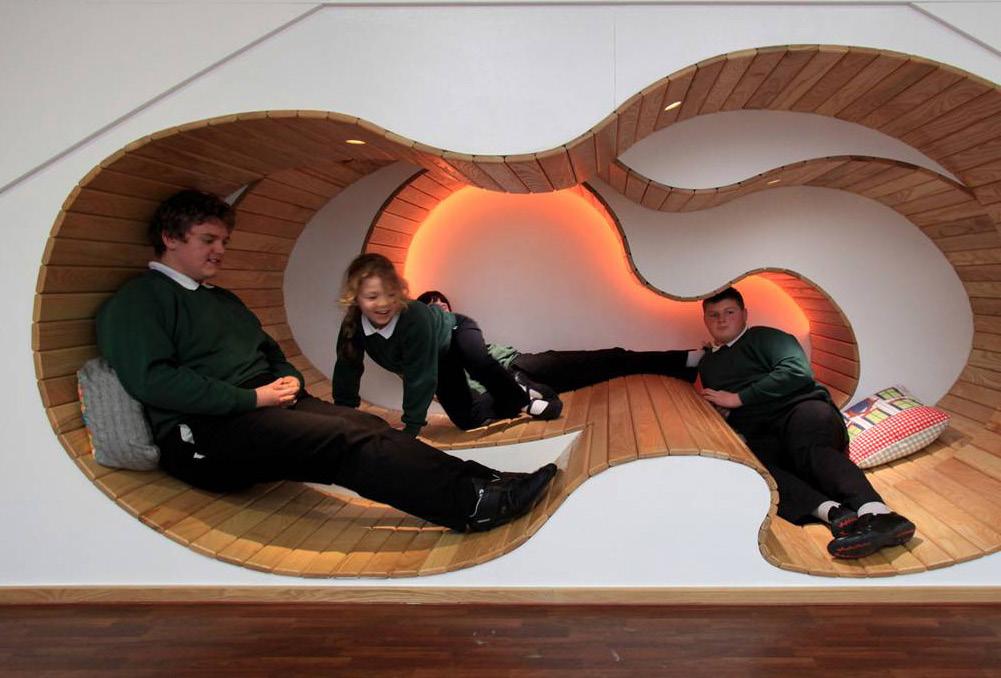
SENSE.STEAM-inspired activities often require an element of exposure by the participants, causing a feeling of discomfort to some. A niche can help here by providing a protected space, lowering the threshold of personal engagement. This is especially important for participants who – for many reasons – might not feel comfortable exposing themselves to the whole group and benefit from an amount of spatial encouragement or, like in the case of neurodiverse participants, protection. A niche can be a separating element which simultaneously facilitates inclusion.
How?
Using niche arrangements is most effective for learner-centered activities, which often involve group work alternating with central discussions, such as forums where each groups present their results. A niche is the ideal spatial typology to facilitate this type of activity. In this case, the spatial organisation of the learning environment goes hand in hand with the design of the activity.
However, it can also be the other way around: a differentiated “niche” setup can inspire the design of a STEAM activity.
Additionally, a niche can also be an additional spatial offer that can be used within any educational activity without the intent of separating participants. However, sometimes and often unpredictable participants intuitively seek spatial separation – like “going to another room to discuss in a smaller round”. Another room, however, has the significant disadvantage that it keeps participants fully isolated. A niche, in contrast, maintains the balance between spatial segregation and integration. This way, niches can lead to surprising results and unexpected group dynamics enriching any STEAM activity.
Further Suggestions
Browse the catalogues of furniture providers, especially for workplaces and universities, and you will discover that niche typologies are everywhere and can be purchased in any form, such as miniature houses, blow-up pods, or cave spaces. Niches are in vogue, but their use is often limited outside university and workplace cultures. For instance, schools rarely incorporate them into learning environments. If you don’t want to spend money on furniture or remodelling existing buildings, you may be asked to deploy some creativity.
Use big screens, curtains on strings or partition walls. Be mindful that some niches may naturally receive more light than others and may require additional lighting. However, if you are already on the case, you might use more unconventional materials and forms to create niches, caves, nooks, and arbours – however you might call them – in any shape you and the group fancy. Determine: How long can the niches be in place? Is the room used by other groups, educators, and teachers, who must be asked beforehand? Would you like to limit the experiment to a week or a month? Ideally, you create niches which you can reuse, remodel, and adjust to your needs.
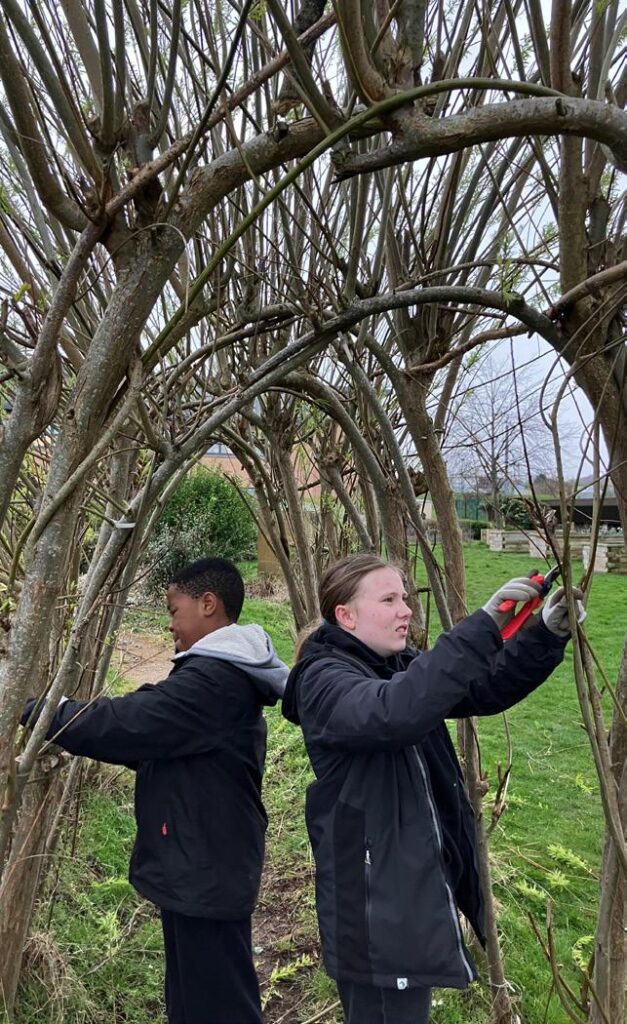
It should be a group effort to rebuild the spatial setup and create niches. In fact, making and arranging a niche can become a joint and joyful activity at the beginning of an activity, offering a suitable conduit for a discussion on how you want to collaborate as a group.
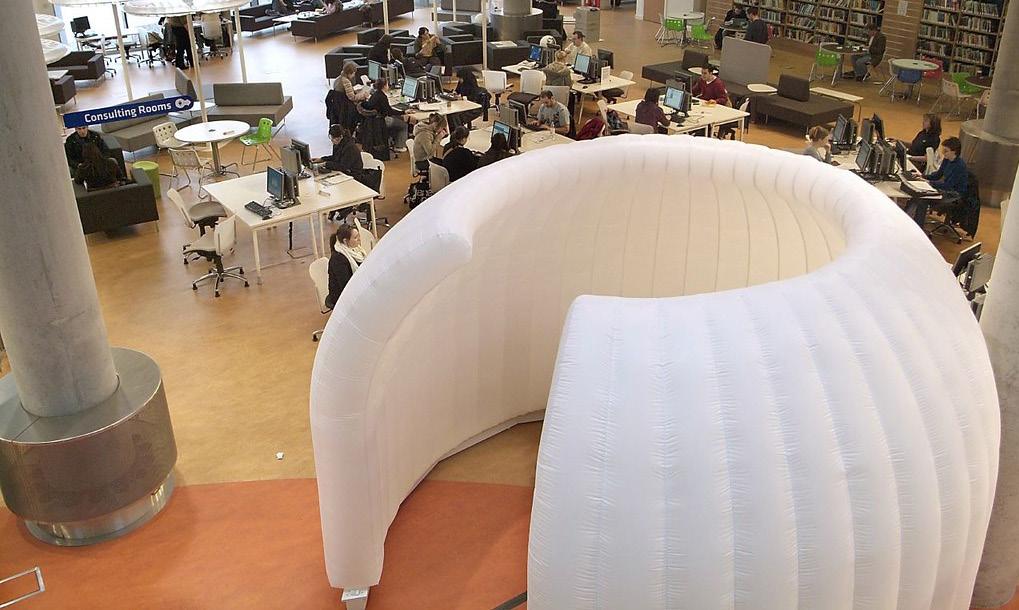
The key element of using the niche is establishing its relationship to the main space. Typically, niches are on edge, so the spatial flow of the main space remains uninterrupted. With this configuration, you are always on the safe side. Start with this. But there are no fixed rules. Other formations are worth trying out. A niche, for example, could be elevated on stilts, creating a nest or hive; another two great synonyms for niches. The sky is the limit.
The best thing is to stay flexible and use moveable pods or something similar. Start doing your usual practice in the new setting and stay attentive: Observe what works and what doesn’t, when participants choose between being in or out of sight, together in the big group, or more withdrawn. Look for opportunities to reorganise learning processes incorporating the observed choices. This way, niches can serve as finely tuned instruments to orchestrate group dynamics
You will see niches are natural winners!