
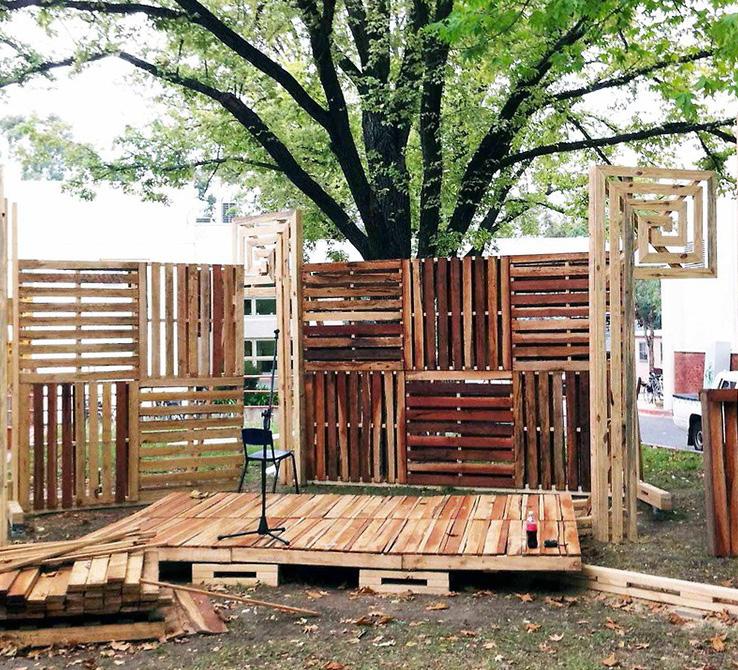
Why?
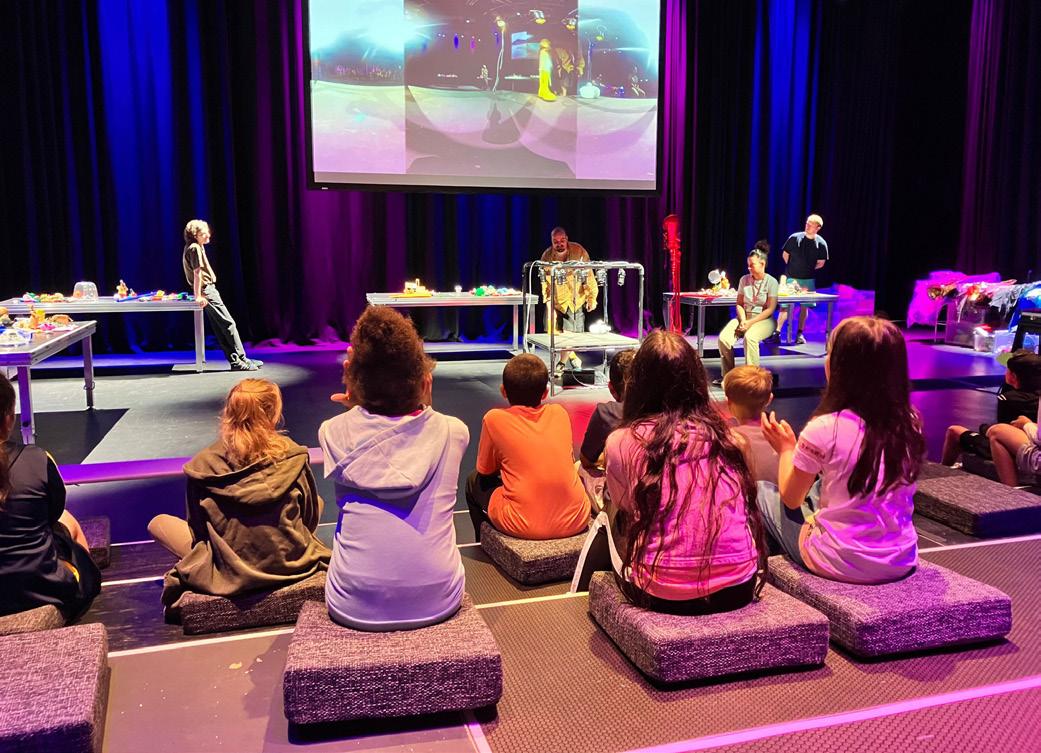
A stage is a space that offers us choices: What do we want to put on stage? What special rules apply to the space which forms the stage?
Working with a stage means highlighting the act of presenting, which is always an integral part of learning practices and experiences. In traditional science education, we are usually focussed on the content of scientific and educational presentations. In STEAM, however, and even more in the SENSE approach, we are also interested in the aesthetic factors that support the creation of evidence and understanding.
A stage is like a looking glass and a golden frame – supporting the showcase of everybody’s expertise.
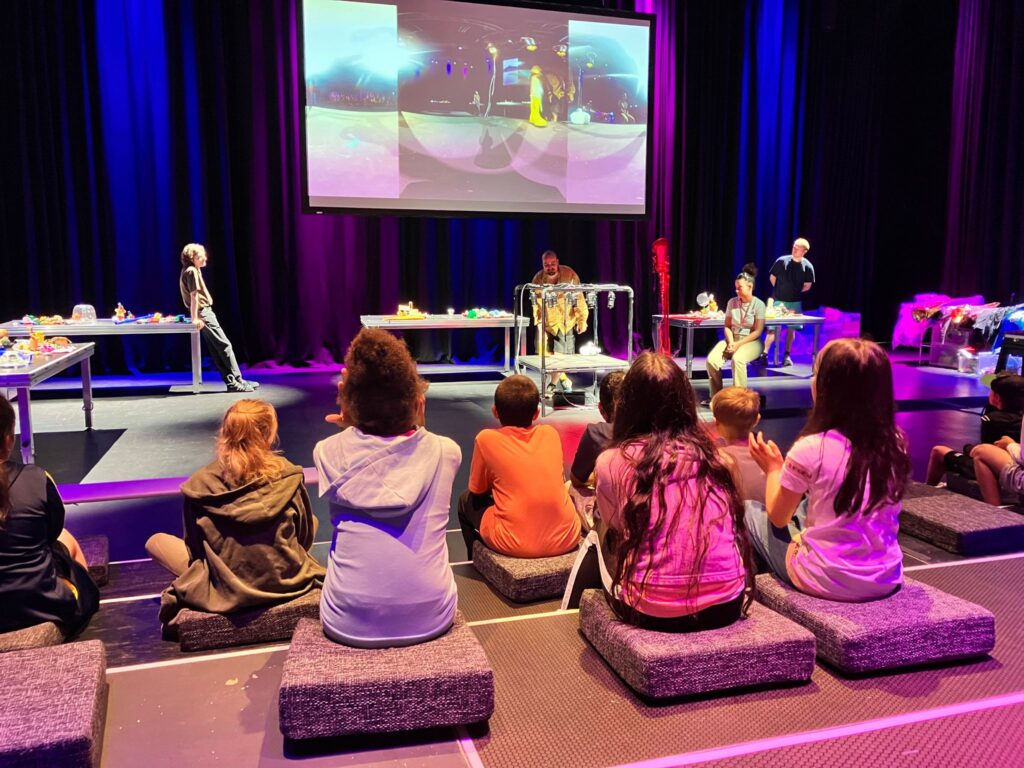
Since 2003, the research theatre as a scenic laboratory dedicated entirely to research between childhood, art and science. Formats and methods of performance art allow the researchers to access the theatre in their own way. The theatre thus becomes a forum for research for everyone, where we can experiment with new forms of knowledge and publicity – from kindergarten to graduate school. src.: Fundus theatre Hamburg
How?
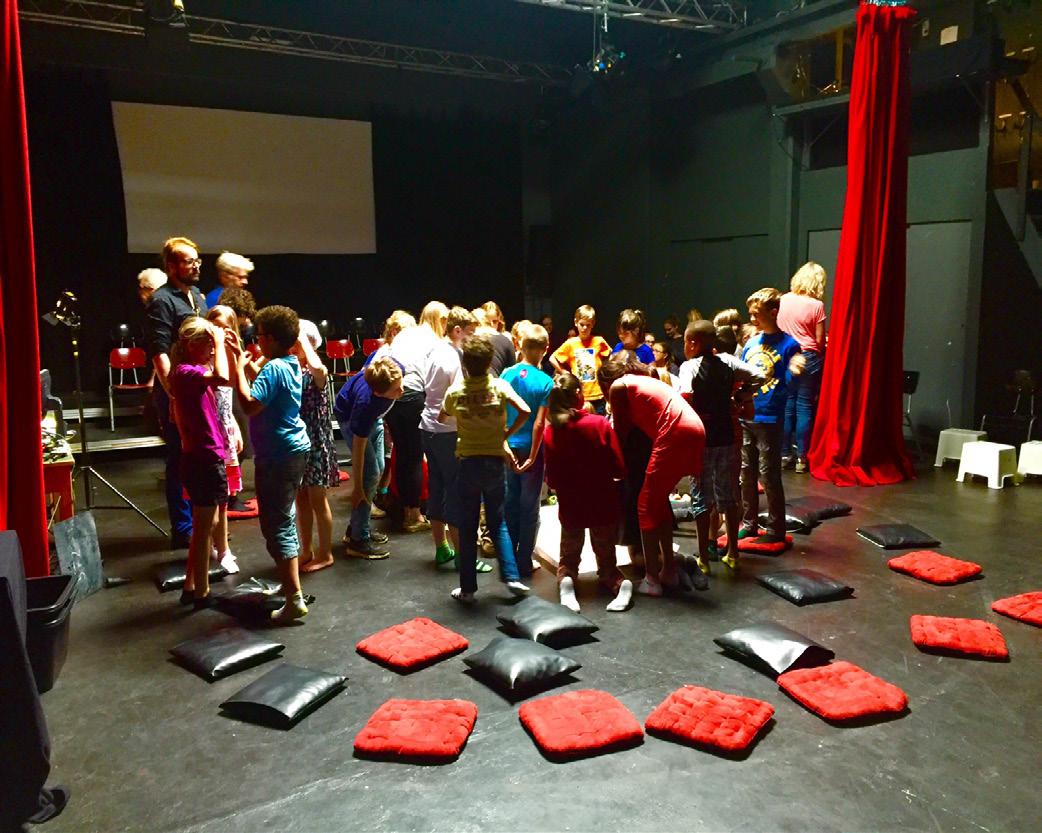
Creating a stage doesn’t have to be complicated. We can move some furniture out of the way and put tape on the floor to mark out an empty square, not too small. There, that’s our stage. Fundamentally, a stage divides a space into two parts: one for presentation and another for observation. A stage does not become a stage because it consists of a podium or has a red curtain (although a podium and red curtain are pleasing and really DO help). A stage is a stage because it is empty to begin with, and it is up to us to decide what we want to showcase. Everything we put on it —be it an object, a gesture, or a statement—will have more meaning because we have chosen to place it there.
A stage is special place of transformation!
Further Suggestions
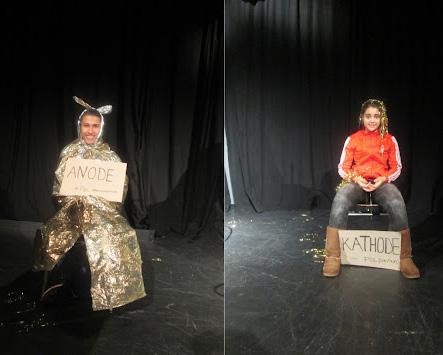
Before we present full performances on our little stage, let’s embrace the magic of minimalism. For example, we can combine objects and statements randomly: One participant chooses a statement to make, and another chooses an object separately. By placing both the object and the statement on the same stage, something will happen between them. This can be funny or even enlightening.
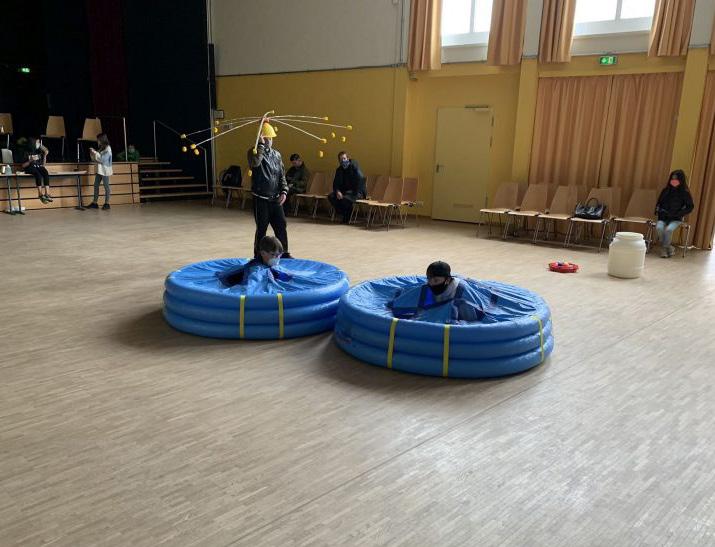
Following this path, we can continue to use our stage for small experimental show-and-tells: We can try to use random objects as models to demonstrate learning content. We can try to demonstrate learning content without words.
Or could the learning content even be demonstrated in a way that affects the speakers themselves? The stage is a good place for self-experimentation to be witnessed by others. What happens on our stage can also be timed in interesting ways: Imagine the room is dark, and the people on stage can only speak for as long as a burning match lights them. And then it’s the next person’s turn.