Case Study in Brief
Description
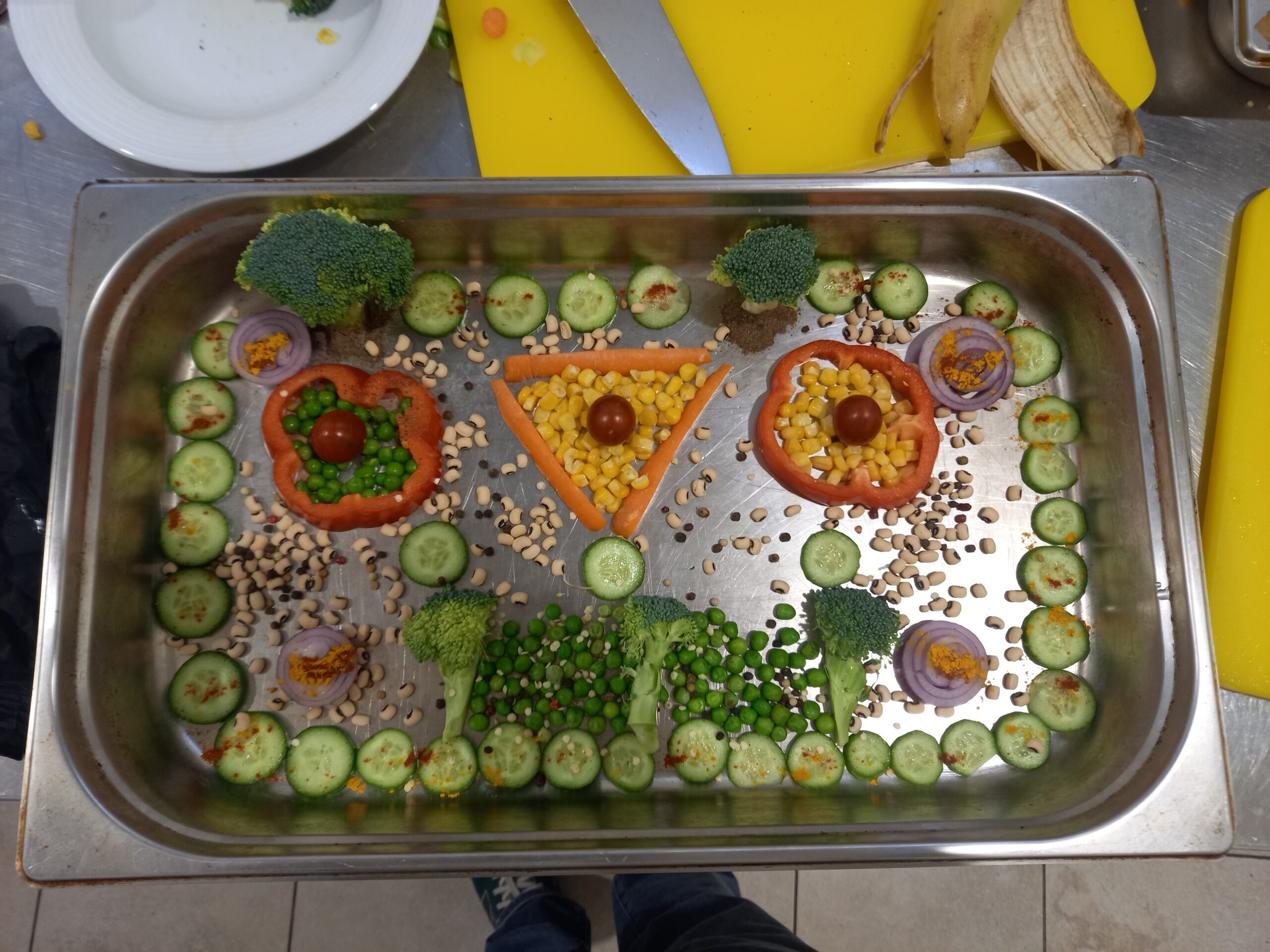
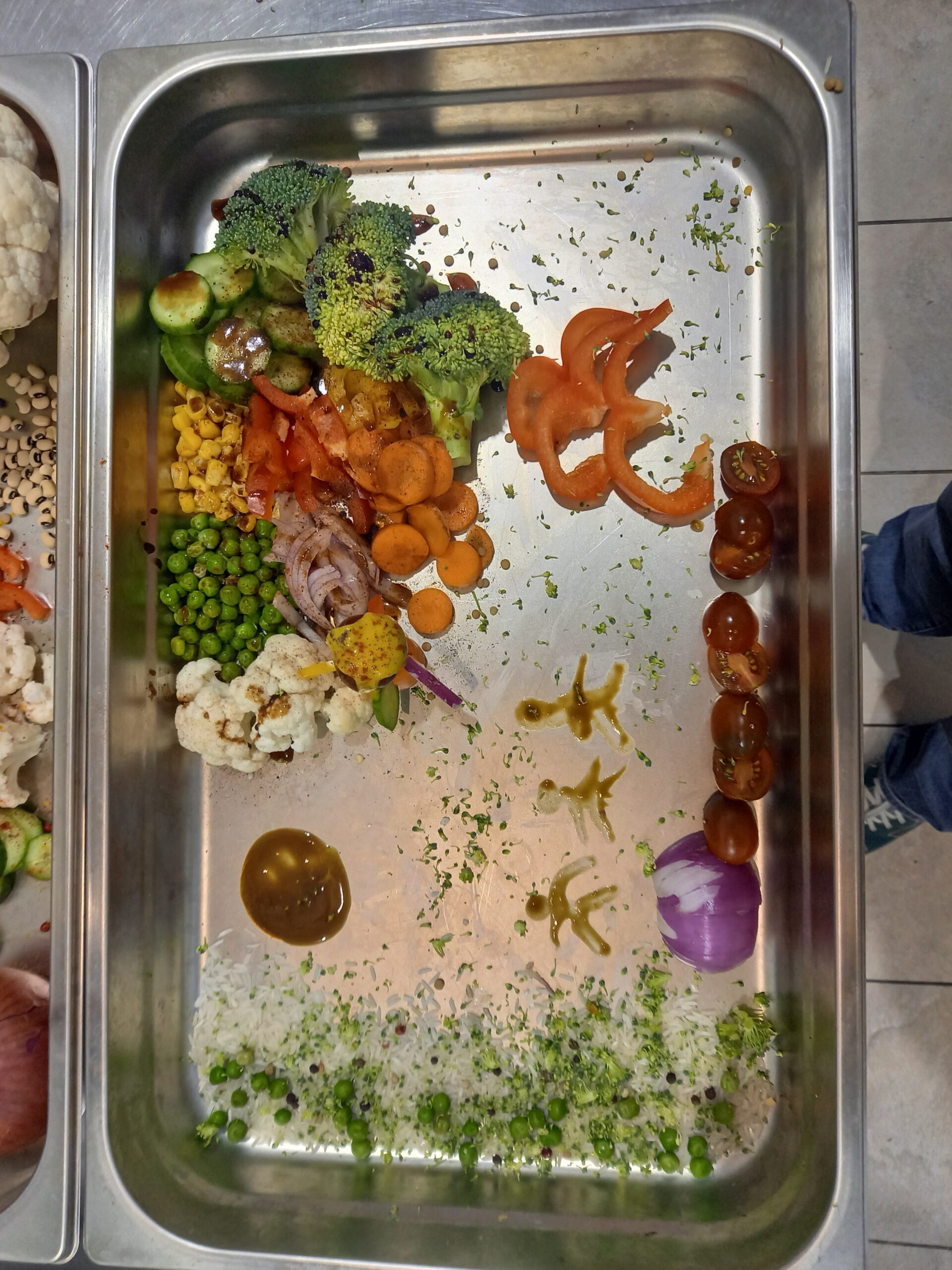
Culinary Canvas invites young people aged 16 to 18 to turn a professional kitchen into an art studio. Working in teams, participants design and build uncooked art installations using a wide range of ingredients. Each piece reflects personal stories, cultural roots and individual aesthetics.
We aim to strengthen connections among participants and create space for self-expression through the shared language of food and visual art. Each installation becomes a reflection of identity and a celebration of cultural diversity.
The activity encourages creative problem-solving and critical thinking through food as an artistic medium. It blends science (ingredient properties and pairings), engineering (structural design), art (visual storytelling and cultural meaning) and mathematics (balance, proportion and spatial reasoning).
We guide participants to turn abstract ideas and personal narratives into physical, visually striking works. Along the way, they build artistic confidence, work collaboratively and gain a deeper appreciation of the richness in their own and others’ cultural backgrounds.
Dispatch From the Field
Culinary Canvas offers a personal and collaborative experience that helps young refugees connect with their heritage and share their stories in a non-verbal, creative way.
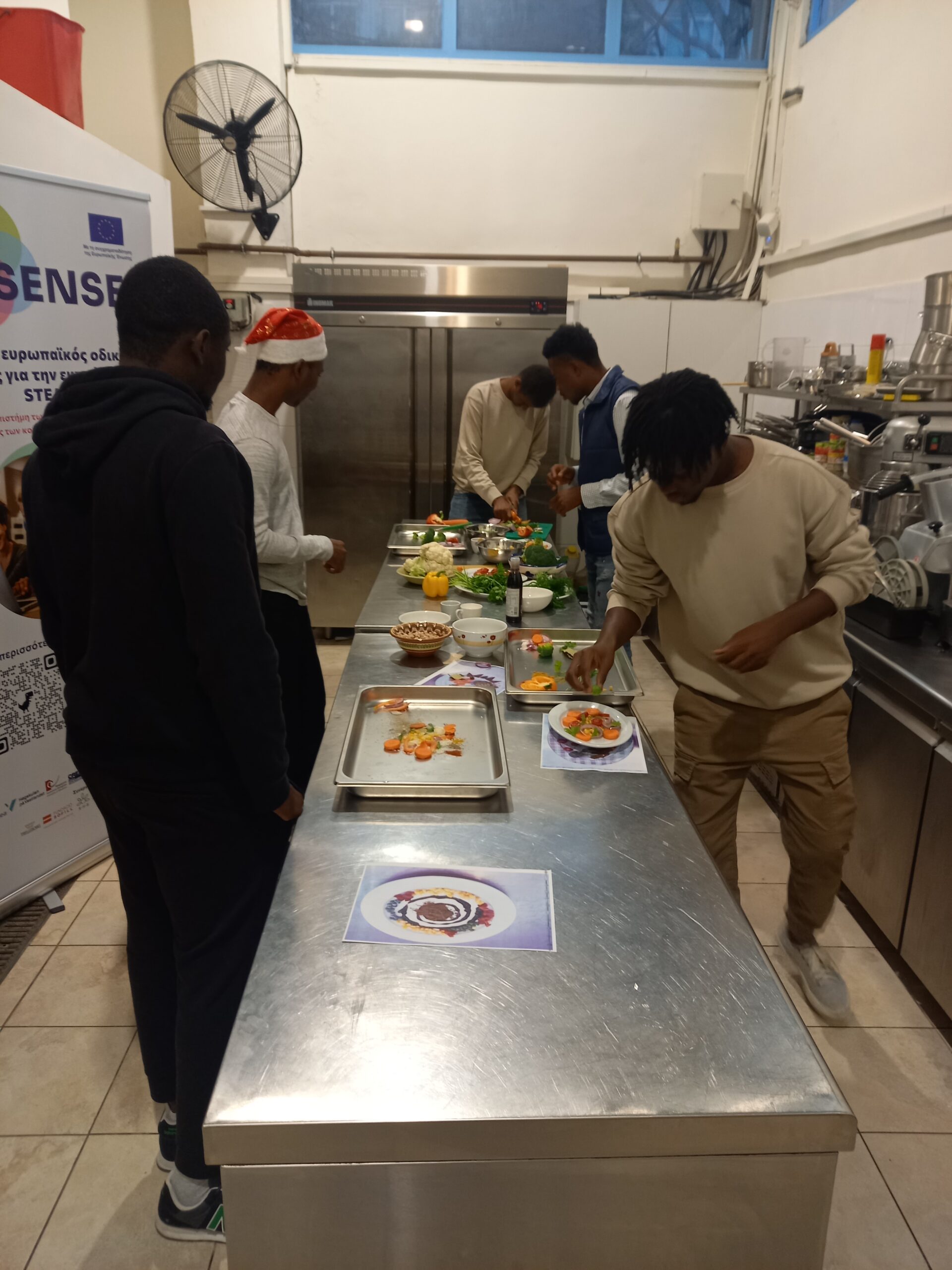
Step 1: Welcome (10 minutes) We begin by welcoming participants to the professional kitchen with a playful “Kitchen Safari.” Instead of a formal introduction, we guide them through the space using simple language and humor, highlighting stations and tools like, “This is where the magic happens for chopping,” or “This is our color palette for ingredients.” We explain basic safety rules in a fun and engaging way. This light start helps participants feel comfortable and curious, especially as young people adapt quickly to new environments.
Step 2: Personal Palettes (15 minutes) We divide participants into small, mixed teams. Each person gets a card and pen to draw or write down one ingredient that reminds them of their childhood or a strong memory tied to food. It could be a fruit, a spice, a dish or even a texture. In their teams, they share the stories behind their choices. We guide the discussion to highlight the emotions and meanings behind these ingredients, making sure everyone feels heard and included.
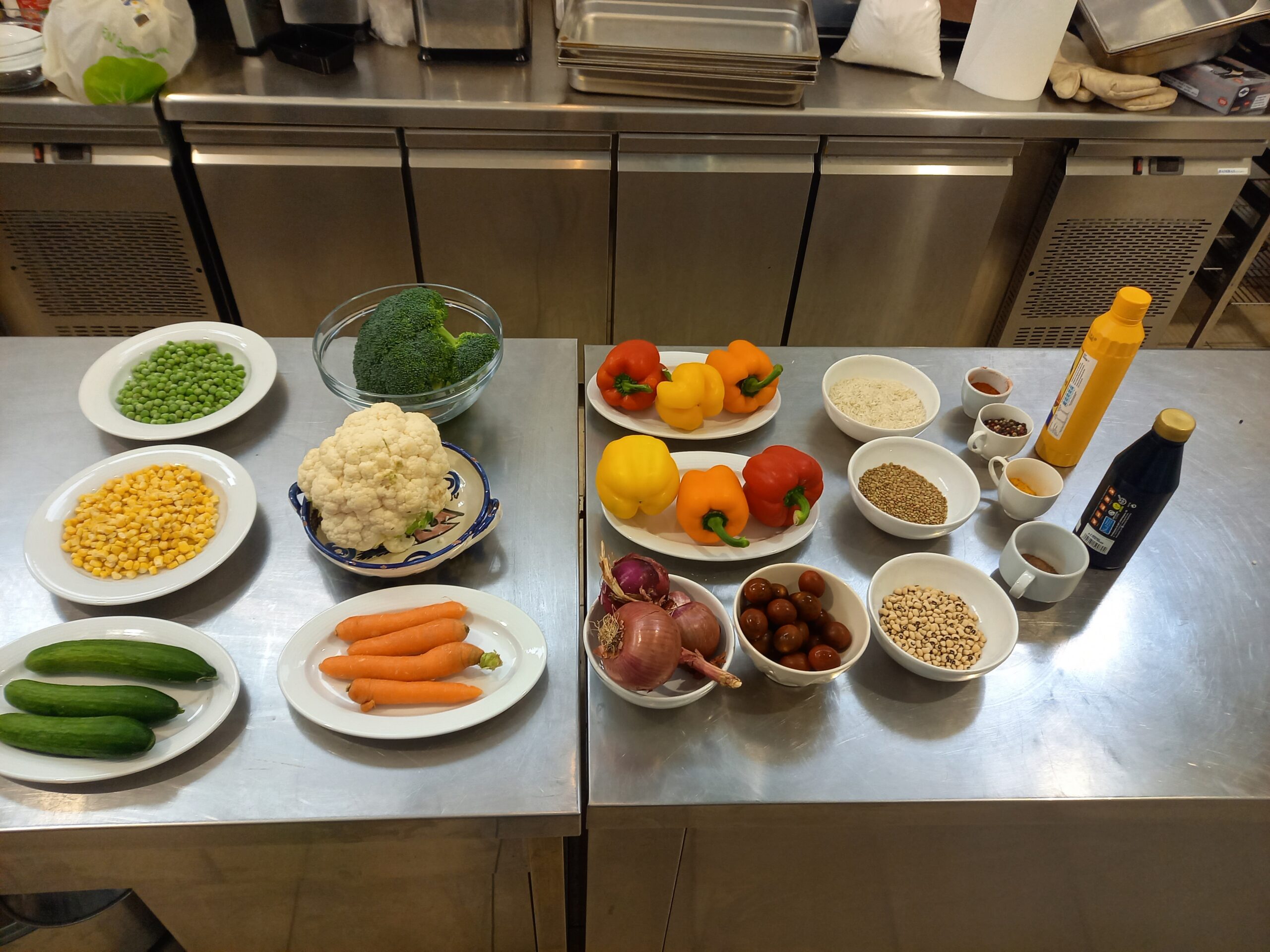
Step 3: The Ingredient Gallery (10 minutes) We reveal the “Ingredient Gallery” , a colorful display of all available ingredients. We introduce each one with a question or fun fact to spark imagination, like “What feeling does the color of this pepper bring to mind?” or “What could these lentils become in a tiny world?” We focus on how the ingredients look, smell and feel, treating them as creative materials rather than cooking elements.
Step 4: The Artist’s Crew (15 minutes) Rather than assigning roles, we invite teams to define their roles based on their own strengths and interests. One person might become the “Concept Artist” sketching ideas, another the “Texture Sculptor” arranging shapes, another the “Color Maestro” balancing the visual elements, or a “Storyteller” explaining the piece. Roles can shift as needed. We encourage teamwork and let participants take the lead in shaping their process.
Step 5: Gathering the Palette (10 minutes) Teams visit the Ingredient Gallery to choose ingredients that speak to them visually or symbolically. We prompt them to think about shapes, colors, textures and meanings. A banana might become a smile, peppers could form abstract patterns or herbs might create fine details. Each team gathers materials that help express their story through visual language.
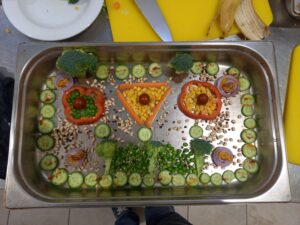
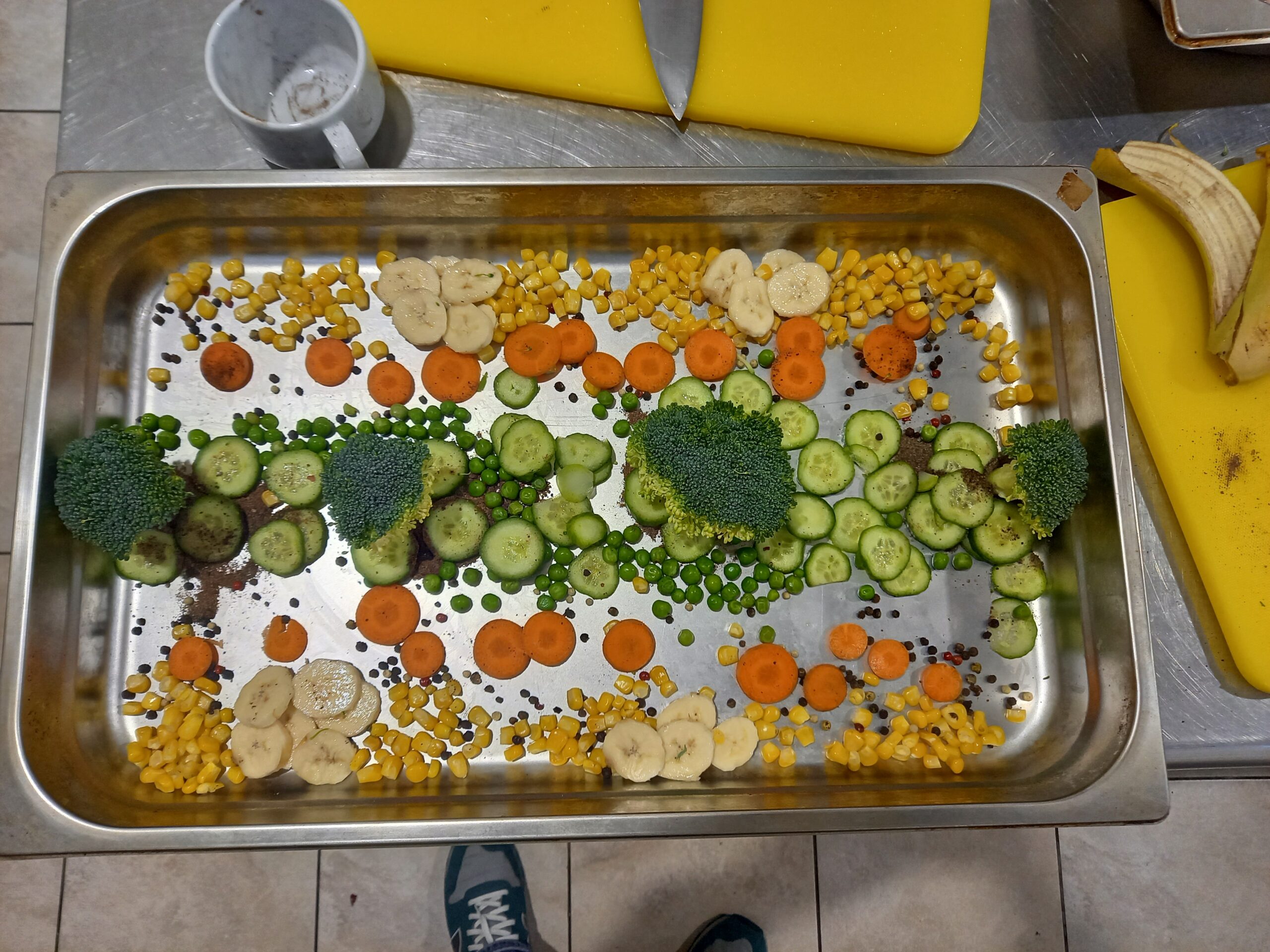
Step 6: Crafting the Culinary Canvas (20 minutes) Back at their workstations, teams begin to arrange their ingredients on plates. They build their “canvases” not through cooking but through imagination. Stories and memories shape their artistic choices. We support the process by asking guiding questions like, “What emotion does this arrangement show?” or “How does this shape connect to your memory?” We focus on exploration, not perfection, and invite metaphor and abstract thinking.
Step 7: Unveiling Creations (20 minutes) Each team presents their culinary canvas to the group. They describe the story behind their piece, explain their ingredient choices and share how their personal and cultural backgrounds inspired the work. We frame this moment as an art exhibition. Peers listen, ask questions and offer supportive feedback. This final step highlights the value of each story and builds shared appreciation across the group.
Practical Details – Facilitator’s Notes
How did you modify the activity?
Duration: 100 minutes.
We use a streamlined introduction and keep the role-playing dynamic and informal. This structure helps maintain high energy and focus, especially when working with young people from refugee families. A concise format supports engagement throughout the creative process.
How did you organize the space?
We organize the professional kitchen into clear zones to support creativity. Each team has its own “art station” at the main counter, with enough room to work together and arrange ingredients. We create a central “Ingredient Gallery” that displays all available ingredients in a visually appealing way. Some ingredients are arranged on platters, others in clear jars or labeled with small artistic signs. This presentation encourages interaction through sight and smell and is a key change from the original version for adults. We also create a “story circle” space for the sharing phase, using comfortable seating to support open and safe conversations.
Who did you work with?
We work with a group of unaccompanied minors aged 16 to 18. They come from various countries in Africa and the Middle East and bring a wide range of cultural backgrounds, English language levels and life experiences. Some have cooked before, but none have formal art training. While the group is eager to connect, a few participants are initially shy due to language barriers or past trauma. These factors shape the activity design, which centers on non-verbal expression and a compassionate, supportive setting.
What resources did you use?
In addition to standard kitchen tools (knives, cutting boards, plates, bowls, aprons), we prepare a diverse set of fresh ingredients. These include at least five types of vegetables, fruits, spices, legumes and grains. The selection features items like colorful bell peppers, leafy greens, exotic fruits and fresh herbs to allow wide creative freedom. We also provide sketchpads and colored pencils for early design work, along with decorative elements and garnishes to expand artistic possibilities.
What did you learn?
Flexibility and personal connection are essential. While the original activity follows a set structure, we find that adapting the steps improves results. We leave room for interpretation, especially in how roles are formed and how teams shape their ideas. This freedom builds empathy and lowers barriers. Participants feel safe expressing themselves, even without strong language skills.
Visual instructions and live demonstrations help overcome language gaps. A visually rich setup and hands-on examples support understanding and help everyone feel included.
Finally, offering a wide variety of colorful and textured ingredients sparks creativity. The participants go beyond literal designs and create powerful, expressive works that reflect personal meaning and cultural identity.