Case Study in Brief
Description
Participants reflect on personal and societal elements they would choose to “destroy” if there were no consequences. Through writing, discussion, and a symbolic action (tearing paper), they explore why some things might need to end to make space for something new. This activity combines social reflection with emotional awareness and connects to the future-making dimension of STEAM.
Dispatch From the Field
This implementation of the parent activity took place in Timișoara with a group of teenagers interested in social inclusion and personal development through STEAM. We began by introducing the concept of STEAM and the SENSE project, creating a warm and safe atmosphere through music and an informal introduction.
Participants were invited to reflect on one thing they would destroy without consequences. This could be a behavior, habit, object, institution, or societal rule. They wrote or drew their choice on a piece of paper. Then, the facilitator asked a sequence of reflective questions: Why this thing? What would change if it were gone? Who else would be affected?
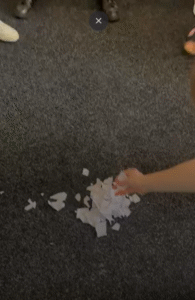
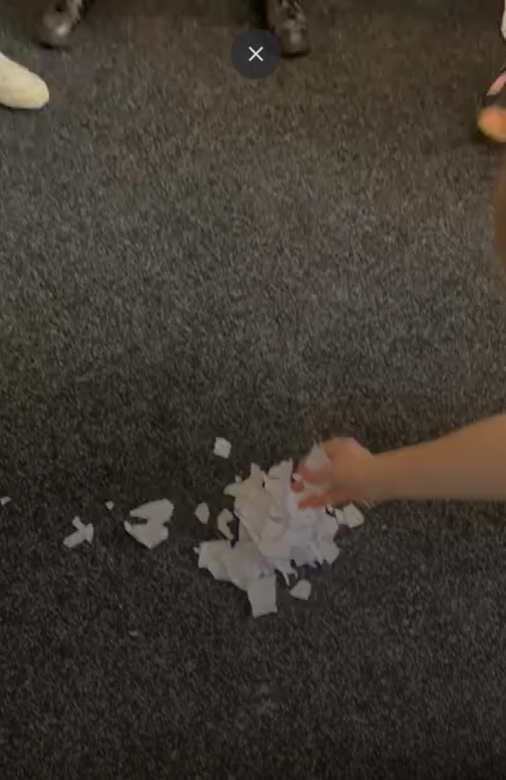
When participants had processed these thoughts, they were invited to physically tear the paper, symbolically “destroying” what they had identified. The act sparked emotional responses, some felt relief, others hesitation.
A group discussion followed, where participants shared if they felt ready to speak. Many expressed powerful personal motivations behind their choices, which ranged from bad habits to unfair societal expectations. The discussion revealed how destruction can be a creative act, clearing the way for positive change.
The method encouraged deep personal connection and collective reflection. Some participants challenged each other’s assumptions, and many left feeling empowered by the emotional clarity the session brought. The activity, though simple, proved deeply impactful.
Unlike the parent activity, this child version integrated more personal storytelling and contextual grounding in local challenges. It encouraged participants to connect their ideas of destruction with their lived realities and the systemic forces around them.
Practical Details – Facilitator’s Notes
How did you modify the activity?
We kept the duration to approximately 2 hours. This included time for introduction, reflection, symbolic action, and discussion. While the parent activity allows for a more compact format, we extended it slightly to give participants room to process emotions and dive deeper in group discussions. The longer duration enriched the outcome.
How did you organize the space?
We held the session in the headquarters of a youth NGO. The space was informal, quiet, and warm, helping participants feel at ease. Chairs were arranged in a semi-circle for discussion, while individual reflection happened at desks spaced apart. Background music added comfort and calm. Posters and red/blue markers on the wall supported emotional check-ins.
Who did you work with?
The group consisted of teenagers aged 15–18 from diverse social and educational backgrounds. They had self-selected this activity based on an interest in STEAM and social topics. The gender balance was even, and although the group knew each other through the community center, many had not explored these topics together before.
What resources did you use?
- Blank sheets of paper for reflective writing
- Colored markers for emotional check-in
- Red and blue markers to mark start/end emotions
- Background music for ambiance
- Posters and sticky notes (optional)
- Guiding questions prepared by facilitators
- A comfortable space with moveable furniture and privacy
What did you learn?
We learned that destruction is a powerful metaphor for change. When given a safe space and the permission to be honest, young people engage deeply with topics like identity, pressure, and injustice. The act of tearing paper seemed simple but offered a strong emotional release. Many participants chose personal challenges rather than abstract concepts, showing they are aware of their environment and its impact.
Facilitators noted the importance of not pushing participants to share if unready. Voluntary storytelling created space for vulnerability and empathy. The activity demonstrated that STEAM can address inner worlds and social systems, not just external or technical ones. We also saw the need for follow-up, as many participants expressed a desire to keep working on these themes.
This activity proved highly adaptable and can be used to start meaningful dialogue about transformation, personal growth, and systemic change.