
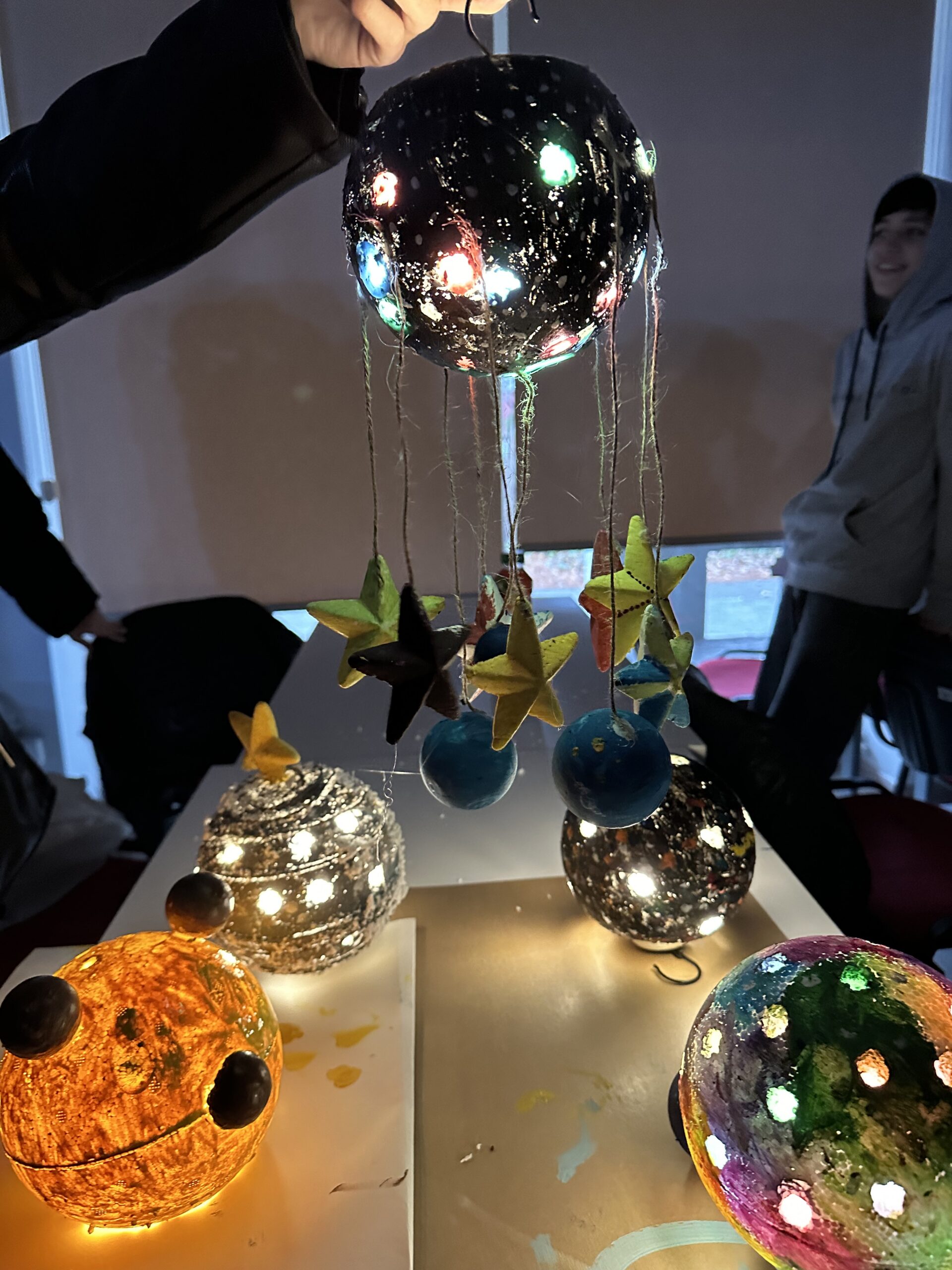
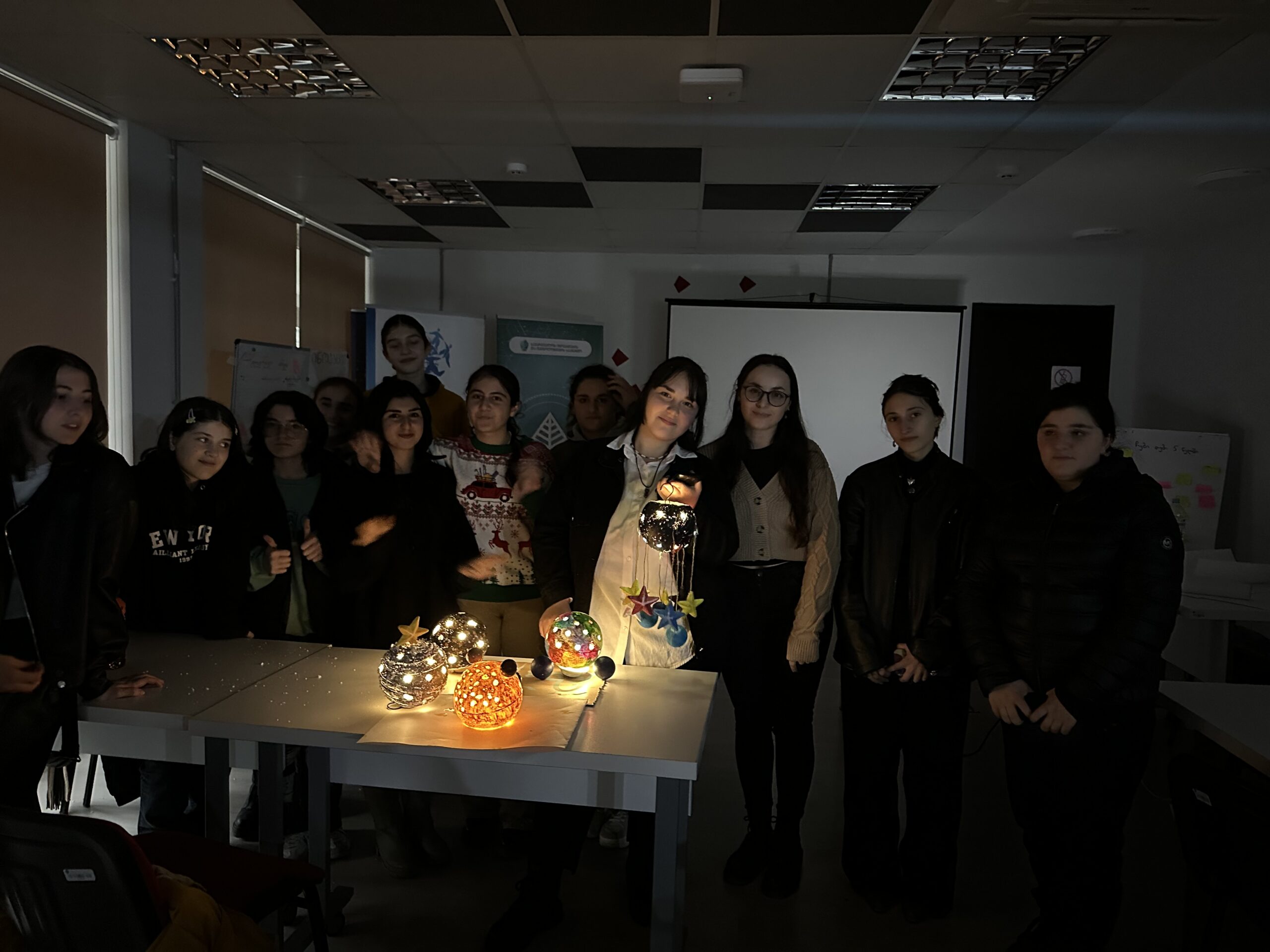
Activity in brief
How does natural and artificial light in buildings affect our health, wellbeing and emotions?
This activity engages design thinking to the study of light and how light conditions impact human health. By introducing kinetic light design – a process that involves the visual arts (color, patterns, shape and emotional effects) alongside physics and engineering principles (e.g., the use of a wind-up mechanism, material manipulation, and physical properties of light), the activity challenges the typical STEM boundaries.
Students are encouraged to apply aesthetics and emotions to their technical designs, merging technical knowledge with creative exploration. This introduces a more holistic, interdisciplinary approach to problem-solving that blends engineering with art and design.
Detailed instructions
Introduction
Start by dividing participants into smaller groups of 2 or 3. Each group is given the same brief: To design a kinetic light device for one of the following scenarios:
- Work: to make you feel alert – i.e. Hospital staff/night shift workers
- Rest: to help you sleep
- Wellbeing: to make you happy on a dull day
- Play: for dancing / partying
Light Palettes Inspirations
- Arrange a selection of light palettes with photos of urban and natural environments in different light conditions for participants to view.
- Ask them to consider what they find inspirational about those.
In this phase, the facilitator can help by guiding participants with an aesthetic observation of the light: how it forms geometric patterns; what may be pleasant about certain features; if there is a rhythm to it (flash seconds; hourly; daily or seasonal etc) and discuss what may be suitable for their scenarios.
Designing and Building the kinetic model
- Display the materials that will be used for the kinetic model. Be explicit in saying that the various components may be used for different purposes, and it is up to each group to make use of them to suit their designs.
- Invite participants to work together to plan and sketch out diagrams to explain how they might use the materials for their light device.
- Some guidance at this point may be offered by asking the groups to consider if there is movement of light/shadows; at which speed the device may release light or perhaps the focus is on the quality of light, as reflected or filtered, its colours, dimness or brightness.
Testing prototypes
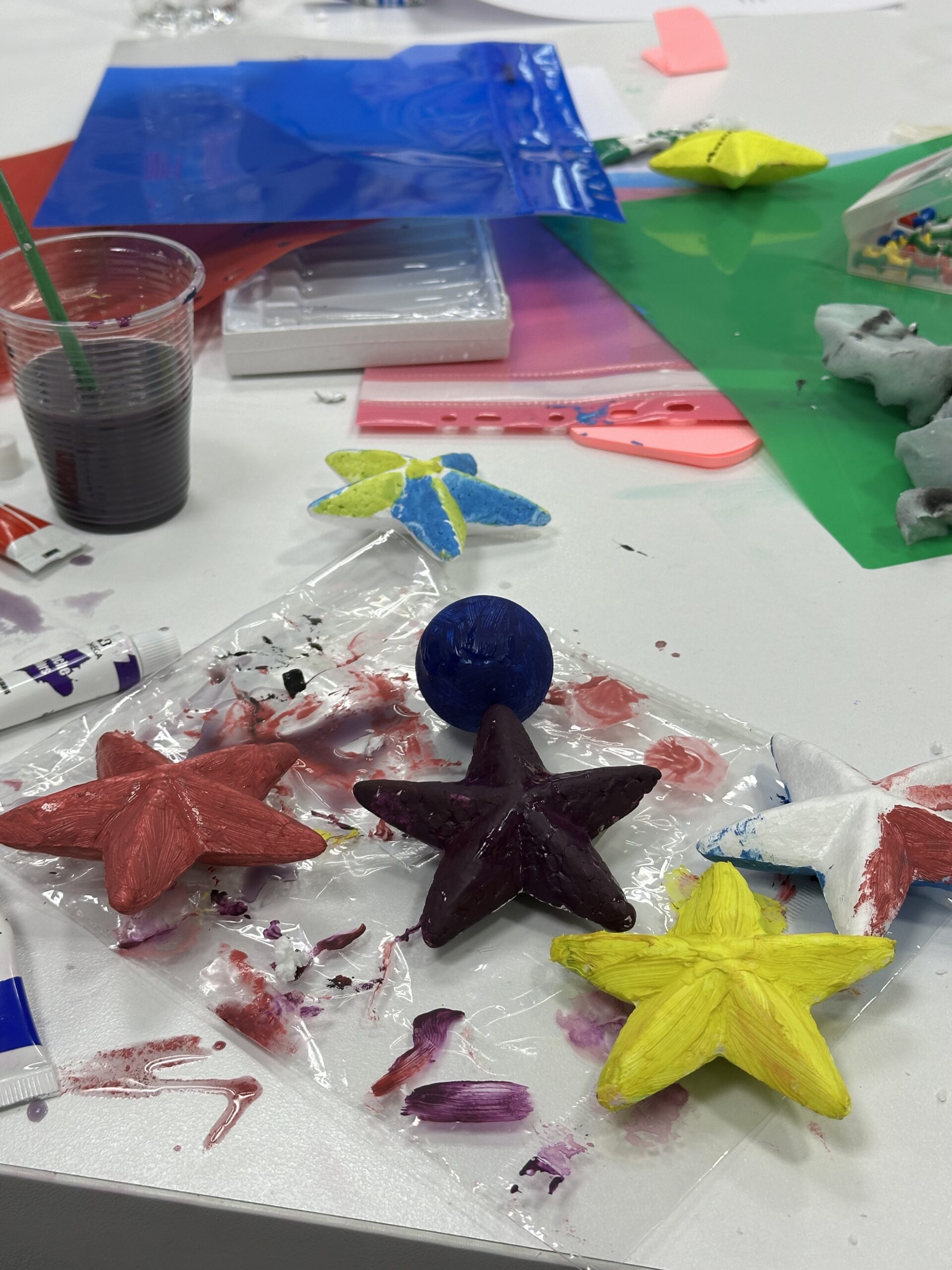
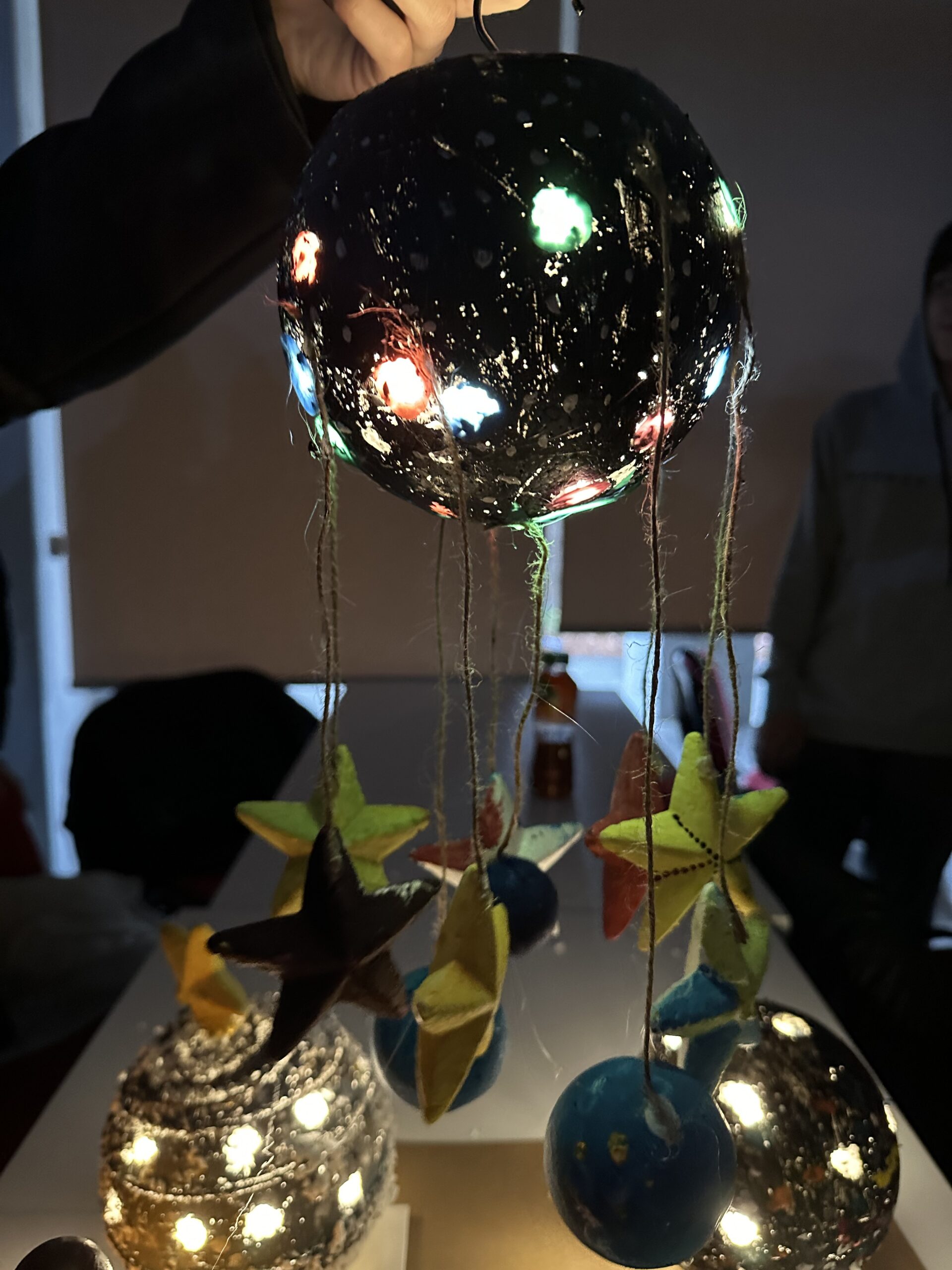
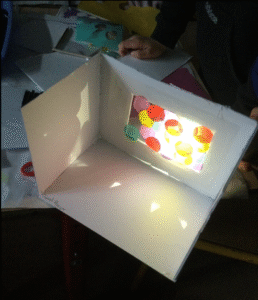
- Invite each group to test techniques using the given material: for example they can observe light using layers of coloured acetate, cut shapes with card to cast shadows, use wire to hang the card/acetate.
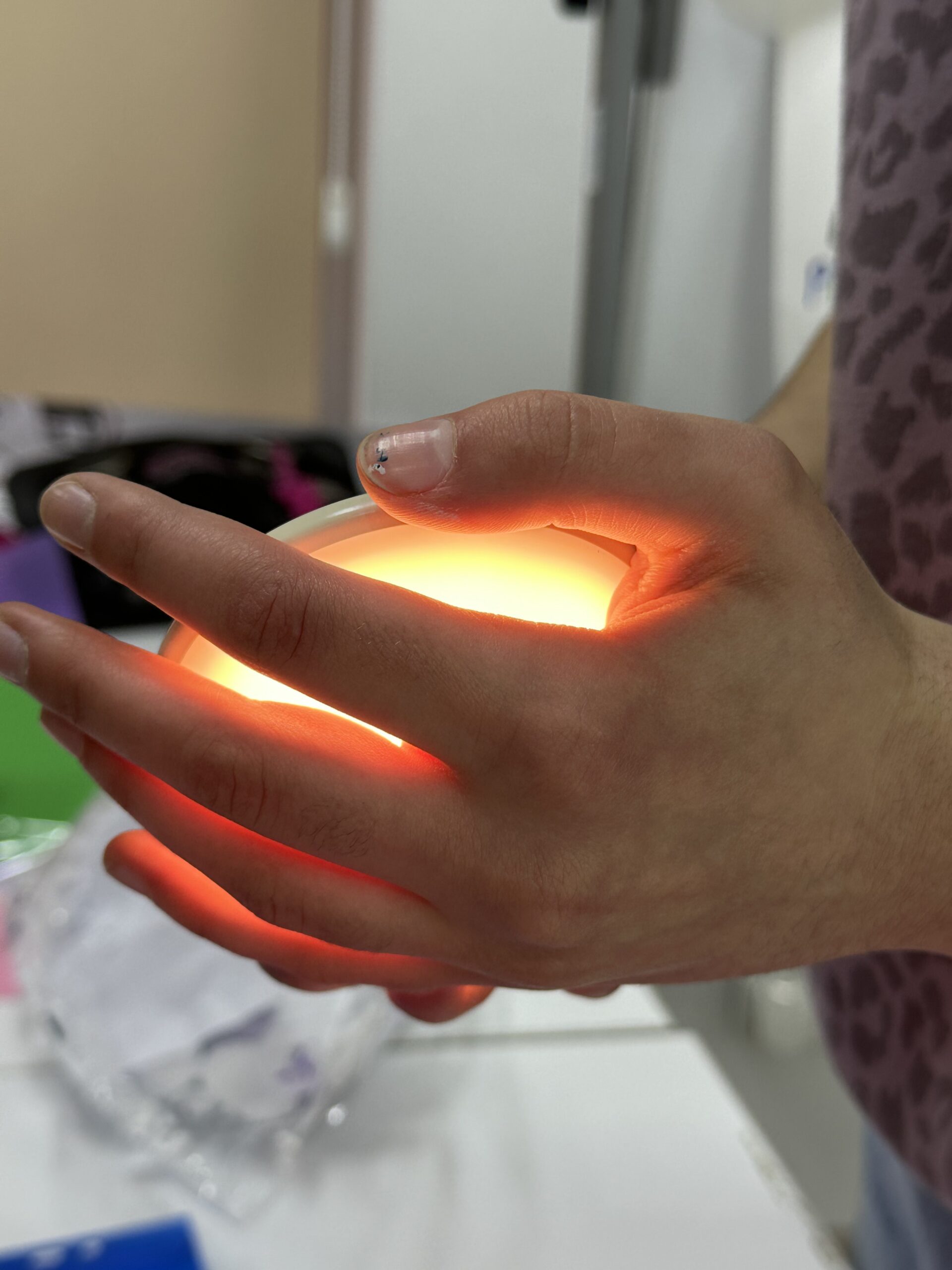
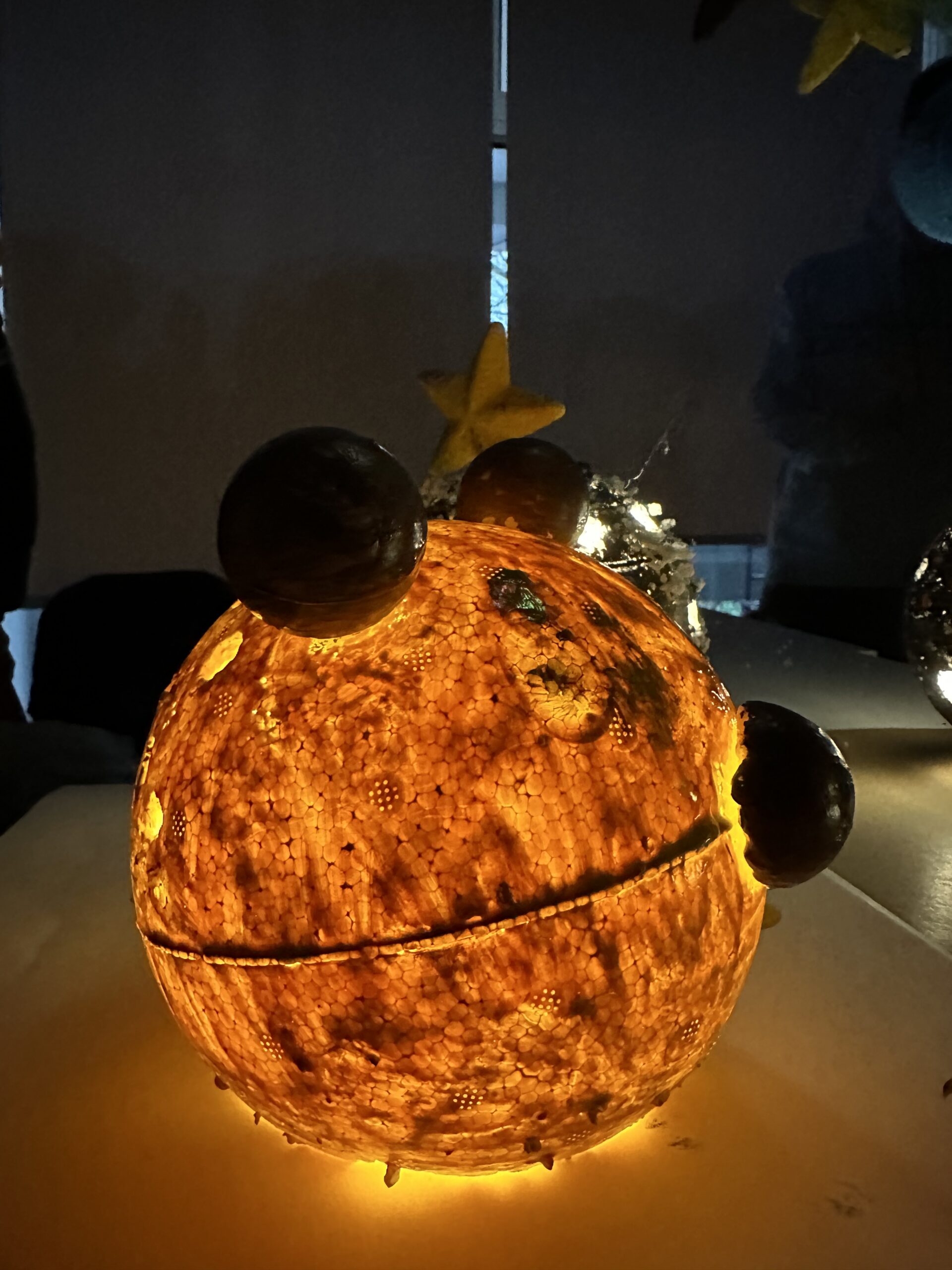
- To support the groups with making their light device, the first step is to attach the wind-up mechanism to the foam base using glue. Next step is to use card/acetate to filter and/or reflect light based on their design and scenario.
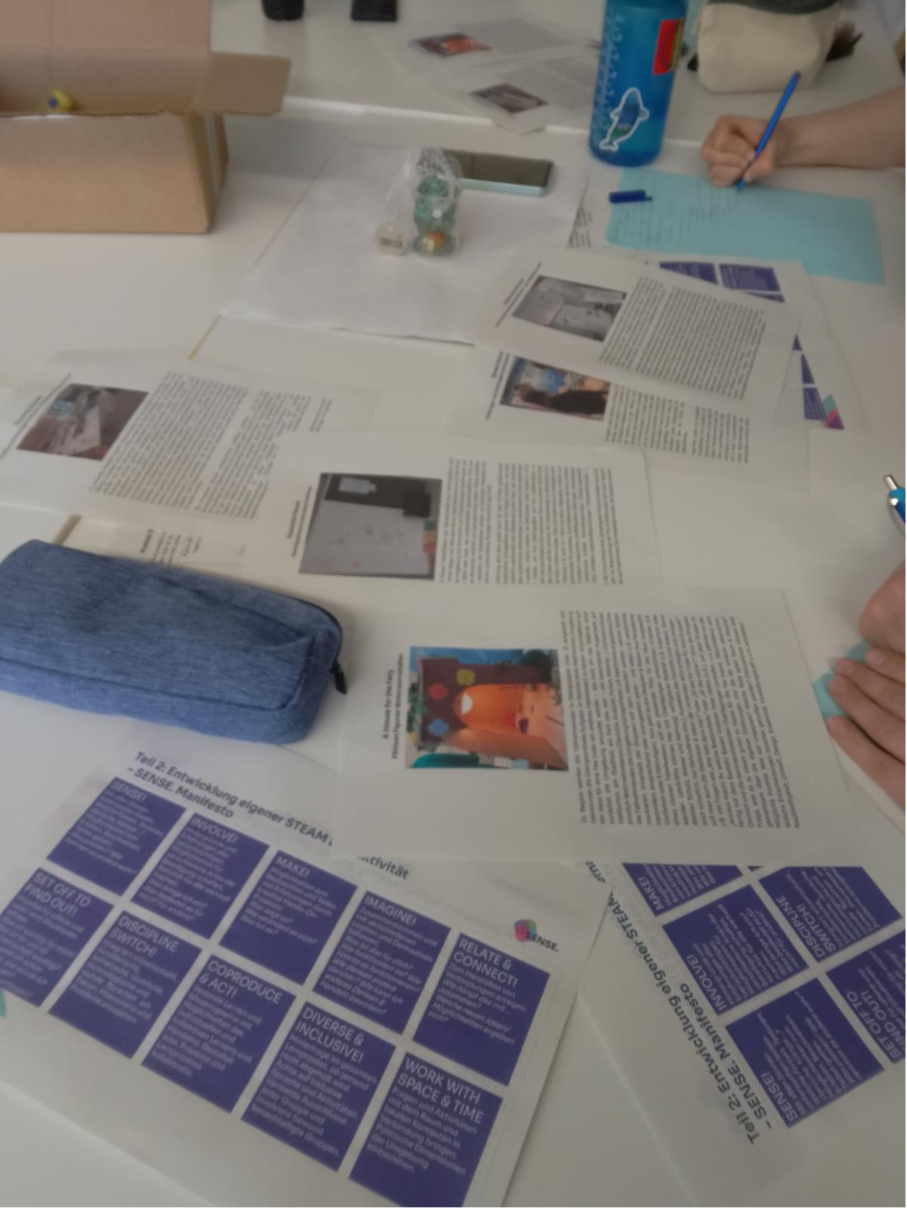
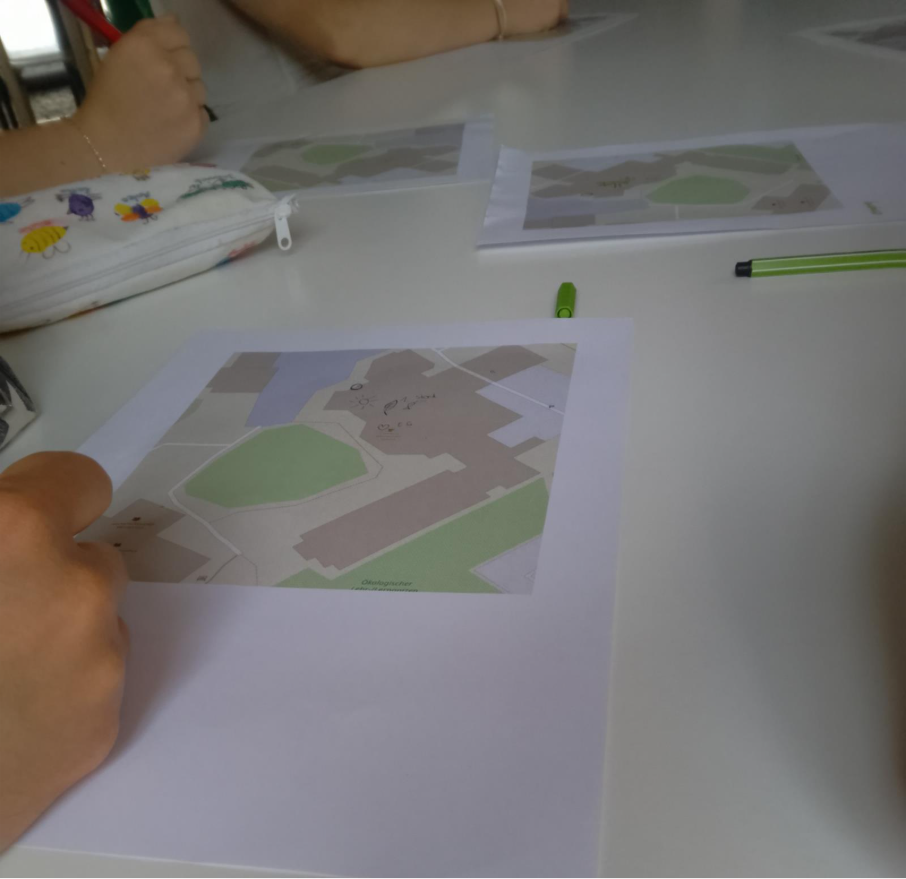
Light Showcase
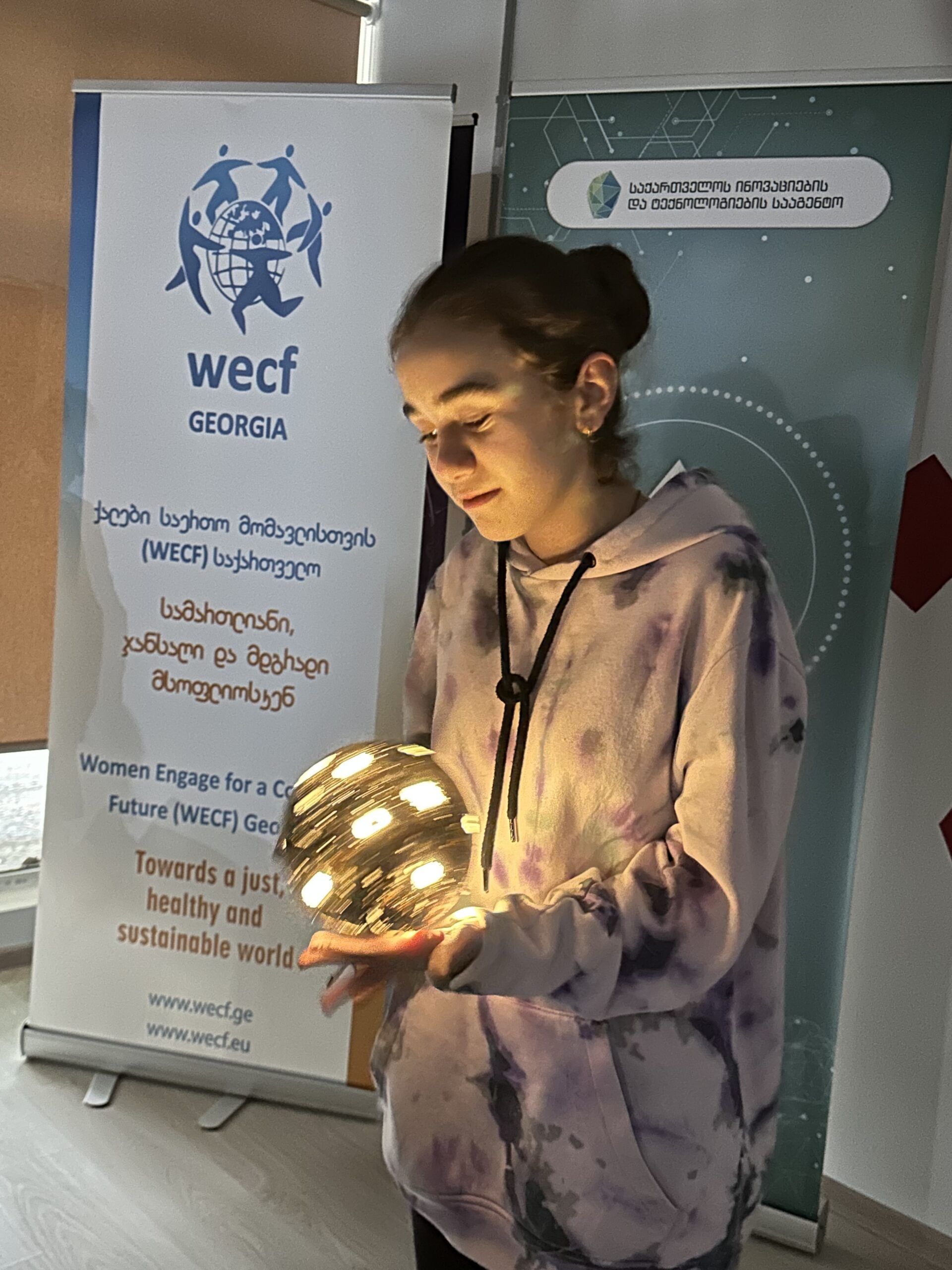
- Each group presents their light device to the rest of the group, explaining their scenario and their concept, and the challenges/successes/lessons learnt.
- Participants are encouraged to ask each other questions about how the light device changes the atmosphere in the room; how it makes them feel, and to provide feedback or comments to each other.
Reflection
- At the end of the exercise, you may wish to invite a personal reflection on the hands-on nature of the project; what participants found challenging and how they overcome those; what might have been ‘good’ moments in the process and what aspects they valued for their own learning.
Practical details
Duration
2 hours or more
For Whom
All ages and backgrounds
Materials needed
- Pencil & paper
- Foamboard (cut into a circle)
- Wind-up mechanism
- Battery-powered roound LED lights
- Assortment of coloured paper/ reflective card
- Plant/flower cuttings (students to collect themselves)
- Selotape
- Whitetack
- Coloured acetate- A4 / A3
- Reflective card (with lasercut perforations if the school/organisation has lasercutting opportunities; otherwise scissors and card will do!)
PLEASE NOTE: if any of such materials are not available, replace them with other scrap and junk materials of everyday use. Encourage participants to be creative because they can be!
Space requirements
This activity works best indoors, preferably with the possibility to draw curtains or blinds on the windows to modify the light conditions.
Recommended Feedback tools
Frame this activity with fast networking, that you run before and after the activity. This will help you see things from a different perspective and notice details. Alternatively, several SENSE. Labs have had good experiences combining this activity with body mapping.
Consider your participants
Inclusivity: it is important to allow participants to engage in selecting their own materials and to work within their own range of ideas. Some people may require extra help with the use of scissors or other technical equipment.
Sensitive materials: The activity focuses on the relationship between light and emotions in conditions found in nature or in buildings. The focus is on the visual sense, but the activity could be adapted to also include other senses – e.g. What types of sound or textures in a space would be suitable for their scenario/activity.
Adaptability: establish an atmosphere of collaboration; the activity is set out as a design challenge and a creative pursuit, not as a competition amongst the groups. Encourage participants to help each other and have fun!
Emotional awareness: By addressing specific scenarios (work, rest, wellbeing, and play), the project opens a discussion about how light affects emotions, productivity, relaxation, and enjoyment and how these effects are different amongst different people. The activity could be adapted to also take into account political dimensions.
Keep the Conversation going
Encourage Questions: Regularly pause to invite participants to ask questions or clarify their understanding about the topic of color and light and activity instructions.
Invite Personal Stories: Prompt participants to share personal experiences related to light and memories of natural phenomena or experiences they may have.
Keep It Moving: If interest or energy drops, introduce new elements like short clips, atmospheric sounds, or sensory prompts to refresh enthusiasm and maintain creative engagement.
Related Case Studies
-
Kinetic Light Devices
STEAM Lab WECFCase Study in Brief Description The activity aimed to explore how natural and artificial light in buildings affects our health, well-being, and emotions. Participants designed ... Read more
-
Lighting Ambiances
STEAM Lab Musée de LouvreCase Study in Brief Description This workshop invites participants to reflect on how light and colour shape different spatial environments and condition our experience of ... Read more
Please note that this activity is provided for personal educational, informational and convenience purposes only, is general in nature and is not intended as a substitute for professional, legal, or medical advice.