
Activity in brief
Discover how participants are storytellers, advocates, and changemakers in this STEAM-based learning sequence. Using the participatory-action research method of photovoice, they explore critical issues through their unique lenses — literally. Through inquiry-based workshops, explorations, photography, and narratives sharing, participants transform personal emotions and insights into proposals for action within their communities and territories. With exhibitions and digital showcases amplifying their voices, this sequence of activities breaks classroom, and formal settings boundaries and inspires civic dialogues and creative solutions to address today’s complex challenges
Detailed instructions
Photovoice can be a valuable approach in your specific context if your goal is to foster agency on issues that impact people’s lives, spanning scientific, social, spatial, relational, political, economic, and collaborative dimensions.
Photovoice is frequently applied in the fields of health, social, and environmental studies to facilitate learning processes where participants deepen their understanding of a specific issue, reflect on their emotions and aspirations related to it, and devise strategies to address it.
In the photovoice, participants understand the issue while capturing photos and then narrate, share, and converse on them and express their unique perspectives and experiences on the specific issue of interest and on their solutions. This approach places participants at the center of the learning process, making them active partners while breaking down the traditional boundaries of settings where people attend meetings to listen to experts or merely intervene to express an opinion.
In general, this activity is composed of six specific stages.
- Group Formation: Identify the specific theme or topic that each group wants to investigate. This can be anything that the group wants to explore (examples: green spaces & urban nature, climate change, biodiversity & wildlife, fashion, technology)
- Information Phase: Let’s look at the issue under investigation and the medium used (the photographic action). This leads to identifying one or more specific questions to answer through the photographic action.
- Taking photographs: Each participant takes at least three photographs representing their perspective on the question(s) as it unfolds in their community, family, territory or social context.
- Discussion: Participants “decode” the photos, select the ones that represent their critical themes, and create narratives to communicate their views. Each photo is assigned a title and caption based on the SHOWED method. The following questions can guide a further understanding of both objective and subjective layers of understanding:
- What does the photograph show?
- What inspired you to take this photo?
- How is this connected to your daily life?
- What is a potential story behind this photo? / What does this photo express?
- What do you think should be done / would you like to do regarding the situation depicted in the photograph?
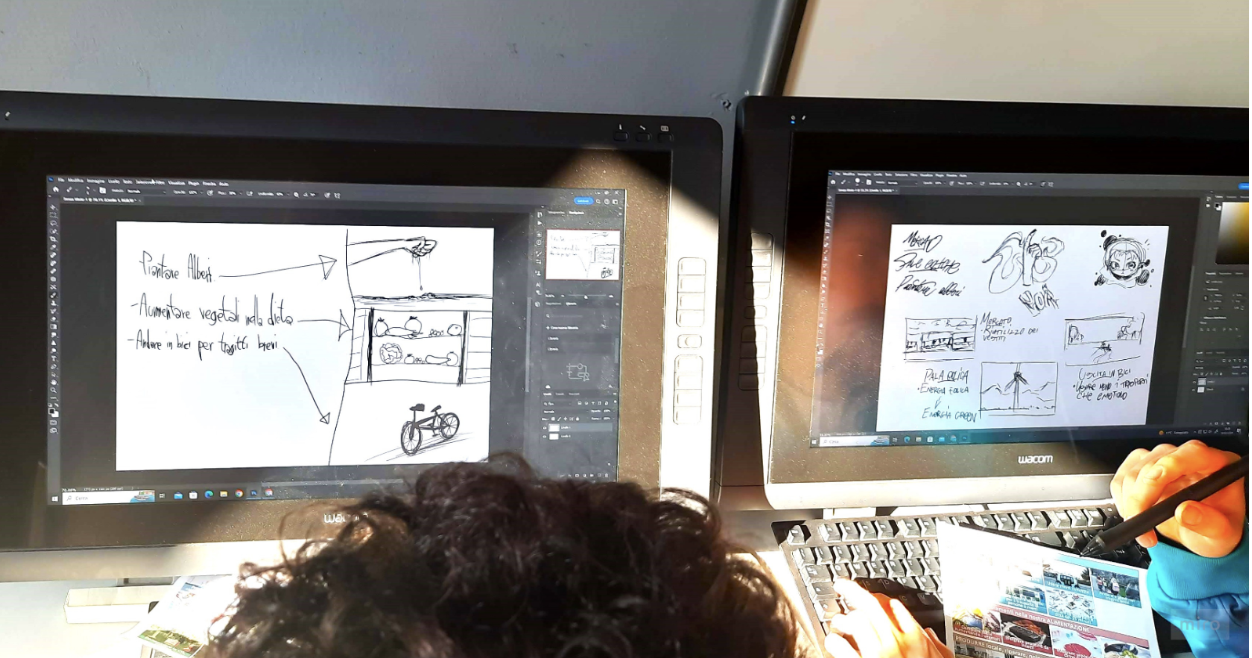
- Identifying narratives: In groups, discuss the emerging narratives behind the photos, which could lead to potential action proposals in the city, suggestions for the school or other settings, and/or personal initiatives within the communities.
- Exhibition: Create an exhibition or a digital presentation of the photos and contents and observe the ripple effects of the outcomes. These elements provide an opportunity to share the results with a broader community and engage in meaningful dialogue about the themes and solutions that emerged.
Practical details
Duration
This activity can range based on group needs
For whom
This activity is for everyone, from primary school kids to elders, from formal to informal learning settings.
List of materials needed
- Tools for taking photos (smartphones, tablets, or cameras).
- Prints of the photographs for the discussion phase.
- Stationery such as flip chart papers, sheets of paper, markers, scotch tape, glue, scissors, etc.
- Materials for setting up the exhibition (high-quality prints, exhibition space, supports for displaying the photos, etc.)
Space requirements
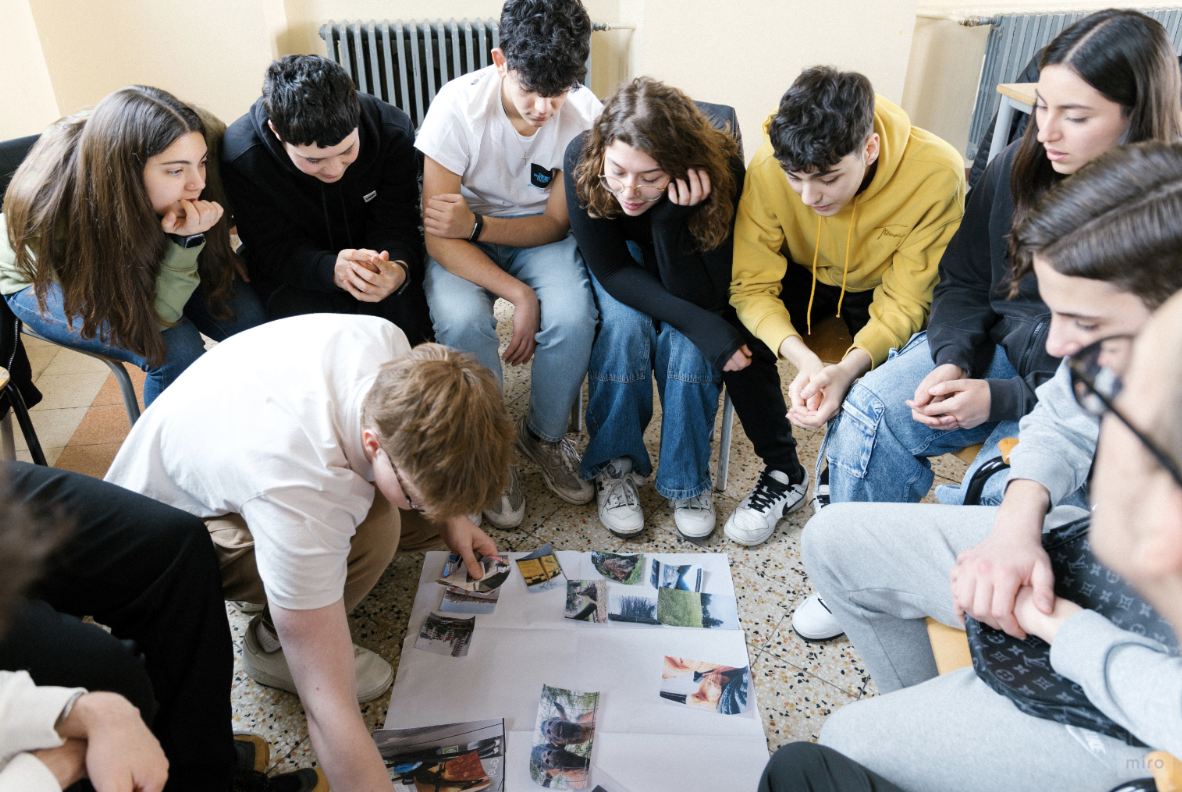
The space needed is not particularly demanding; however, it would be ideal for the phase where participants share and discuss their photos to sit around a table.
A circular arrangement is particularly effective, as it encourages an open exchange, where everyone can view the photos and engage in dialogue without anyone feeling left out.
It is also useful to have available spaces where participants can individually work on their narratives.
Recommended Feedback tools
Our feedback tools, flashlight or body mapping, provide a practical yet meaningful way to think about this activity.
Consider your participants
Inclusivity and Access: No professional cameras are needed; a smartphone camera is an accessible and ideal tool. In our pilot, we provided tablets to students who either didn’t have a personal smartphone or whose device’s camera wasn’t functioning properly. This is particularly important when working with primary school students or participants from vulnerable groups or the elderly.
Keep the conversation going
Encourage Questions: Look at other people’s photos and ask yourself what the photographer wants you to see. What is shown in the photo, and what is not?
Answer this question by taking another photo.
Invite Personal Stories: Stimulate your imagination: How many different stories can you relate to this photo? Group people into small clusters for a storytelling session.
Keep It Moving: Connect this activity to a citizen science project. Before you start, set the framework for a citizen science task. However, there is no need to anticipate specific outcomes. Group the emerging narratives behind the photos, which could lead to potential action proposals in the city, suggestions for the school or other settings, and/or personal initiatives within the communities.
Please note that this activity is provided for personal educational, informational and convenience purposes only, is general in nature and is not intended as a substitute for professional, legal, or medical advice.