

Activity in brief
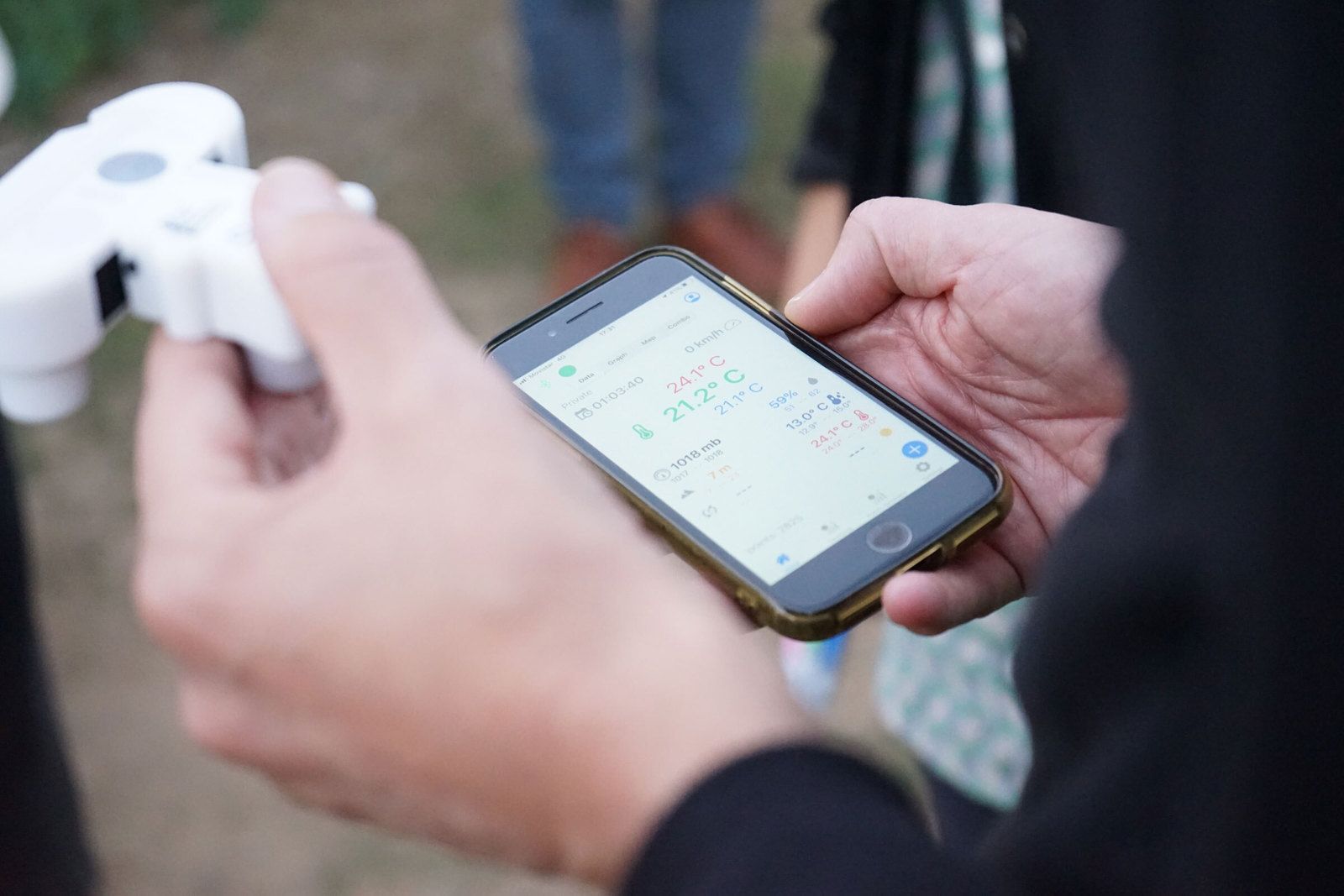
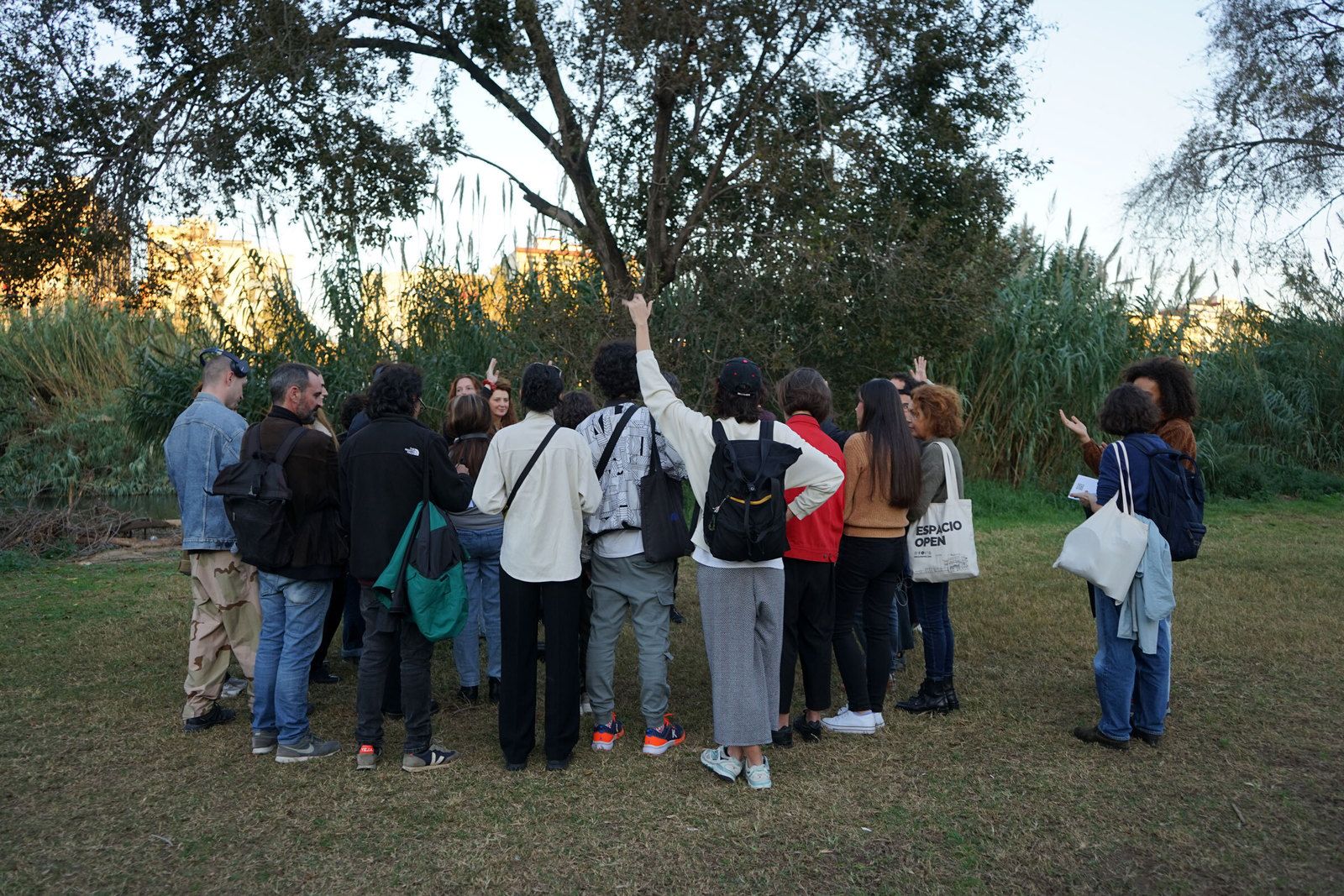
Participants will explore urban heat challenges through citizen science. The activity includes interactive discussions about participants’ local neighborhoods, the role of public spaces, and the microscale impacts of extreme heat. Participants will co-create “heat walks” using temperature sensors to gather data, interpret findings, and discuss potential solutions.
By integrating hands-on engagement and collaborative exploration, this activity inspires curiosity and critical thinking which are critical in fostering equitable and innovative solutions to contemporary challenges, particularly in the context of urban environments and climate adaptation.
The Heat Chronicles is a citizen science project that pivots on participatory practices and open science and is designed to measure highly localized temperatures and local perceptions of the heat within the environment and works with maps and other visual materials to make sense of temperatures.
The participants are referenced as experts in their own communities and are thus able to provide valuable insight into their own diverse needs and perceptions. They are actively engaged as co-creators that design fundamental elements of the practices.
Detailed instructions
Step 1: Introduction and Context Setting (10 minutes)
- Presentation of the workshop themes and objectives (climate change, heat in the city, causes of heat in the city, public spaces, tools that measure heat, sensors, etc.)
- Overview of “Heat Walks” and its relevance to urban heat adaptation
- Introduction to participatory mapping and co-creation tools (what will be used in this activity? Sensors, ipads, survey of body sensations?)
Step 2: Heat Walk Design
- Participants will divide into two or more groups (depending on number of participants)
- Maps: The participants look at maps of their communities, and using their knowledge acquired in the previous workshop about measuring heat, what higher temperatures look like within the city, etc., they identify sites within the community in which they want to measure the temperature
- Designate Routes: The participants then design the route in which to measure the temperature using tools (sensors) to measure the temperature of their neighborhood at a micro-scale
Step 3: Perform the heat walk
- The participants gather their tools (sensors), notepads, etc. and set out on the previously established routes toward the 3-5 sites that are designated to measure the temperature in their neighborhood.
The following gives an overview of the overall process: - Heat is measured with the sensors
- Each location is noted with a picture and indicating the closest address
- Survey is conducted to ask the participants about the temperature measured, and how people are perceiving the temperature and their surroundings
- Participants observe the surroundings/public spaces/potential ‘uses’
- Take temperature/observations at all stops along the route
Step 4: Presentation and Discussion
- Each group presents their “heat walk” routes and insights
- Open discussion on challenges and opportunities identified during the activity in the context of universities
- Go over the data collected from the heat walk and talk about how to evaluate individual and group results. We compare data and have an open discussion with guiding questions.
Practical details
Duration
1-2 hours. This activity can be flexible dependent on the number of participants. But it is best to have roughly an hour for the heat walk and about an hour of discussion (30-40 minutes of preparation before, 10-20 minutes after to talk about the experiences and results)
This can also be broken up in three distinct sessions:
Session 1: Introduction to Heat Chronicles and related elements (e.g., citizen science. Explanation of the participants’ roles. Collective mapping of the most relevant public spaces. Make decisions on the walking routes.
Session 2: Perform the collective thermal walks to measure the geolocated temperature. Also make note of thermal comfort and physical sensations and perceptions of the participants in the designated places.
.Session 3: Collective data interpretation with the participants. Discuss the heat walks, perceptions, and make proposals for improvement within the public spaces in an effort to mitigate extreme heat.
Recommended Feedback tools
At the beginning of the session you can do a quick round of fast networking and use the answers at the end of the workshop to think about alternative answers participants would give now, after the session. Of finish the workshop with a flashlight feedback. A Gallery Walk will be an excellent way to combine both, reflective feedback and presentation of the results to the public.
Space requirements
Indoors space to present & plan the activity (to go over maps, neighborhood, routes, background, etc.)
Outdoor space to measure heat, this should be in a neighborhood/area that the participants know well, so that they can design the routes and assess the public spaces where they spend their time (where they play, eat, shop, meet with family/friends, public transport, etc.)
For whom
Ages 8+ is ideal, and any group size, though walking groups are easier smaller than 12-15
Materials needed
Room setup: sticky notes, maps of neighborhood, markers, pens
Outdoor activity: (Heat measuring tools, sensors, ipads. pens & paper to write on (for at least one person to indicate locations of temperature measurement, polls body perception of heat)
Consider your participants
Spatial Orientation Challenges: Some participants may struggle with interpreting standard maps. Offering alternatives like guided walks around the area or creating personal maps can help those with different spatial thinking skills engage more effectively.
Accuracy of Maps: The provided basemap may not accurately reflect the current layout or may omit significant places that participants feel connected to. This can be an opportunity to discuss the limitations of maps and possibly create a new, more representative basemap with participant input.
Physical Layout Requirements: Ensure a large enough table and room layout that supports easy access for all participants. A larger table not only facilitates gathering and discussion but also supports side conversations and smaller group interactions.
Heat and Physical Movement: The activity involve physical movement. It is essential to prioritize participant safety by considering health conditions, age, fitness, and acclimatization to hot environments. Walks should avoid peak heat hours, include frequent shaded breaks, and provide easy access to water. Participants should wear light, breathable clothing, hats, sunglasses, and sunscreen, and be briefed on recognizing symptoms of heat illness. Organizers should implement a buddy system, monitor participants closely. Routes, pace, and duration should be adjusted according to temperature and humidity, and walks should be rescheduled if conditions become unsafe.
Emotional Support: Discussing personal attachments to places can evoke strong emotions, especially if those places are associated with negative experiences. Facilitators should be equipped to handle emotional responses sensitively and provide support or private space if needed.
Keep the conversation going
Encourage Questions: Regularly pause to invite participants to ask questions or clarify their understanding about the topic and activity instructions.
Invite Personal Stories: Prompt participants to share personal experiences related to light and memories of natural phenomena or experiences they may have.
Keep It Moving: If interest or energy drops, introduce new elements like short clips, atmospheric sounds, or sensory prompts to refresh enthusiasm and maintain creative engagement.
Relation to SENSE.STEAM
Heat walks offers multiple opportunities to experiment with the SENSE approach:
- It encourages participants to observe the context using their full sensory spectrum, enriching their understanding of the place or space they are in.
- It encourages each person to develop and share their own perceptual abilities through a practice-based approach.
- It opens up ways in which the body and its sensory apparatus engage with natural and physical phenomena.
- It fosters exploration and inquiry.
- Inclusivity is central, as the activity recognizes the diversity of experiences and perspectives among participants.
- Space is used as a medium for perceptive exploration and creative experience.
- It values slowness and wandering as meaningful approaches to learning.
Related Case Studies
-
Thermal Inquiries
STEAM Lab Musée de LouvreCase Study in Brief Description This workshop explores temperature through the senses, materials, and time-based transformations. Using their own bodies as measuring instruments, participants investigate ... Read more
-
Favourite Places – Community Mapping
STEAM Lab WECFCase Study in Brief Description The activity engages participants from different backgrounds and stakeholder groups to explore the needs and interest of other groups and ... Read more
-
In*Visible – Climate Change Photovoice
STEAM Lab CREDACase Study in Brief Description We lead a participatory project on the climate crisis that uses photography as a tool for inquiry, exploration, mapping, reflection ... Read more
Please note that this activity is provided for personal educational, informational and convenience purposes only, is general in nature and is not intended as a substitute for professional, legal, or medical advice.