
Activity in brief
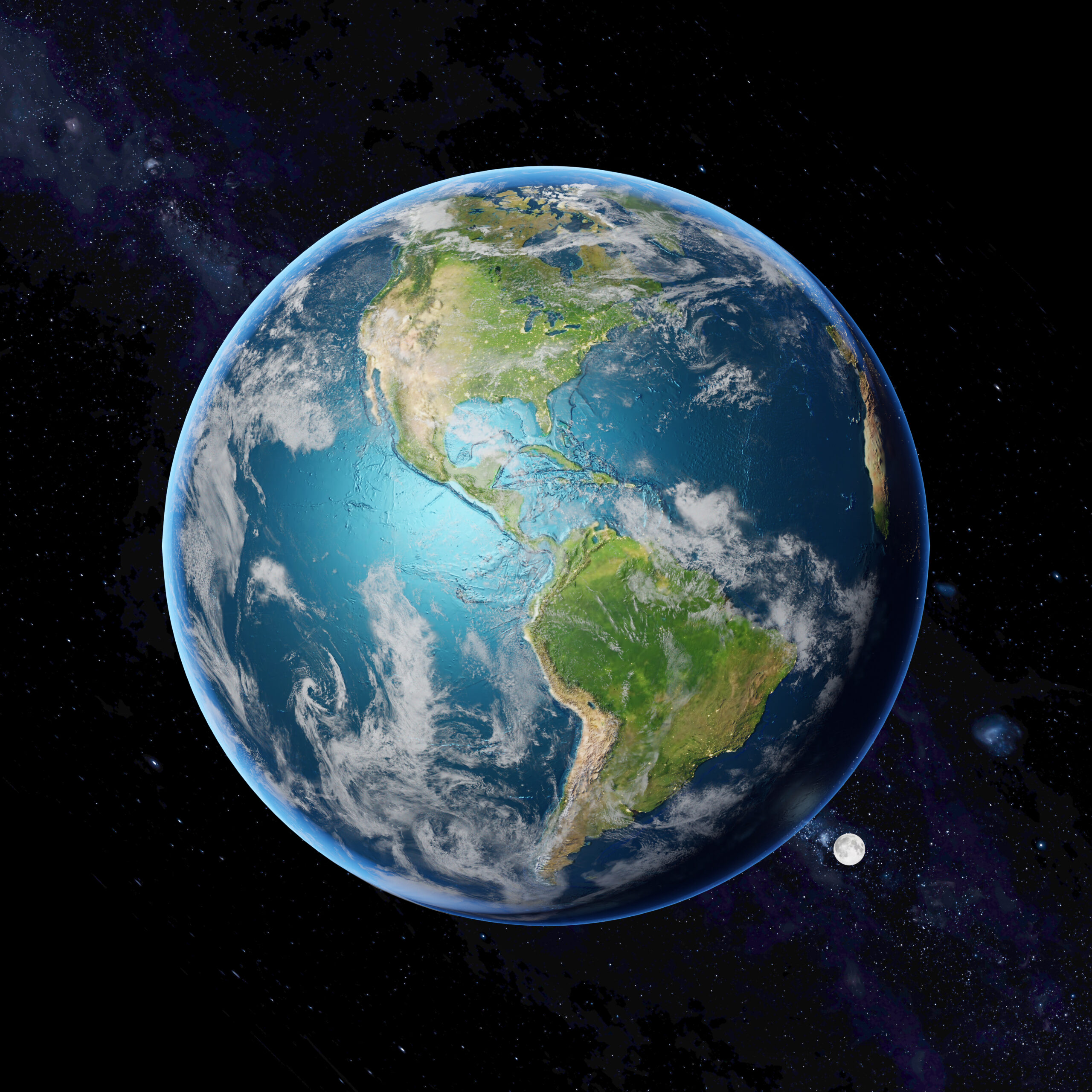
Flying While Lying combines meditation and spatial intervention to explore perceptions of Earth as a moving spaceship. Participants lie down and engage in guided visualization inspired by astronauts’ first views of Earth in the 1960s, as well as Buckminster Fuller’s concept of “Spaceship Earth.” Through reflection and sensory imagination, they reconsider the common perception of Earth as separate from space, becoming aware that we are already astronauts traveling on a living spaceship. This immersive, arts-based activity encourages participants to experience the interconnectedness of Earth, fostering awareness and appreciation of our shared planet.
Detailed instructions
Preparation (5–10 minutes)
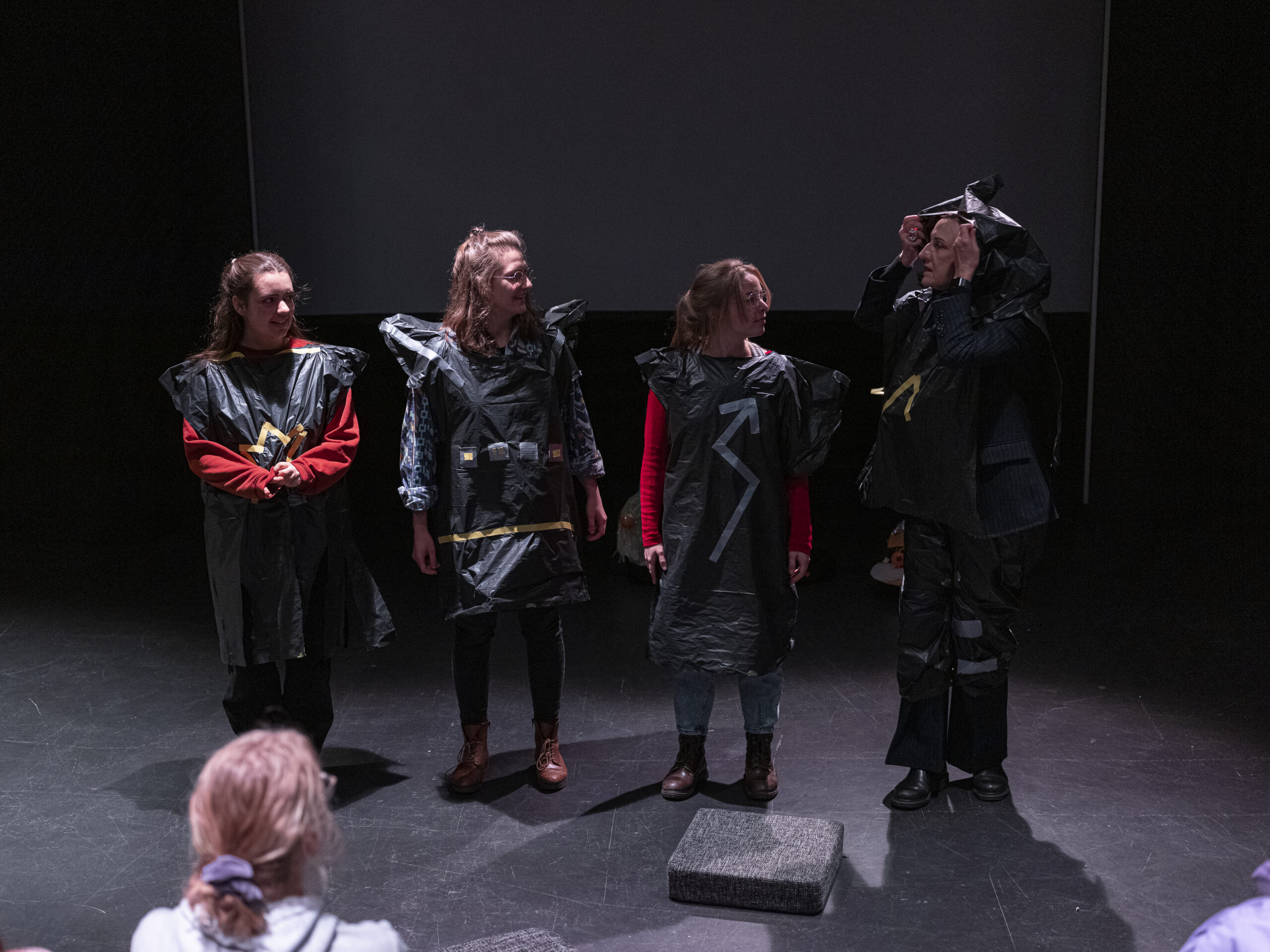
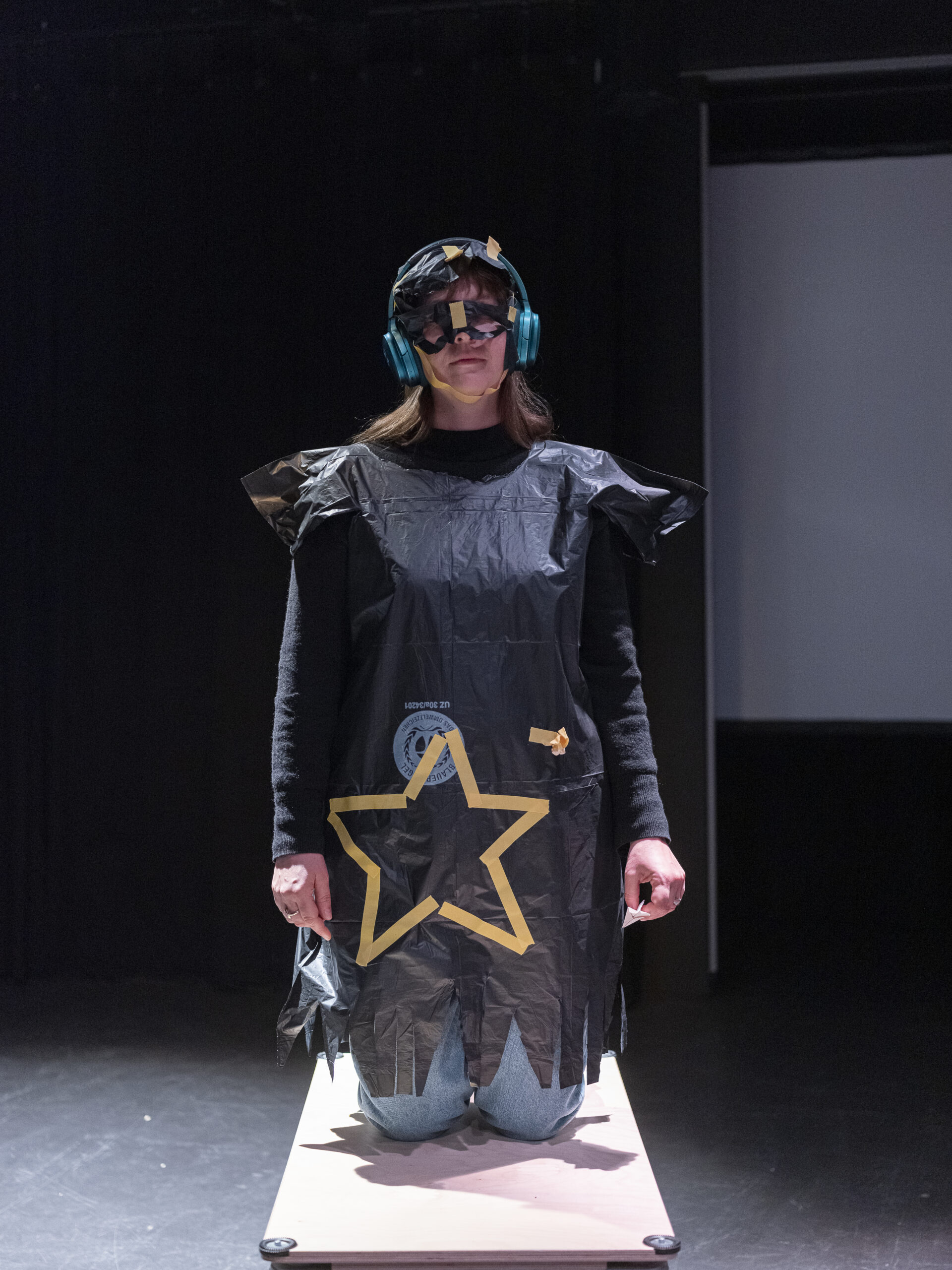
- Provide large garbage bags (one per participant), cutting holes for heads and arms. Decorate bags with silver tape to resemble space suits (optional but recommended).
- Identify an outdoor space (e.g., schoolyard, public square) where participants can safely lie down and look at the sky.
Introduction (5 minutes)
- Briefly explain the activity: Participants will become “Earth astronauts,” exploring how Earth moves through space.
- Emphasize safety (Don’t look directly at the sun!!) and encourage participants to be open-minded and imaginative.
Space Travel Experience (10–15 minutes)
- Participants lie down on their backs, wearing their “space suits,” and observe the sky.
- Spend approximately eight minutes noticing subtle changes in the sun’s position without looking directly at it.
- Reflect briefly: The sunlight reaching Earth took eight minutes, meaning you are looking into the past.
- Ask participants to orient themselves with their feet pointed toward sunrise.
- Guide a short meditation about Earth’s rotation and orbit speed (spinning at about 1660 km/h, orbiting the sun at about 108,000 km/h).
- Discuss gravity as a “seatbelt”: participants lift their legs briefly, noting how gravity holds them securely, keeping them from floating into space.
Reflection and Discussion (10–15 minutes)
- Gather participants into a circle.
- Facilitate a discussion:
- Has your perception of the surroundings changed? How?
- Would you describe your experience as space travel? Why or why not?
- What other activities might prepare Earth astronauts for similar experiences?
Practical details
Duration
90 minutes, rough guidance, allow for enough time for interaction and reflection.
For Whom
This activity is suitable for small groups of both children or adults, and it applies to generic audiences (schools, youth groups, adult workshops)
Recommended Feedback tools
Run a flashlight before and after this activity to hear about participants expectations and experiences. This will help you to connect to previous or future sessions.
Requirements for space
Most ideal in an outdoor space, on a good weather day.
Materials needed
- Garbage bags, one for each participant
- Colorful tape
- Scissors
- Smartphone and Headphones
- Sun protection.
Consider your participants
Sensitive Materials: This activity involves meditation, extended periods of calm, and unusual actions in public spaces. Participants with ADHS or anxiety might find this challenging. Clearly communicate what will happen and offer the option to participate partially or observe if they feel uncomfortable.
Inclusivity and Access: Create an inclusive, accessible environment. Choose locations easily accessible for participants with mobility challenges, ensuring spaces are comfortable for prolonged lying down or sitting. Foster an atmosphere that respects personal boundaries and ensures everyone feels safe to engage openly.
Adaptability: Offer alternatives for participants needing more active engagement or shorter activities. Encourage participants to creatively explore their identities as “Earth astronauts,” discussing their personal strengths, expertise, and aspirations. Provide optional breaks or movement opportunities to maintain comfort and focus.
Keep the Conversation going
Encourage Questions: For larger groups, consider verbally guiding the lying-down activity and providing printed instructions or audio recordings to clarify each step. Clearly explain what participants will experience and ensure everyone is comfortable with the meditation exercise.
Invite Personal Stories: Choose a location suitable for the group’s comfort level—such as a park or a quiet public square—to encourage reflection. Allow participants to discuss afterwards how they felt lying publicly and invite them to share personal impressions or experiences triggered by the activity.
Keep It Moving: If the chosen space is public, you may attract curious observers. Plan for someone to facilitate these public interactions, briefly explaining the activity and its purpose (“We are Earth astronauts!”). This can turn spontaneous encounters into opportunities to engage with the broader community.
Please note that this activity is provided for personal educational, informational and convenience purposes only, is general in nature and is not intended as a substitute for professional, legal, or medical advice.