
Why?
Did you ever thing about how many senses we have? 5? The exact number is actually a hotly contested subject. How many senses do we really have, and what can we call them? What about the senses of balance, pain, and temperature?
If you’re curious to explore this topic, you’ve come to the right experiment. The connections between our learning practices and our sensual perception are abundant.
This experiment strikes a delicate balance between the limits and nature of creative exploration and objective testing. How do scientists use subjective senses to make objective sense? How can we manipulate our perception by controlling the environment? And what objective knowledge can we learn from creating environments that bend and twist our senses with light, smell, air, sound, and texture?
Feel the hot, smelly, soft and glaring impact of subjectivity colliding with scientific objectivity!
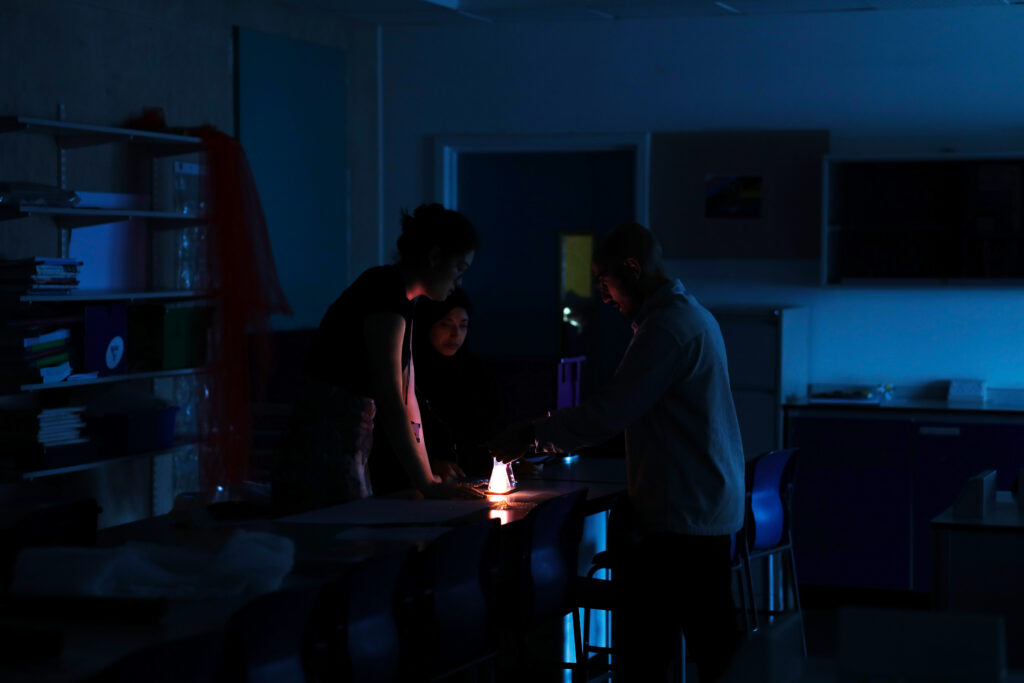
src.: SENSE.
How?
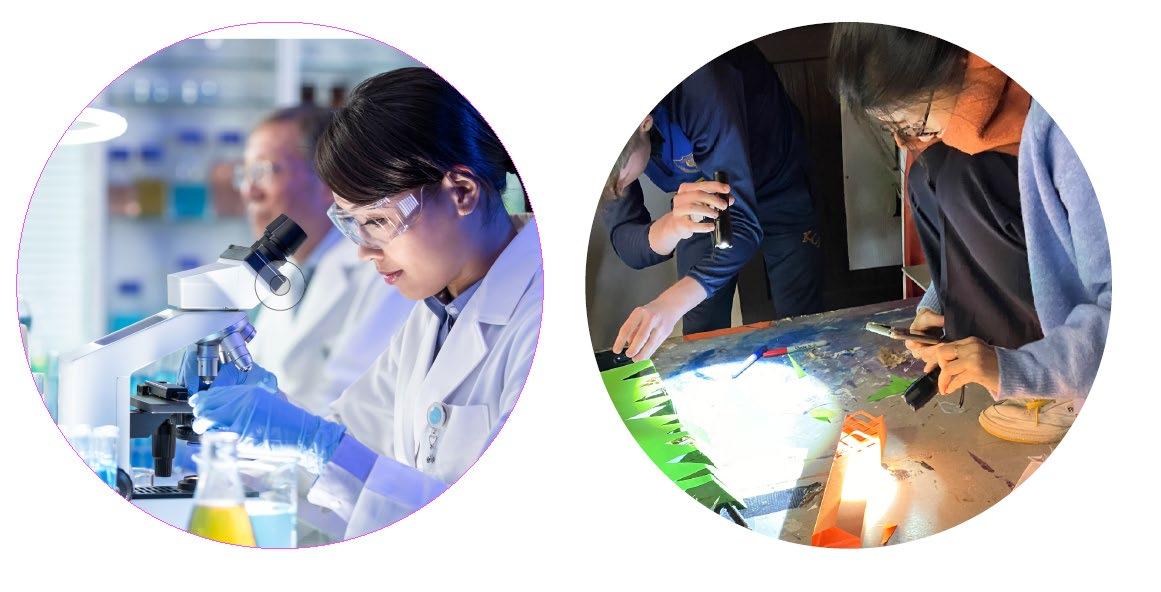
Bruno Latour, the well-known French sociologist, once claimed that scientists only find out what they – subjectively – intend to find out, albeit in a very systematic – objective – manner.
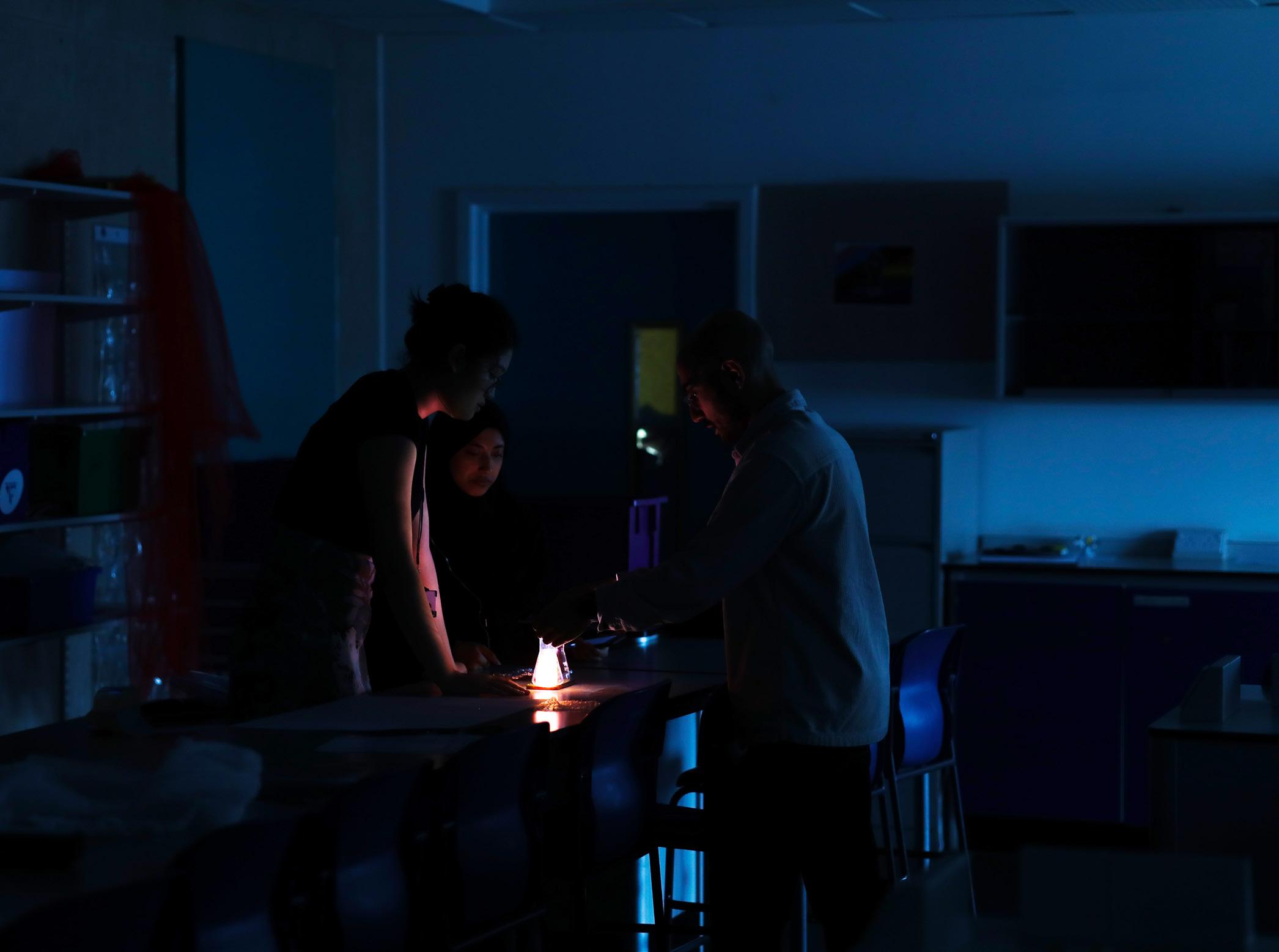
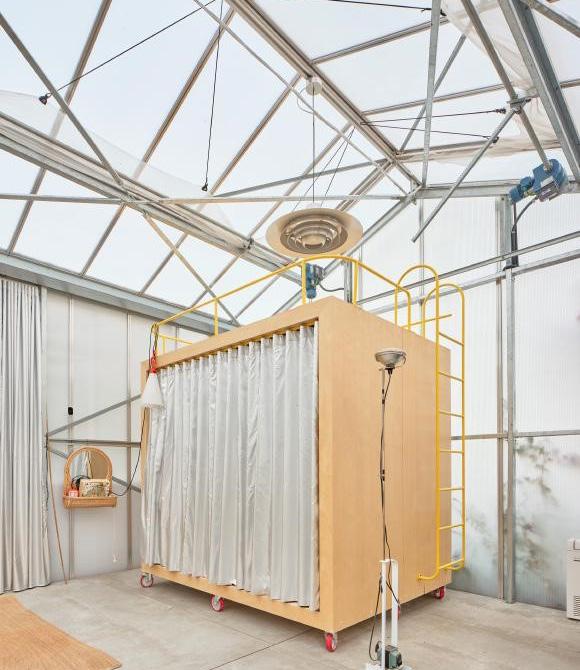
The sense lab plays with this contradiction and creates a space with a highly controlled environment, a black box (of any size) that allows for precise manipulation of light, air, noise, or other environmental factors: the perfect lab.
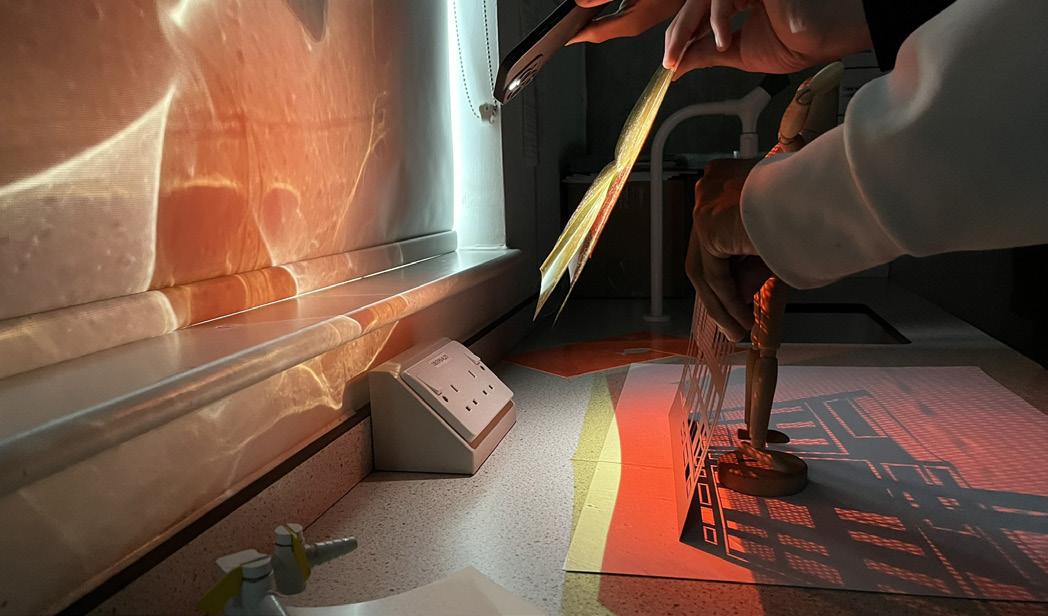
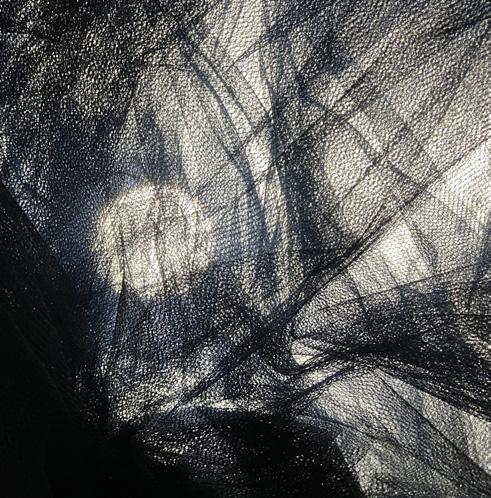
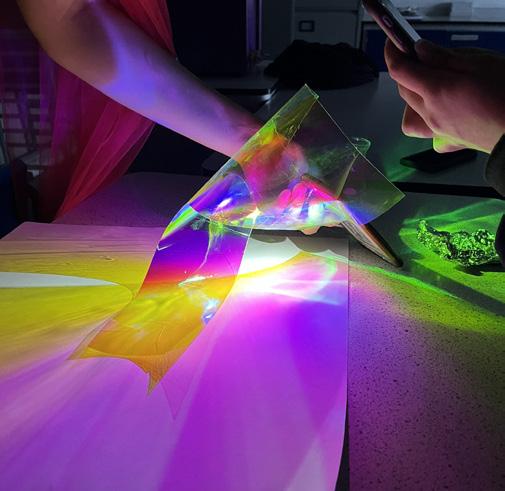
By exploring the effects of, for example, light in a darkened space, we create a an environment for systematic experimentation with shadows and colour reflection. Analogue to the scientist, participants engage in the process of systematic testing, however, with a highly personalised outcome.
Participants should reflect on the creative process of intuitive choice and scientific phenomena at the same time. Will they spot any connection? And what role does the space play in this context?
Further Suggestions
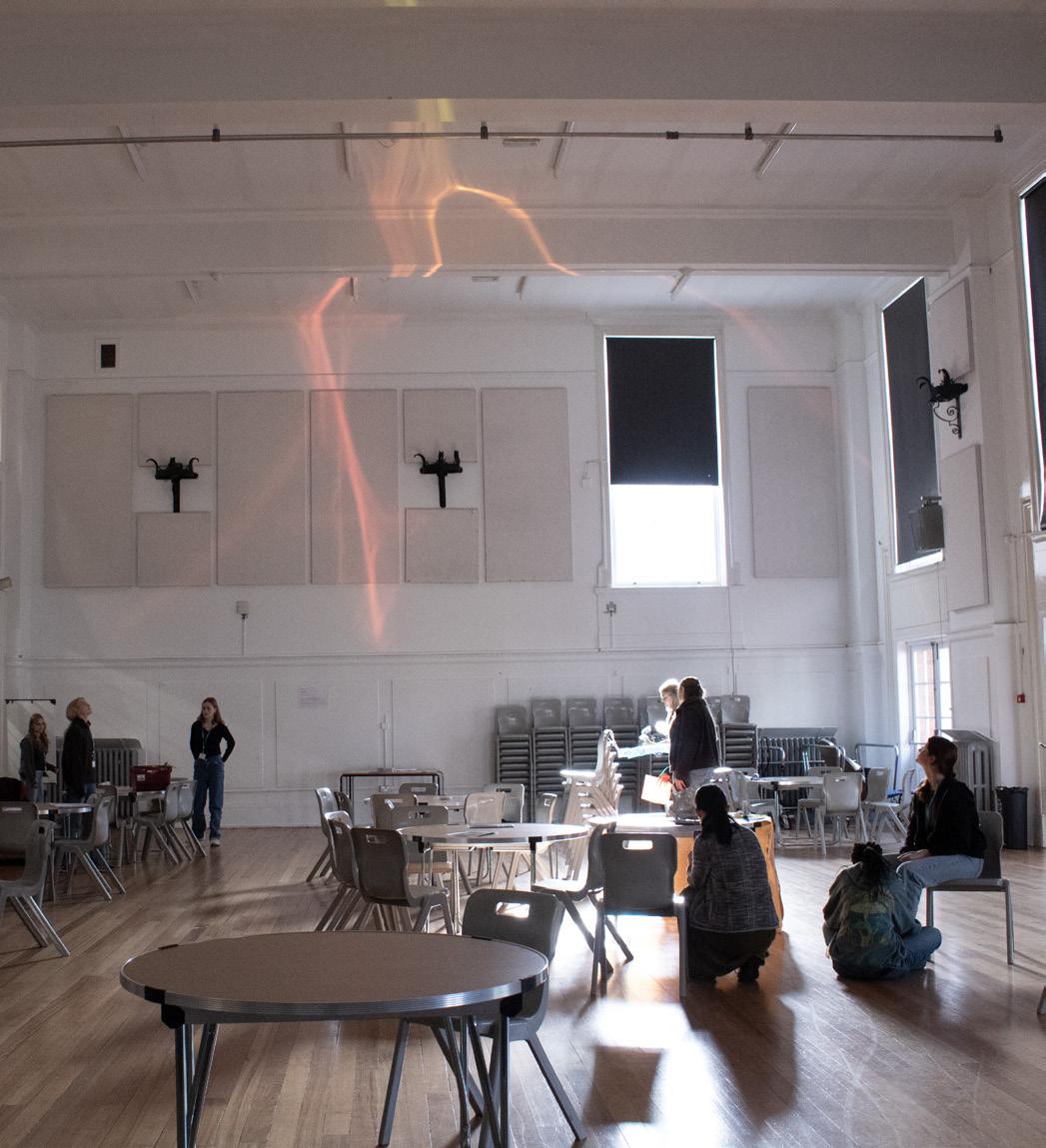
We should not take the term “lab” too literally. We really don’t have to build a new lab building. Just turn existing spaces into temporary labs! Take out or rearrange the furniture, fit fabric into the windows, and make sure you can control the temperature and airflow. Make it yours!
Or go into an existing lab! Many schools have specialist spaces of this kind of practice. If that is not feasible, you can use the right equipment to conduct experiments, for example, with light. A strong torch that overpowers existing sources might do the job, too. A massive plastic bag can isolate smells. Headphones can control sound. Be creative.
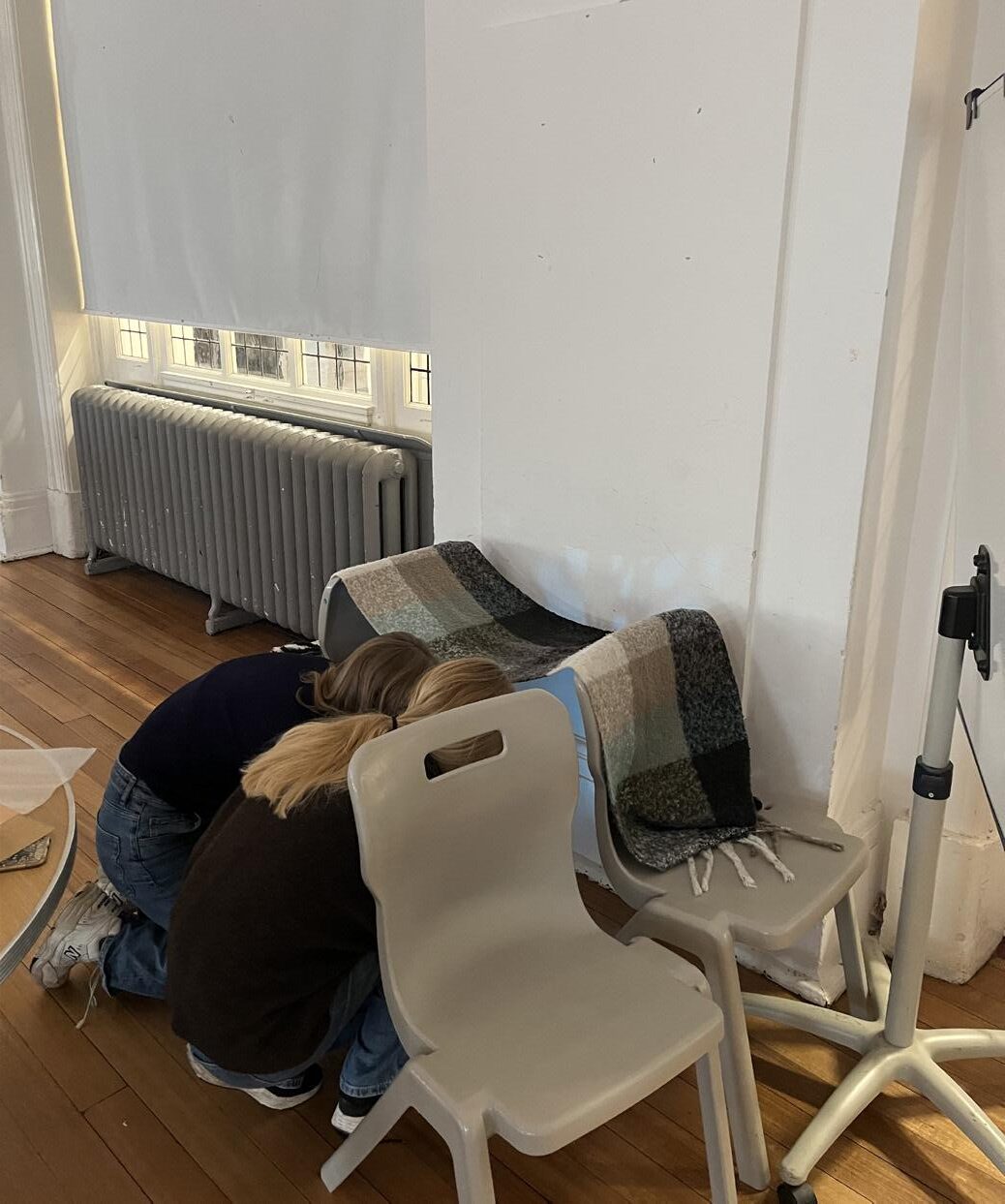
If you don’t have an environment that is usable for the envisaged experiments, you can also build a miniature lab. Take a cardboard box and create a “raree show”, a little box for experimentation, a small world in itself. Creating a miniature lab can be a STEAM activity in itself: which shape do I give this simulated space? What equipment do I need? In one of the SENSE.STEAM labs, the participants created minispaces leading to fascinating results of new worlds made from light, colour and shadow, creating many little worlds to counter a vast space that was hard to control. This is spatial agency at its best!
Ask the participants: What happens to light and shadows if you fiddle with the light? Have you observed closely what type of shadows you produce? Can you explain these? (And why would you?) What kind and colour of light do the participants like? Could something be done to create this type of light in the room, for example, by using headlight foils in windows or around light bulbs?
Rooms also often have a particular smell. How does our room smell? For example, we can change the smell with freshly cut lemons, herbs, or other scents. What scents do the participants like? Does it change how they carry out other activities? Can participants take turns to create a pleasant smell for each session? Can you create new spaces with smell?
What is the sound of our room? What do we hear – listen closely.
We can try to add a new background sound to the room. Listening to the sound of the ocean or birds singing in the forest can change the atmosphere of our practice. Again, we can ask: What are the participants’ preferences for a good learning atmosphere? Tape it, combine it, explore it. Line the walls and floor with fabric, and listen and feel how touch and sound changes…
You’ll discover infinite opportunities for exploration. The fascinating lesson here is that, over time, participants often become so absorbed in the process that they forget the original purpose of their experiments.
Do you think scientists always know what and why they research, scrutinise, change, and observe? Do you see the parallel?