
Why?
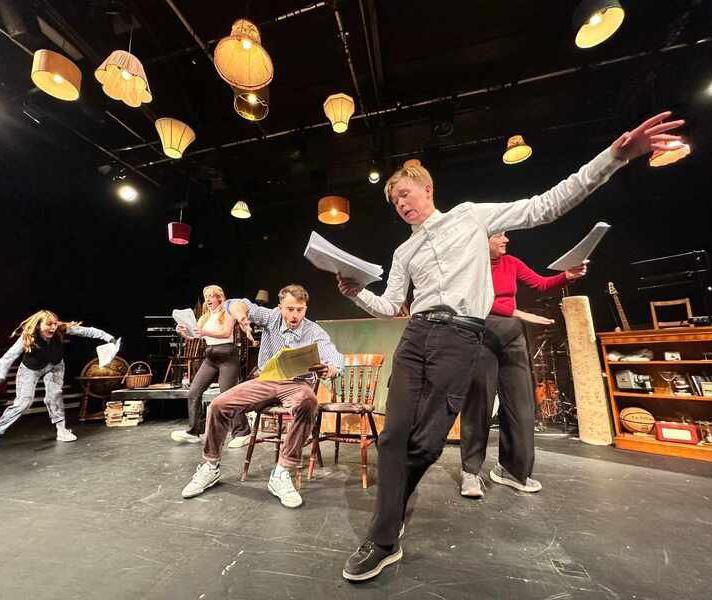
Space is a profoundly personal and embodied experience. Humans interact with one another and their physical environment in constantly evolving ways. To grasp the complexity of the environment—and the world at large—your body can serve as a finely tuned instrument.
Translating phenomena and scientific concepts into an embodied performance teaches participants two important lessons: first, how personal and relative your relationship with the world and other people is, and second, how you can engage with it using all of your senses.
This experiment is both an empowering and humbling experience.
How
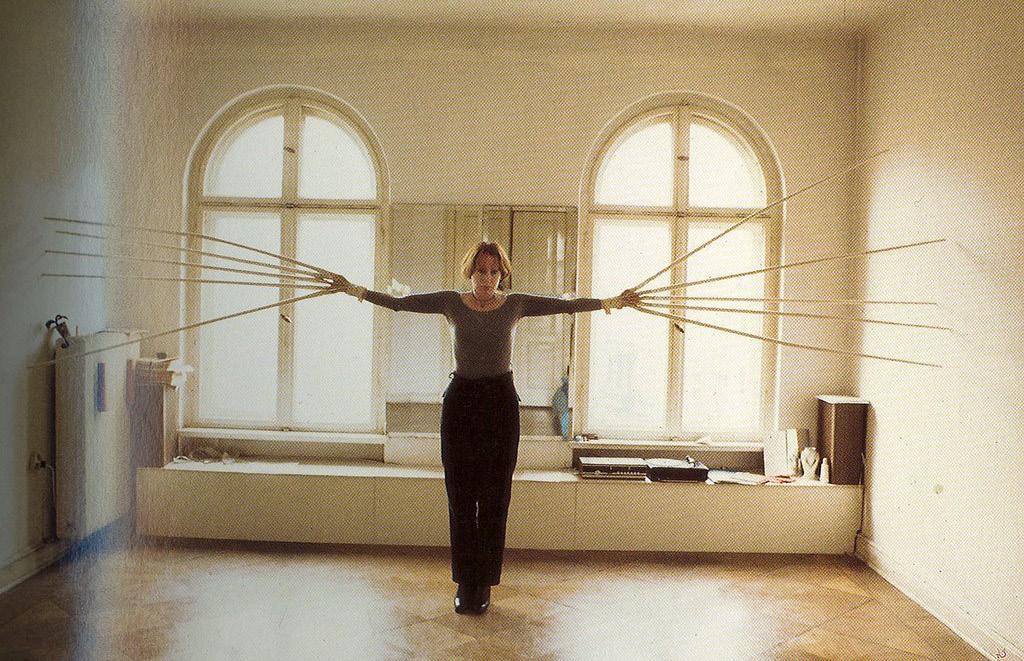
For this experiment, you will work either in a group or individually. The activities can take many shapes: a performance or a piece of body extension and live installation. The possibilities are endless.
The key is to start positioning your body, or a group of bodies, in space and to each other and observe and try out how you can react to others or the environment in different ways.
Try to use or create props that help redefine your relationship with the space around you; reflect, test and go with the flow.
Do the spatial arrangements really determine how our bodies relate to the space and each other? Often, they merely suggest a conventional pattern of bodies that can easily be changed and experimented with. By experiencing this, we can gain insights into how our bodies not only use spatial setups as they are but can also generate different dynamic spaces between us.
Props or specific spaces –for example, a dance studio with mirrors– can support this type of activity well. However, one thing needs to be clear: your body and how you use, move or extend it to communicate with the world is at the centre of this space-making experiment that has the power to transform any sp ace into an exciting exploratory instrument.
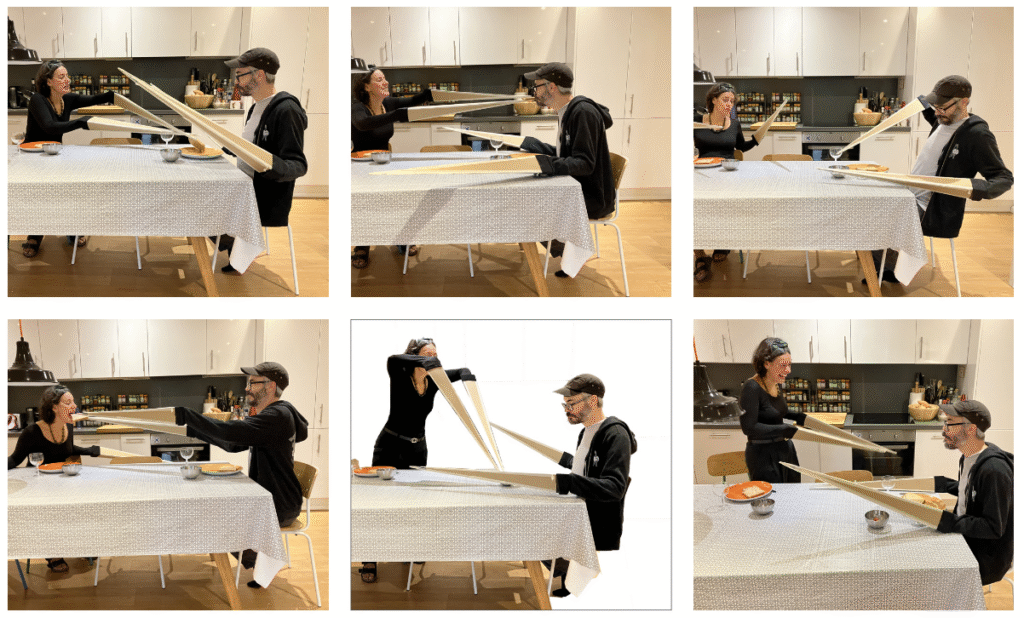
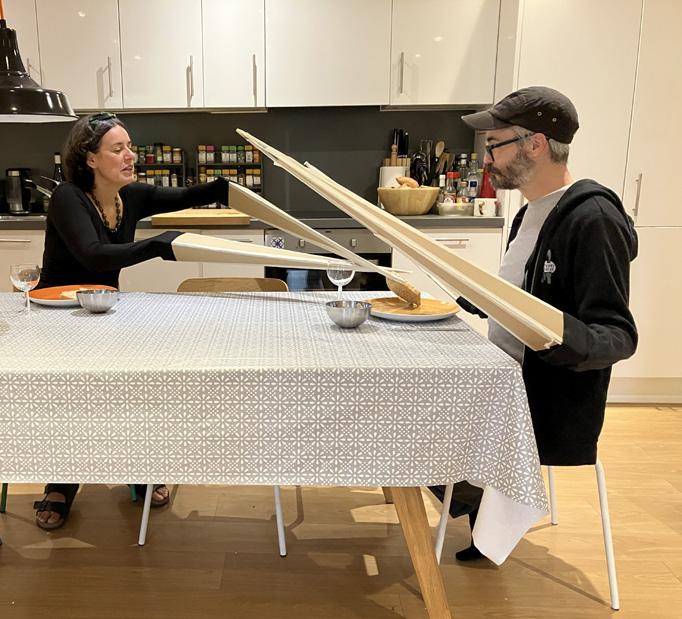
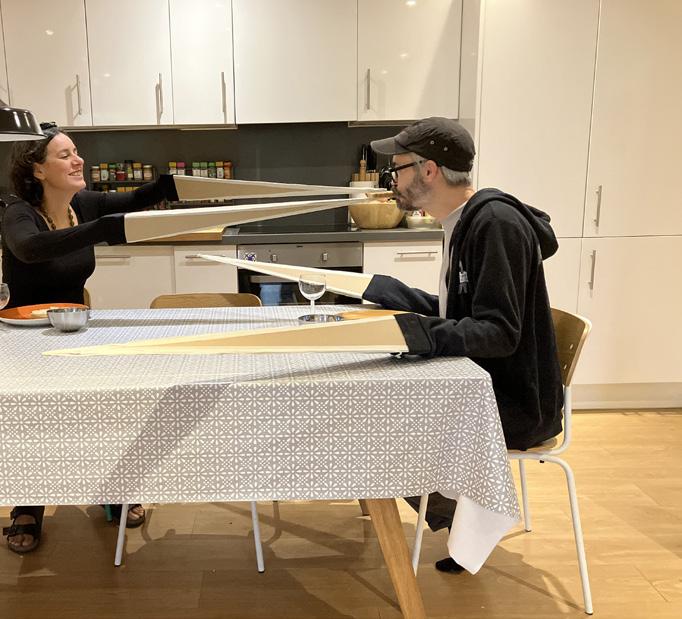
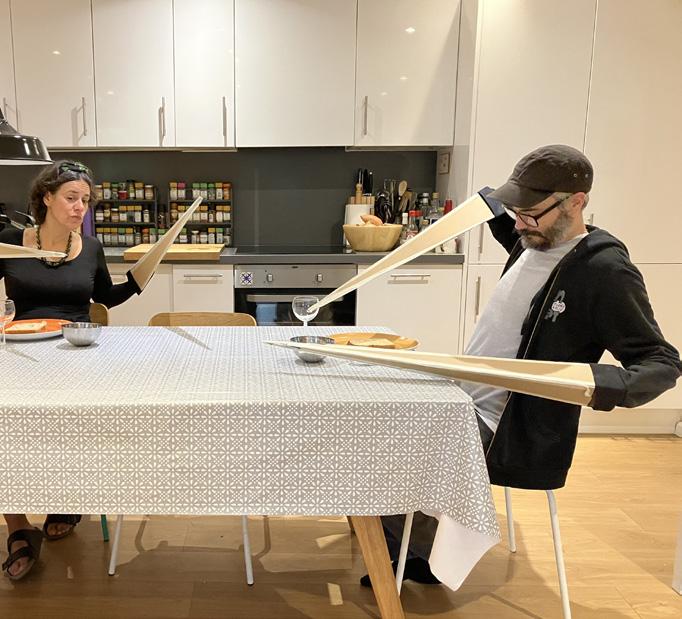
How does extending the arms transform the physical and social space during dining? Because the participants’ “arms” are too long, they have to collaborate to eat.
Further Suggestions
In this experimental sequence, we will focus on how our bodies interact with each other and within the physical setup.
There are many ways to carry out this experiment. Get inspired by the world of performances, theatre, dance art installations, “Body Art” – a close observation of how people interact and position their bodies when they converse with each other might also be a good starting point.
There are several strands you might want to follow:
- Let participants create a “body extension” – That can be anything from gloves to stilts – and explore the environment, analysing how this changes perception. There are many things we can observe and reflect on. How does interaction change if we are on stilts? How does social space change if your arms are too long so you have to feed your neigh or simple things? If everyone wears rose-coloured glasses, is the world becoming a better place?
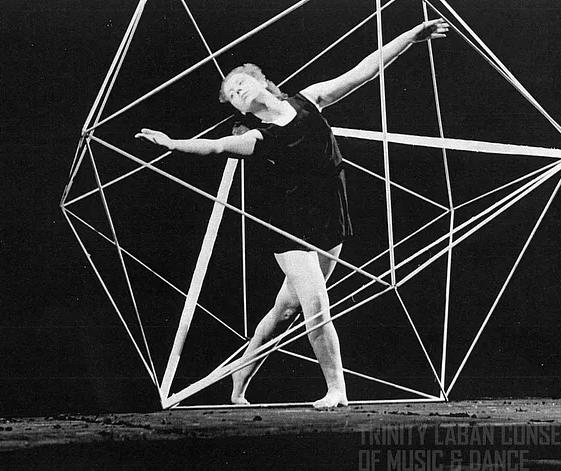
- Work in groups interactively and position the body to each other, analysing and reacting to each other’s movements. Have a look at Laban’s movement analysis. That is a great inspiration. One of the most common ways to change body constellations is to move from a unicentric to a polycentric arrangement and back again. For example, instead of everyone looking at the speaker in front of the class, people can gather around and work in groups. And then – who and where will be the centre when we return to one?
- Co-design a performance that aims to visualise a “theme” that can be a scientific theory or social field using your bodies. There are many performances, for example, where participants emulate Einstein’s ideas with their bodies. Einstein is all about how speed, position and time are relative and depend on how objects relate to the observer. Discuss with the group how this could be visualised and experienced with your bodies. Everything is constantly moving but as soon as everyone moves at the same speed, nothing moves any more. Can you visualise this? Can everyone move precisely at the same speed?
Or, of course, mix all the three approaches! Your body can be a limitless source of inspiration.
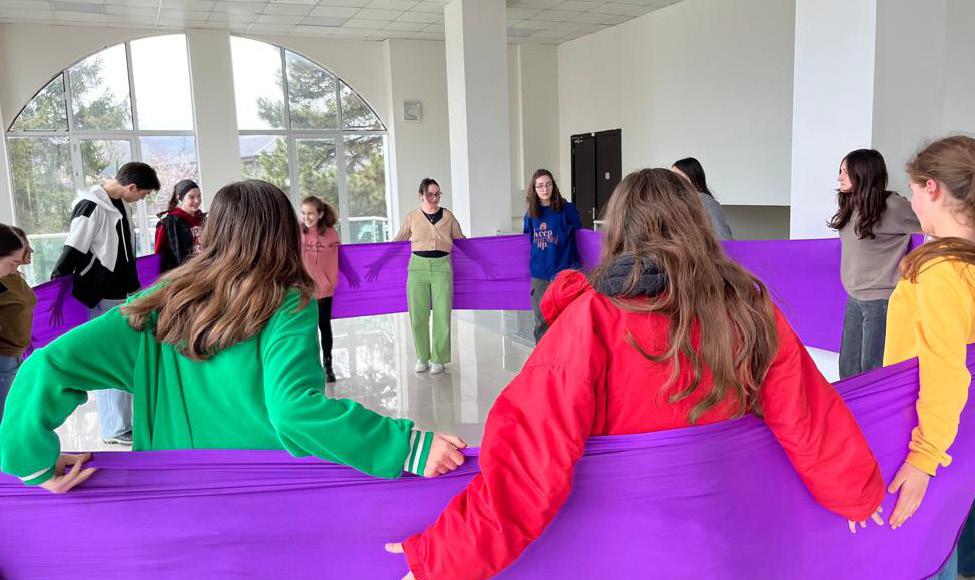
Bodies can become an experimental space of physical and social community