
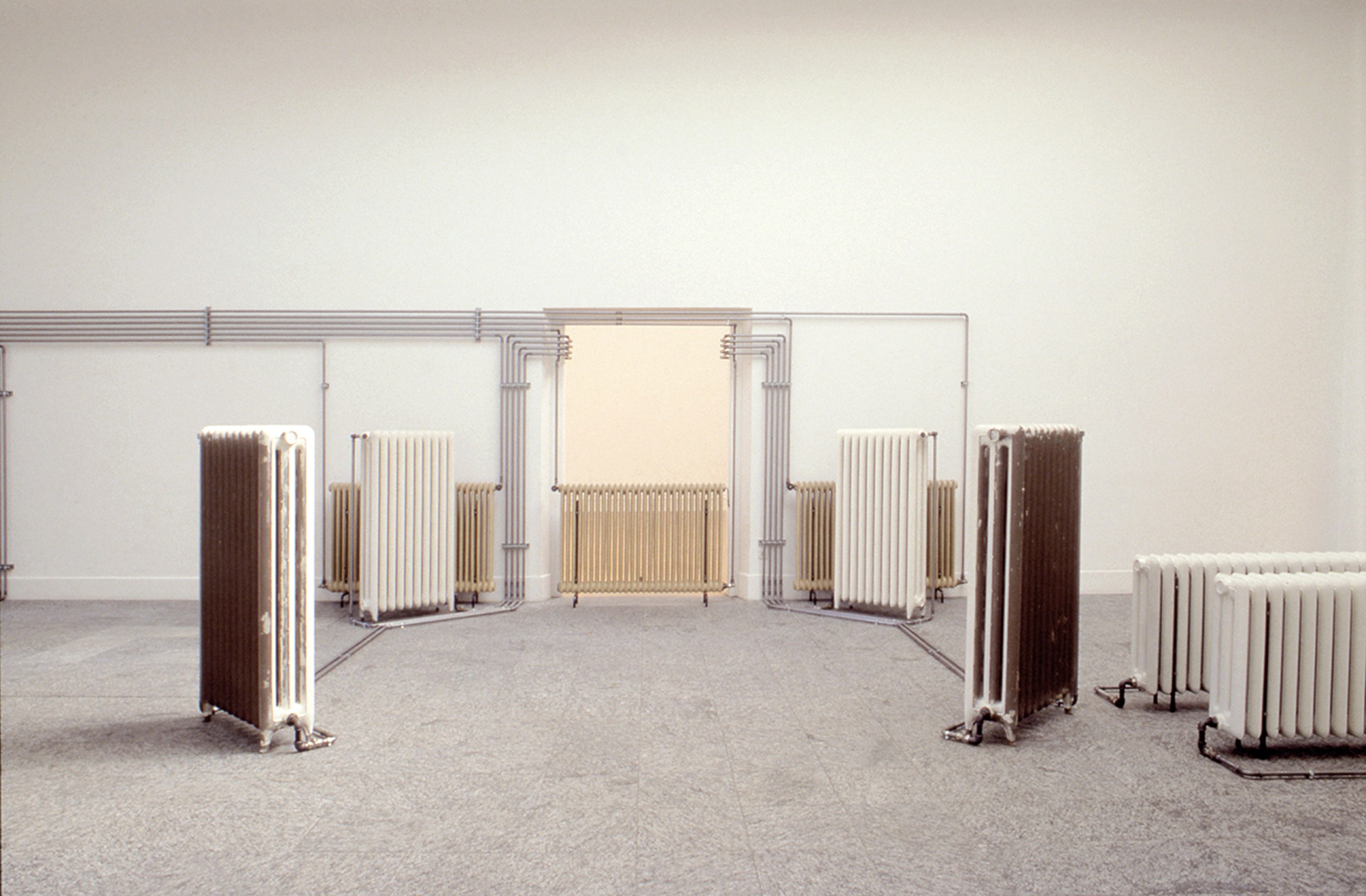
Case Study in Brief
Description
This workshop explores temperature through the senses, materials, and time-based transformations. Using their own bodies as measuring instruments, participants investigate how heat and cold affect different materials—both visually and through touch. They carry out experiments that map temperature in space, observe how materials melt, harden or dry, and reflect on how we perceive temperature versus how it is measured. The activity encourages observation, collaboration, and creative thinking, and concludes with a group discussion linking sensory experiences to the history of thermometry and artistic practices engaging with temperature.
Dispatch From the Field
1. Presentation (10-15 minutes)
The activity begins with a group discussion in which participants are asked about their relationship with temperature and how it is measured. How do we experience changes in temperature and what role does the body play? Through what reactions does our body indicate the approximate temperature? How do the skin or muscles react? What is the average temperature of the human body? Can we increase or decrease that temperature? Do you think there can be a difference between ‘felt temperature’ and ‘measured temperature’?
Optional : A list of objects/materials is made and classified as hot or cold. The objectives of this stage are 1) to make explicit the link between temperature and material and 2) to explore its representations.
The group is organised into teams of 2 or 3 participants.
The working materials are presented: a selection of temperature-sensitive materials that undergo a visible change in state, shape, appearance, size or colour.
These materials are presented to the participants. For experiments 1 and 3, the group choose three different materials with which they will carry out one of the proposed experiments:
2. Experimenting
Teams choose one of the proposed experiments:
Experiment A: Thermal Mapping (20-25’)
Participants are asked: where are the coldest and warmest places in the workspace? Some hypotheses are formulated. Participants carry out at least 5 different measurements, using the materials as alternative measuring instruments. What do the temperature variations depend on: exposure to light, wind, type of support material? Based on the observations made, a temperature map of the workspace is drawn up. Participants create a colour code to indicate cold or hot spots and reflect on conventional representations of temperature using colours.
Experiment B: Material Transformations (20-25’)
This experiment focuses on how certain materials change over time at room temperature and when heat is applied. Different heat sources can be used, such as body heat (Hands, breath) or a hairdryer (under supervision). Observe the temporality of the processes: how quickly or slowly the change occurs, depending on the type of heat, how it is applied (directly or indirectly) or the distance between the heat source and the material. Possible questions: How long does it take for an ice cube to melt? How long does it take for a drop of ink to dry? How long can I work with a piece of clay before it dries and hardens? What strategies can be implemented to prevent or delay as much as possible a material from melting, drying out or cracking ?
The processes are observed and documented by taking notes, drawing, taking photos or videos.
Experiment C: Sensing Temperature (20-25’)
Participants in this experience can choose up to six different materials to carry out different perceptual experiences. First, based solely on their visual assessment (appearance, colour, shape), participants classify the materials according to how warm or cold they feel. Then, participants use their bodies (hands, cheeks, lips, forehead) to perceive the temperature of the same materials. A second classification is carried out based on the temperature felt to the touch. In turns, participants try to perceive the temperature of the materials with their eyes closed and observe the differences with respect to their previous experiences. The materials are then reclassified on a scale from coldest to warmest. The materials can be heated or cooled slightly and the changes observed. Each rating is documented by taking a photo. The experiment explores the variability of our perception of temperature and highlights the body as a sensitive and subjective measuring instrument.
3. Sharing the results of each group’s experiences. (10-15 minutes)
4. Opening: (10-15 minutes)
The activity ends with a group discussion that includes a basic introduction to the history of temperature measurement (i.e. the difference between thermoscope and thermometer) and a presentation of examples of artists or architects who engage creatively with temperature: Michael Asher, SMITH, Philippe Rahm, Ana Mendieta (Siluetas series), etc.
Practical Details – Facilitator’s Notes
How did you modify the activity?
Duration: 1h15 – 1h30
The workshop is based on the Parent activity The Art of Measuring focusing on activity no. 2 on Measuring Temperature. Drawing from an approach to measurement practices based on experience and repositioning the body at its centre, the workshop explores the relationship between temperature, materiality and transformation over time.
How did you organize the space?
The workshop can be carried out both indoors and outdoors. Ideally, this activity would benefit from an indoor space that is connected to an outdoor space (park, garden, patio, terrace) to add complexity to the relationship between the space, its light conditions, the materials, and their thermal effects.
Who did you work with?
The activity has been designed to be experienced with children aged 10-11. With some adjustments in terms of content and format, the activity could be adapted to other age groups.
For effective group management, distribution of materials and logistics, a maximum of 15 participants is recommended
What resources did you use?
Materials that visibly transform with temperature and over time:
- Ice (ice cubes or ice blocks)
- Clay
- Mud
- Plaster
- Wax
- Glue
- Ink
Edible materials: butter, chocolate, chewing gum, soft candies
Other materials (optional) : Thermochromic ink
Supports (Paper, plastic, aluminium, wooden tray, ceramic)
Paper + Pencil
Photo cameras (phone, tablet, cameras with thermal printing technology, etc.)
Hairdryer, electric blanket.
History of sciences and history of art references (digital presentation or printed images)
Related Case Studies
-
Art of Measuring
Activity in brief The Art of Measuring uses creative, body-based activities and everyday materials to explore innovative ways of measurement. Participants experiment by measuring space, ... Read more
-
Heat Walks
Activity in brief Participants will explore urban heat challenges through citizen science. The activity includes interactive discussions about participants’ local neighborhoods, the role of public ... Read more