Case Study in Brief
Description
This activity engages students to explore the diversity of soil in their local areas and to get close to it through aesthetic practices of attentional observation, texturing and visual-poetic composition.
Dispatch From the Field
We introduce this activity as part of a STEAM education unit that focuses on making with materials as a way to reflect on the learning process. The goal is to show how materials can give voice to the voiceless and make visible the issues and questions that often stay hidden. Soil becomes a key example. It plays a vital role in the global ecosystem, yet it rarely appears in traditional school curricula.
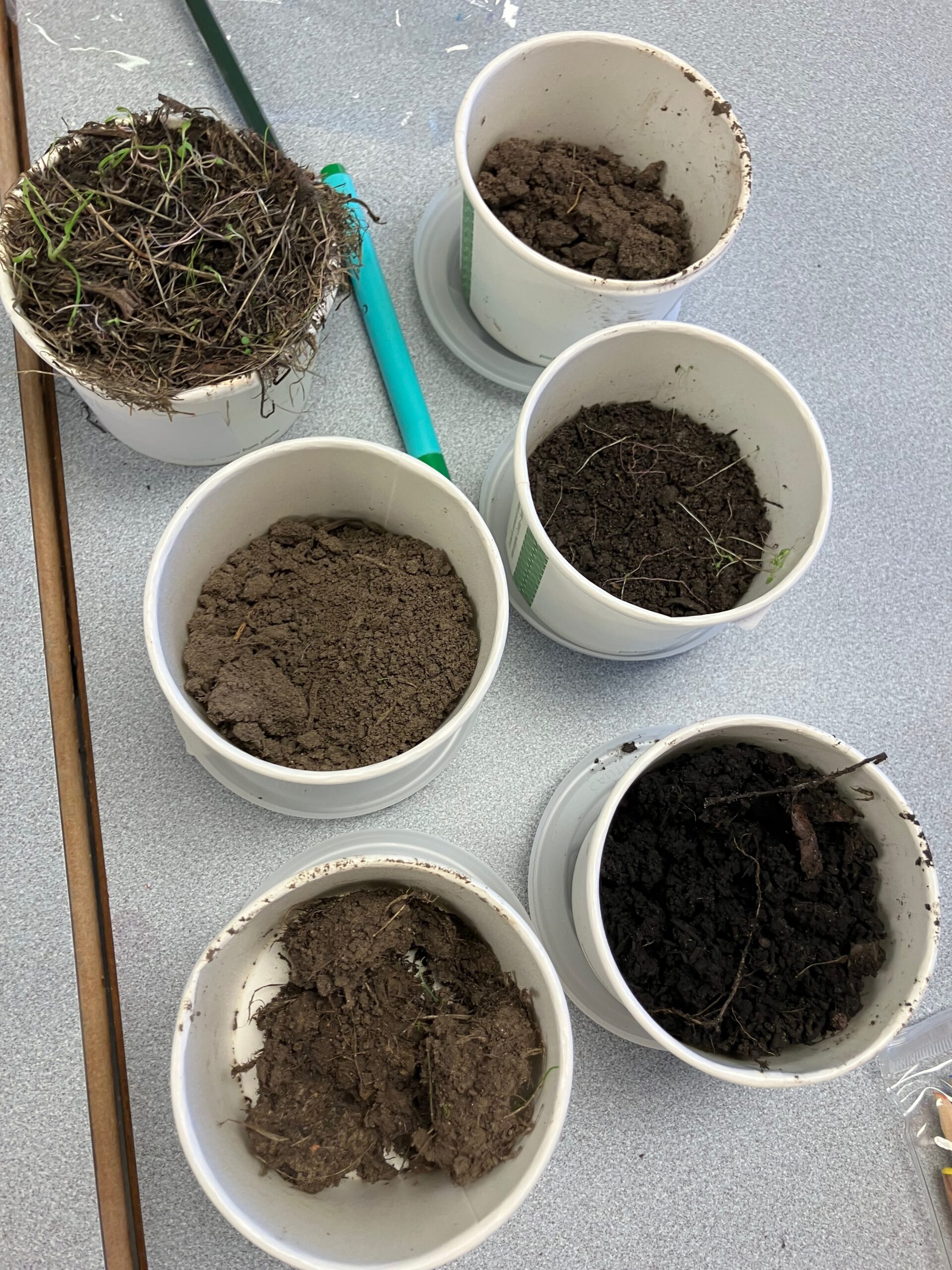
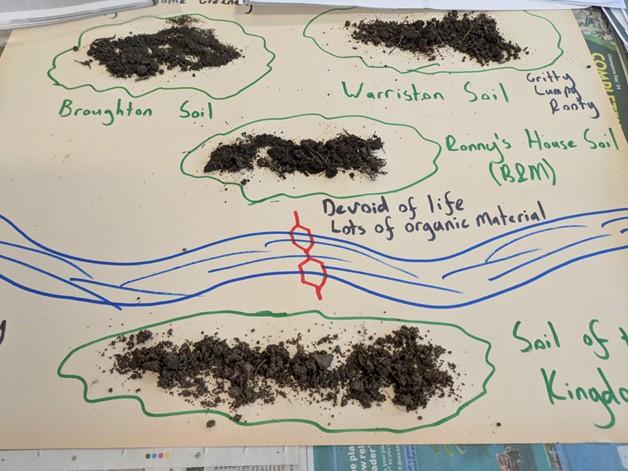
Students bring small soil samples from their communities. In a parallel version of the activity, which we run at the same time in a secondary school, we invite students to collect samples from different parts of the school garden. We want to help students build a personal connection to the soil they gather, learn about its qualities and reflect on where it comes from. Comparing samples helps them understand how soil varies with geography, use and location.
We begin by inviting students to observe their soil through the senses, especially touch. They notice different textures and components. They reflect on qualities like humidity, dryness, organic content, the presence of humus or collagen and the presence of small insects or other materials.
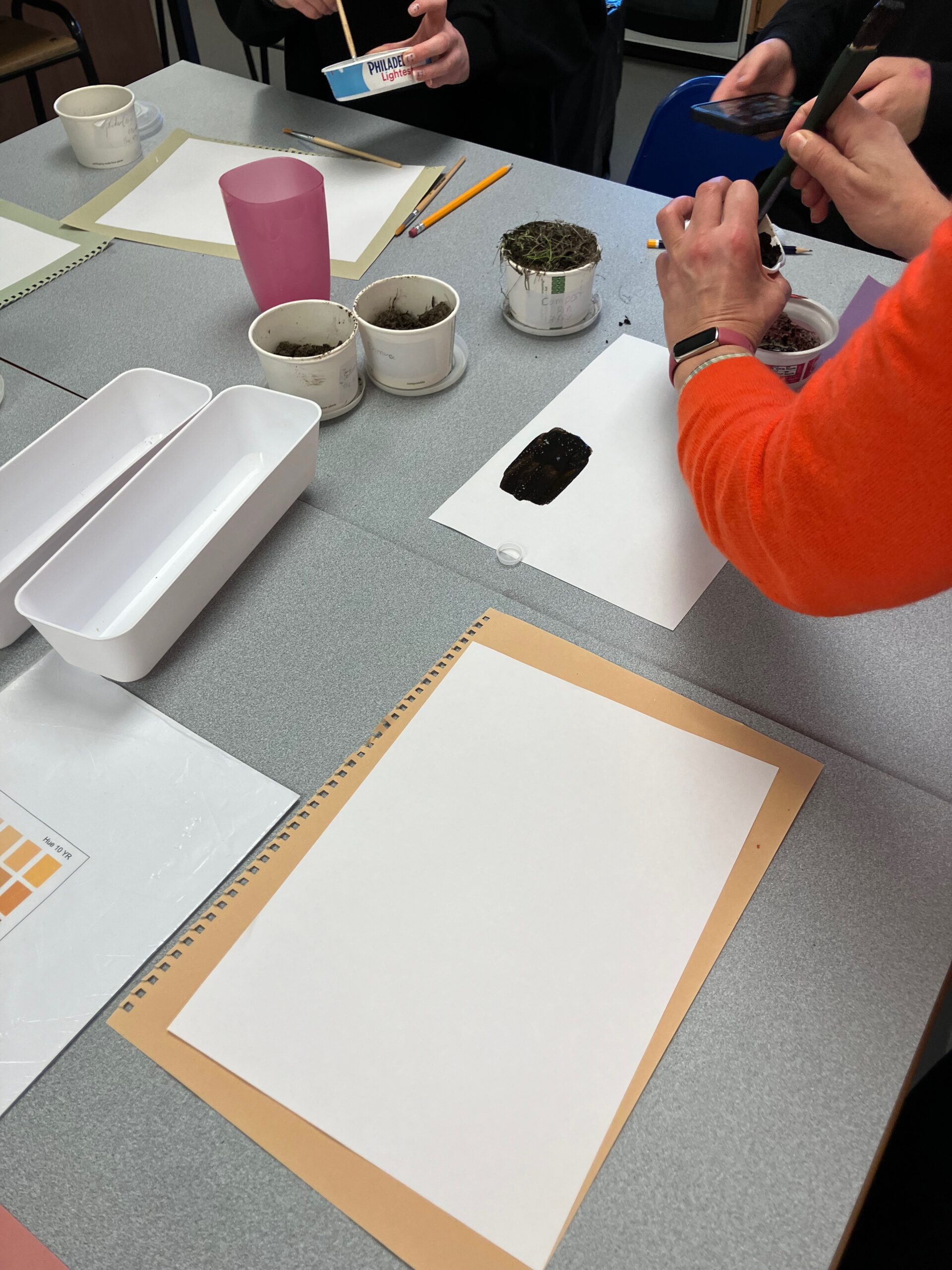
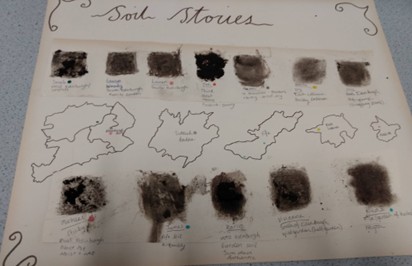
Next, we study the soil under a microscope and in water solutions. Then we invite students to smear each sample on paper to see the pigments and residue left behind. We use a color chart to link each soil sample to possible regional ecosystems.
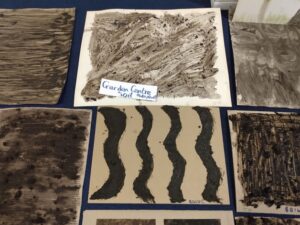
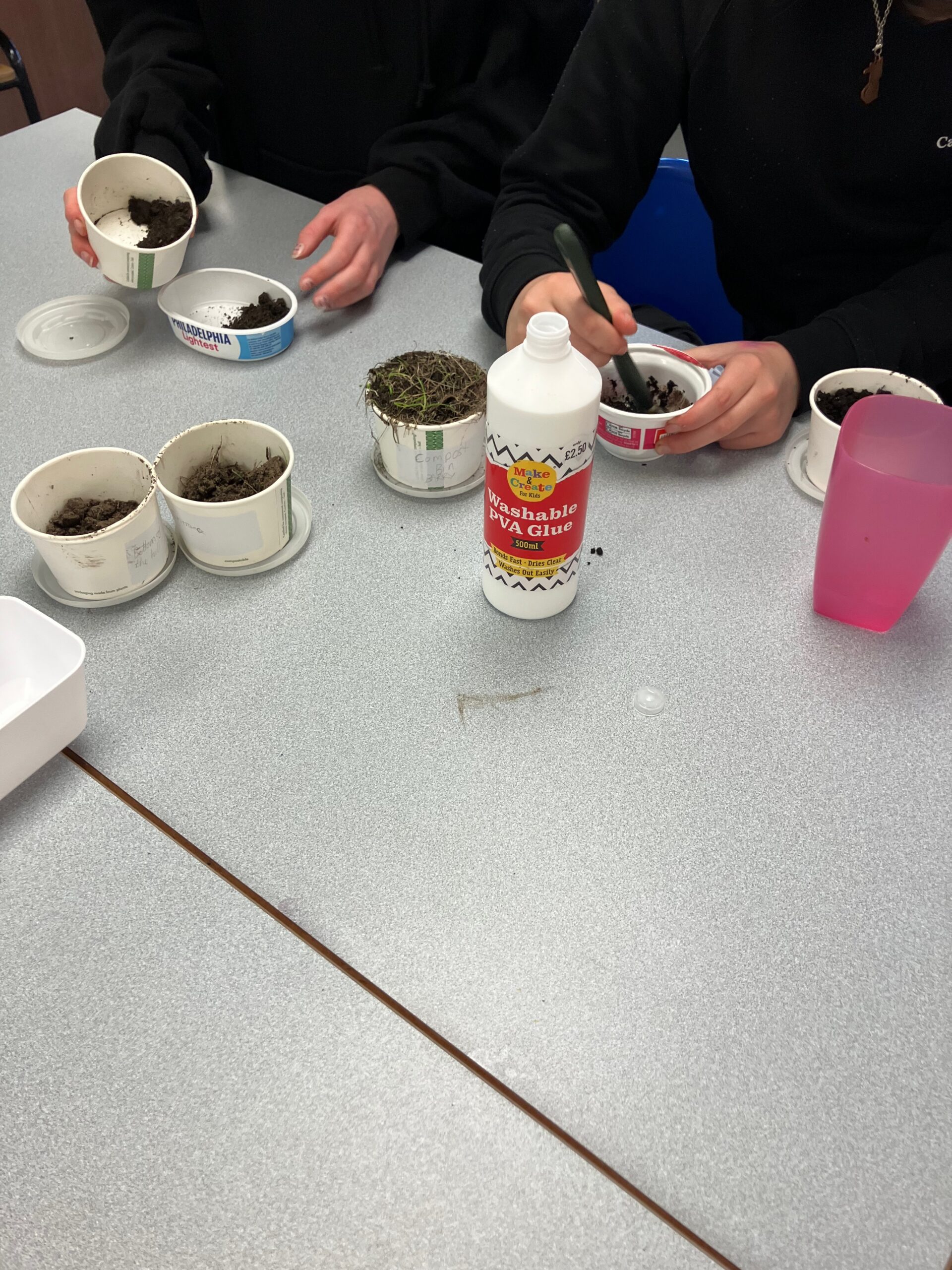
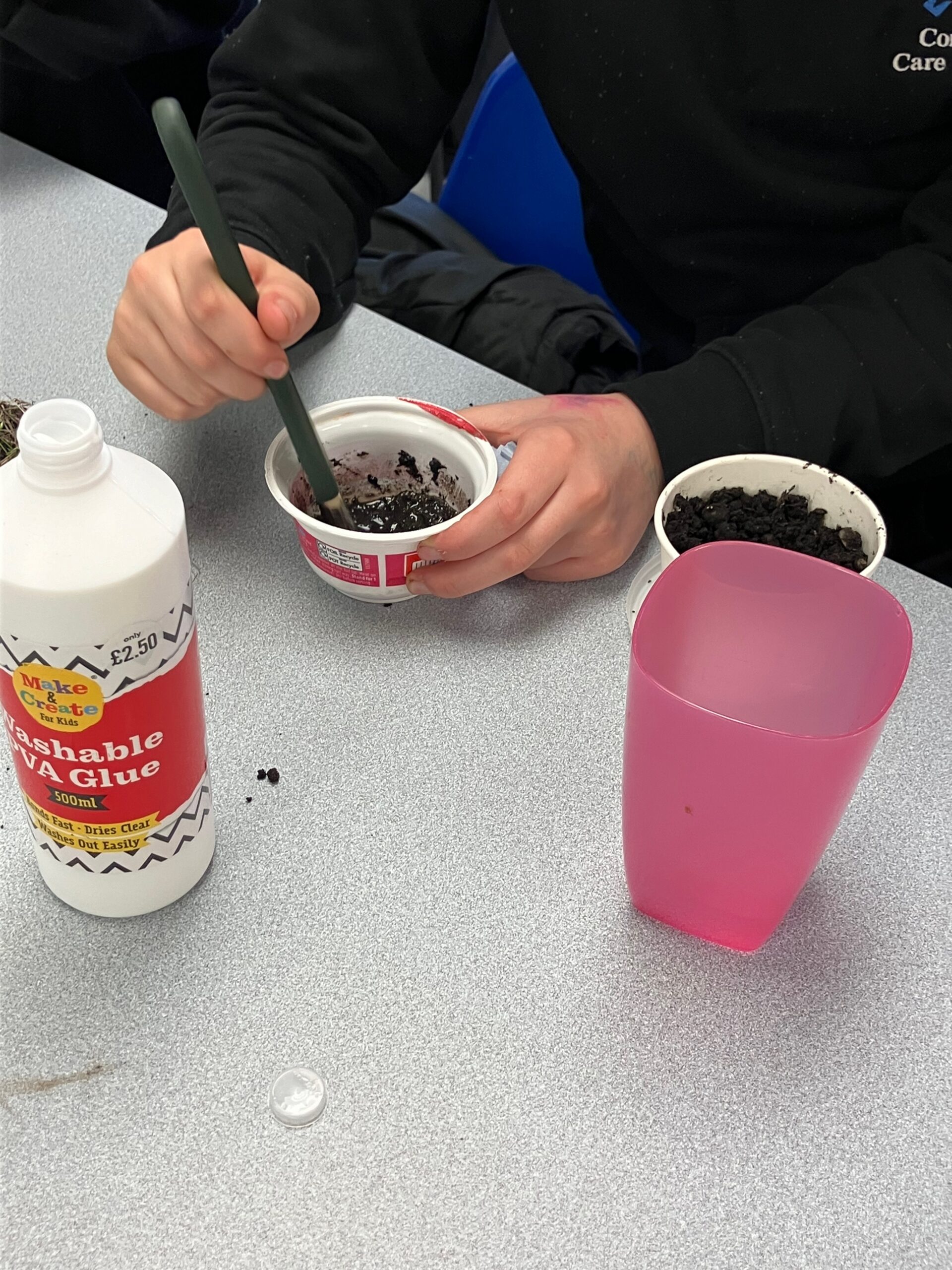
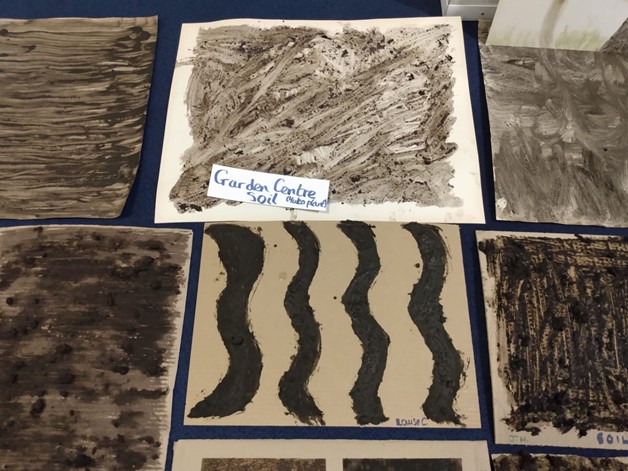
In the second part of the activity, we shift to a mode of attentional observation. We ask students to let the soil “speak” through painting. We mix each soil with water and PVA glue, then ask students to paint a single square in the center of their page using their sample. Together, these paintings create a collective palette that shows the visual and material diversity of the soil across the room.
After creating the shared palette, students freely paint a subject of their choice using any of the soils available in the room. This phase invites creative expression and highlights how soil varies across place.
We end the activity with two exhibitions. First, we display the soil palettes. Then, we hold a full group exhibition in the main lecture hall. In this final phase, students pair their paintings with short texts and poems, drawing on literature to express what they have learned and felt through the process.
Practical Details – Facilitator’s Notes
How did you modify the activity?
We add a soil separation observation by placing different types of soil in water and watching how the particles settle. This allows students to see layers of particulate matter, clay and organic material. We also use lenses and a microscope to study the samples more closely.
How did you organize the space?
Students work in groups around large tables in a university classroom. Each group receives old paintbrushes and sheets of A3 heavy paper that have aged naturally by sitting in sunlight over the summer. The slightly yellowed paper adds an aesthetic quality to the final paintings. We display the artworks on a white wall just outside the classroom, which turns into a beautiful and unexpected exhibition space.
Who did you work with?
We run the activity with two groups: students in the Postgraduate Diploma of Primary Teacher Education and a group of first-year secondary students.
What resources did you use?
Each student brings a soil sample from their own backyard. They come from different parts of Scotland, adding variety to the materials. Other resources include aged paper, old brushes, a microscope (optional), printed soil charts, water, PVA glue, a selection of soil poems from From Field to Palette: Dialogues on Soil and Art in the Anthropocene by A. Toland and J. Stratton Noller (2018), and a short video titled I Am Soil, available online at https://youtu.be/Dor4XvjA8Wo.
What did you learn?
This activity engages everyone, regardless of age. It introduces soil as a living material that responds to touch and reveals its qualities through different forms of observation, from microscopes to painting.
Painting with soil proves calming and immersive. Many students choose to paint with their fingers, which creates a focused, curious and open atmosphere. The act of painting brings out the aesthetic power of soil and encourages students to express themselves, ask questions and learn more about global soil issues. The shared exhibition becomes a space for reflection and dialogue.