
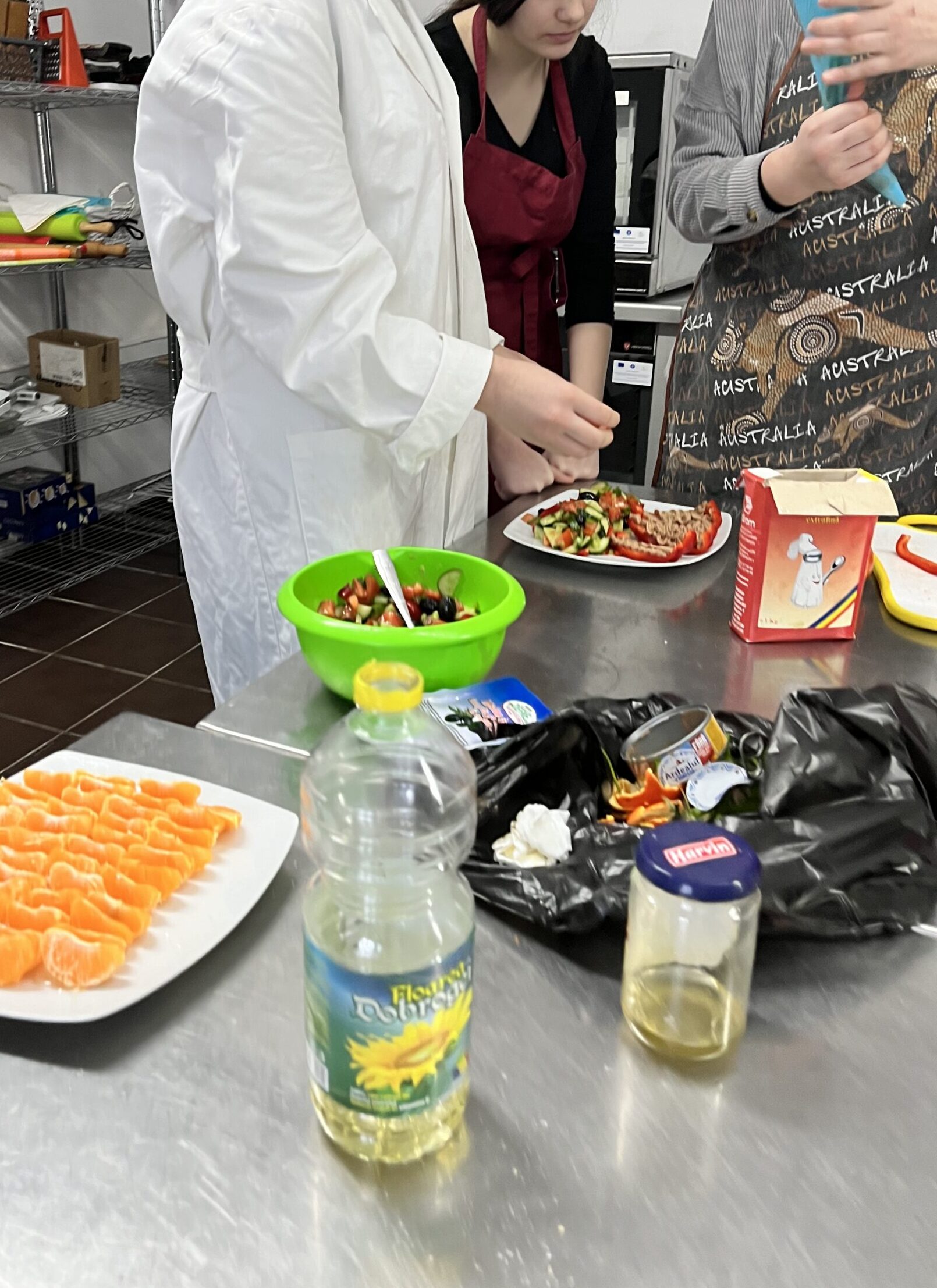
Activity in brief
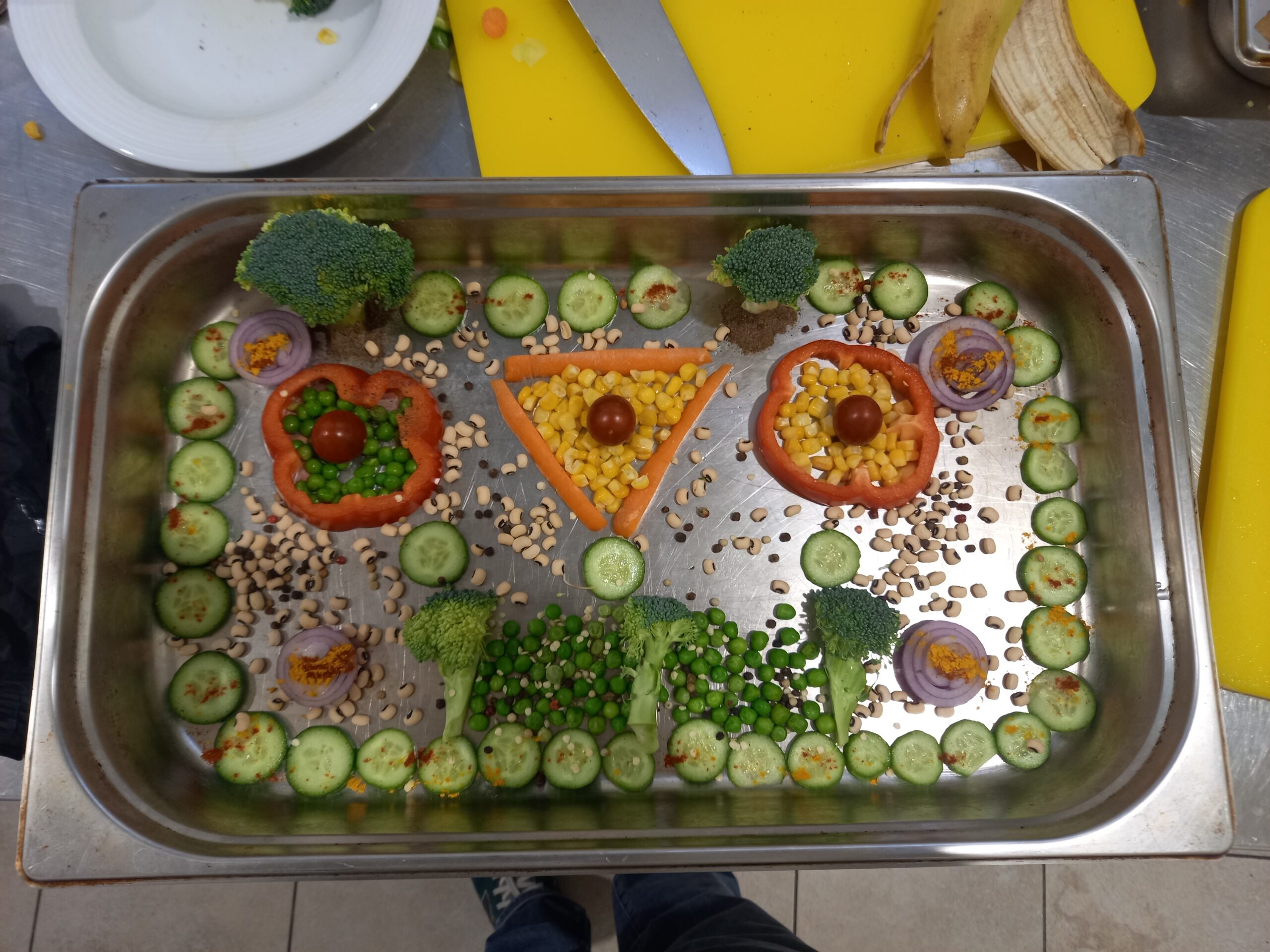
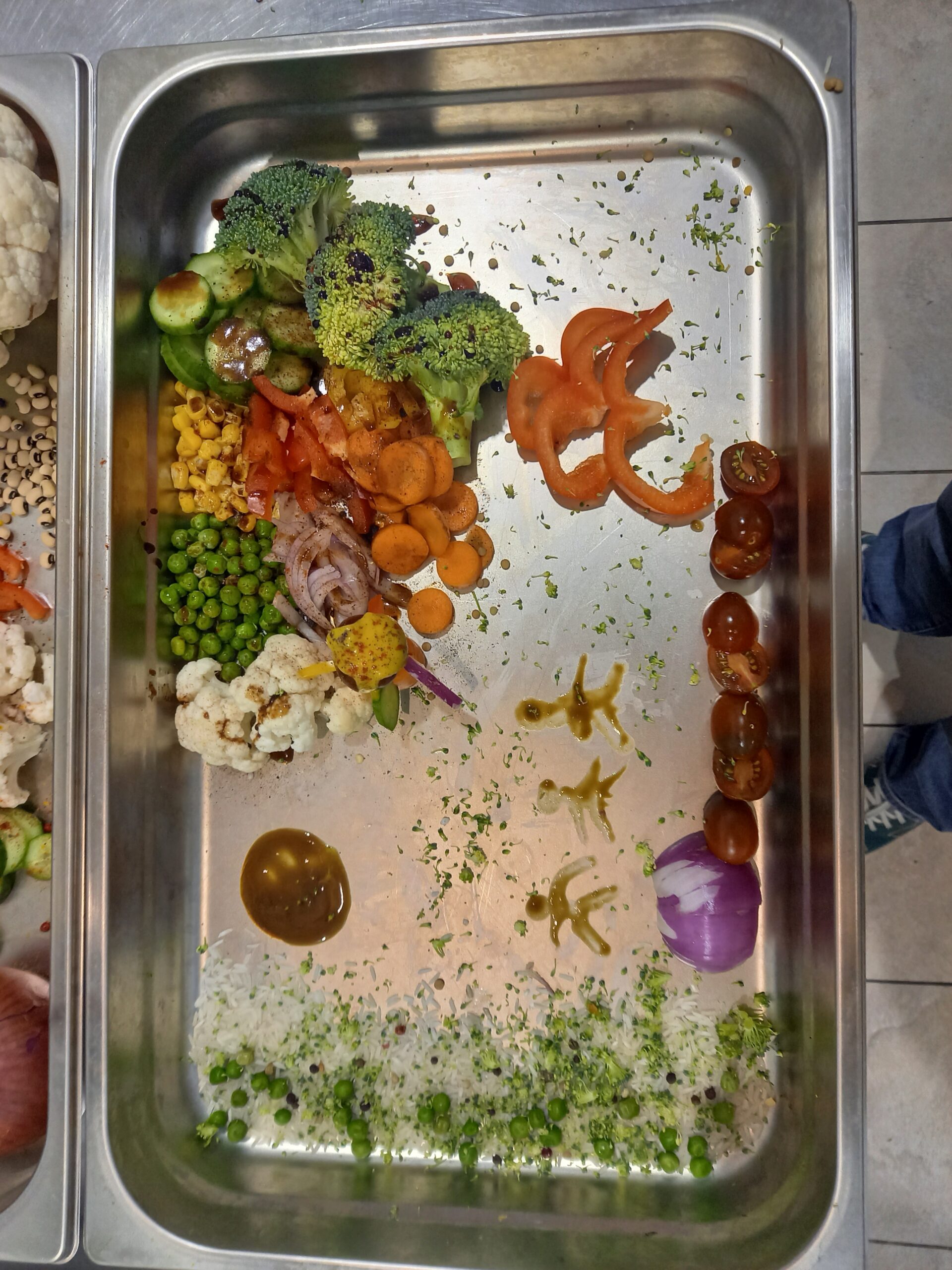
Teams of people with different backgrounds create “dishes”, together, which are not at first really cooked and eaten, but are presented as art works. After choosing the ingredients carefully the “dishes” can represent the personalities, cultural backgrounds and aesthetic views of the participants. Each participant is sharing stories connected to food and memories from their childhood cities. Compassion, awareness, and inclusion are key to approach this activity.
Detailed instructions
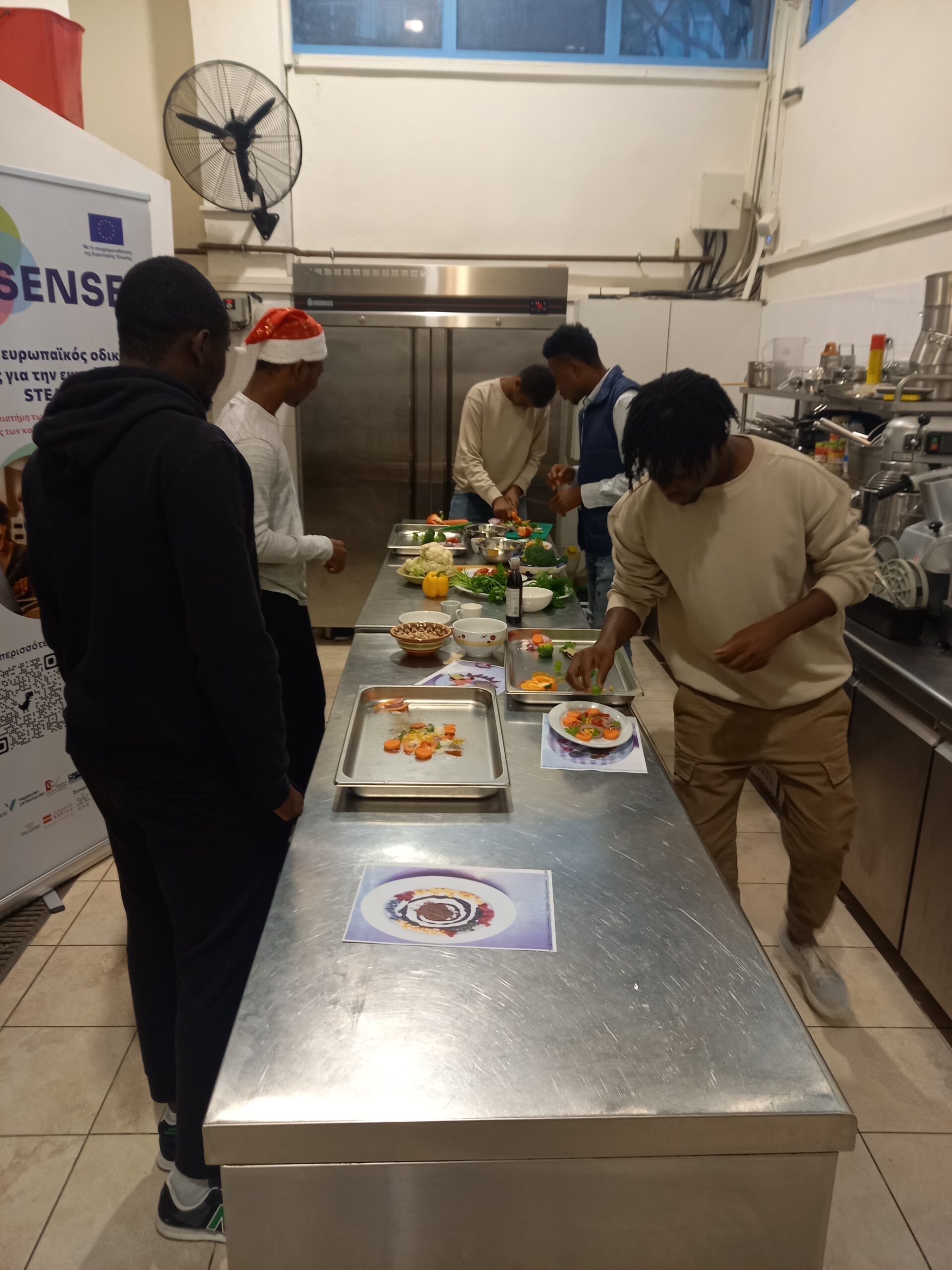
Ideally, the activity is set in a professional kitchen and facilitated by a professional of the culinary arts. It can also happen in any other kitchen large enough for the group. Groups of more than seven participants should be split in teams of 4-5 members.
- Introduction and familiarisation with the space: The participants are given a few minutes to introduce themselves to each. Afterwards the facilitator shows the group around the space and demonstrates the use of equipment.
- Team building: Teams are exchanging traditions and cultural references that exist in their childhood cities, regarding food. Each participant is invited to mention their personal preferences and list ingredients that are not to their liking or are restricted in their culture or religion.
- Presentation of ingredients: The facilitator will present the ingredients (see list below) and describe their use in both traditional and modern recipes common to the region where the activity is held.
- Assuming roles: The task is to create a “dish” as an artwort, using the ingredients present in the kitchen. To do that, each team member is going to assume a specific role according to their preference and characteristics: one member can be responsible for selecting ingredients, another one for decorating the plate, one can be spokesperson for the team, and so on. Ideally these roles will develop through conversation and getting to know each other. Alternatively, the facilitator can assist in appointing roles which relate to each team member’s qualities.
- Choosing ingredients: Now teams can choose the ingredients to create their dish. Now the senses are activated: The smell, colours and textures help participants to pick the most suitable ingredients for their dish presentation.
- Creating the dish: Participants are invited to open up and express themselves: Which stories would they like to share and how do they relate to the ingredients? This relation doesn’t have to be litteral, it can also use shapes and sounds. For example, a broccoli can be a bush, lentils can be pebbles on the beach, a carrot can be a rocket, and so on. The “cooking” is now the artistic process of arranging of ingredients on the plate i.e. the canvas.
- Presentation: All teams present their dish to the whole group and explain why they chose the ingredients and what different elements on the plate stands for. There should be ample time for questions and dialog.
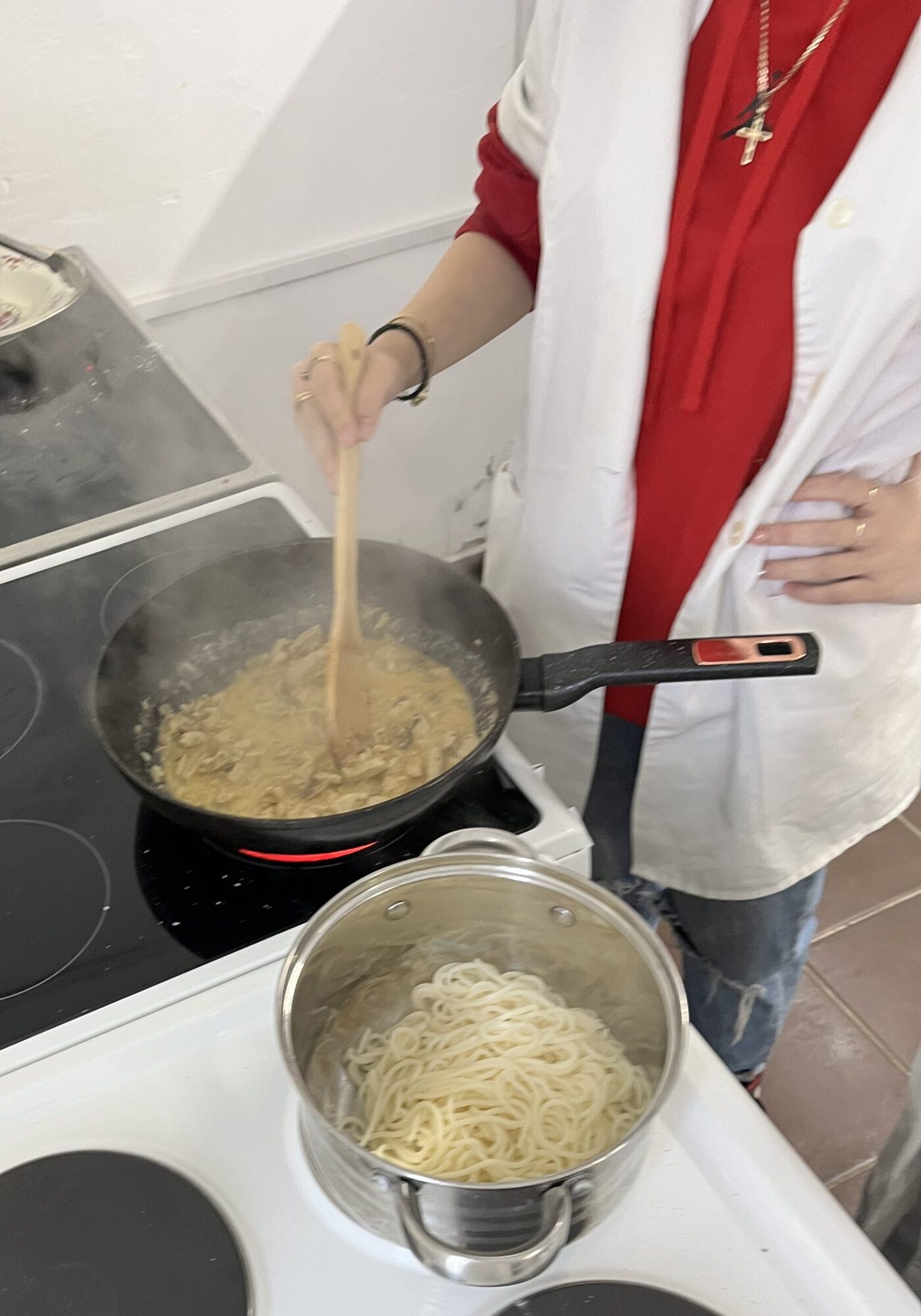
- Sharing a meal: Would participants now like to actually cook with the ingredients? Go ahead and enjoy the meal.
Practical details
Materials needed
Cooking ingredients:
- spices like salt, pepper, oregano, basil, and curry (each of them placed in bowls and/or as fresh plants),
- vegetables like tomatoes, cauliflower, peppers, and onions,
- legumes such as lentils, beans, and chickpeas,
- grain food like wheat/bread and rice,
- fruits such as bananas, apples, and oranges,
- as well as oil, lemons, vinegar, milk, yogurt, and alternatives.
Each category should consist of no less than ten different ingredients. Those mentioned seem fairly universal, the rest can be chosen according to the availability and tradition in the hosting region.
Also, for a group of five participants:
- 6 pairs of spoons, forks, and knives,
- 2 flat plates
- 2 deep/salad plates
- 2 bowls
- kitchen paper, towels
- 6 cooking aprons
- 6 glasses of water.
Other materials;
- pens, pencils and paper
Duration
90-120 minutes
For whom
Ideal for heterogeneous groups with members from different backgrounds, and more specifically for members of cultural minorities.
Space requirements
The activity is ideally meant to happen in a well-lit kitchen, preferably a professional one. It can also happen in any other large kitchen
Recommended Feedback tools
We discovered that using a flashlight feedback provides participants with fresh energy after they have focused on this intense workshop. It works really well! Try it!
Consider your participants
Sensitive Materials: Be aware and show empathy: participants may share personal stories about their lives, some of which may include violence, being forced to leave their homes or being abused. You need to be able to feel sorry for others to be able to respond to such stories with kindness, acceptance and a positive attitude.
Inclusivity and Access: Language could potentially be a barrier here. The presence of interpreters might be required. Consequently the activity should be prolonged by at least 50%.
Keep the conversation going
Invite Personal Stories: Be aware and show empathy: The stories shared by the participants may potentially contain suffering, for example incidents of violence, forced displacement or abuse. A high level of empathy is required to respond to such stories with compassion, acceptance and a positive attitude.
Keep It Moving: Do the same activity again with the same group of people, or invite people who came to earlier D.I.N.E. workshops to meet with other people who came to different sessions.
Take photos and put together an exhibition. You could show it in community centres, administrative buildings or schools.
Related Case Studies
-
DINE with High School Students
STEAM Lab GEYCCase Study in Brief Description This activity invites high school students to use food as a way to tell personal stories, foster collaboration and explore ... Read more
-
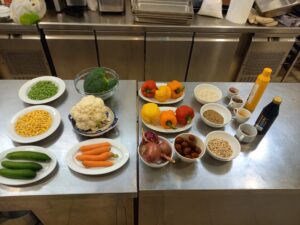
Culinary Canvas
STEAM Lab OdysseaCase Study in Brief Description Culinary Canvas invites young people aged 16 to 18 to turn a professional kitchen into an art studio. Working in ... Read more
Please note that this activity is provided for personal educational, informational and convenience purposes only, is general in nature and is not intended as a substitute for professional, legal, or medical advice.