

Activity in brief
Use the sense of touch or smell or taste in an intentional way to explore types and qualities of soil. Apply your knowledge to paint with soil as an art material to make a personal response to the place. Or put a focus on crafting or science through sedimentation and filtration experiments.
Detailed instructions
Introduction
- It is useful to start the activity with a brief introduction about the senses and how they play a role in science (e.g. through smell or observation) and in art (e.g. to generate personal responses); and how we can integrate different ways of using the senses to understand the world around us.
Collecting soils
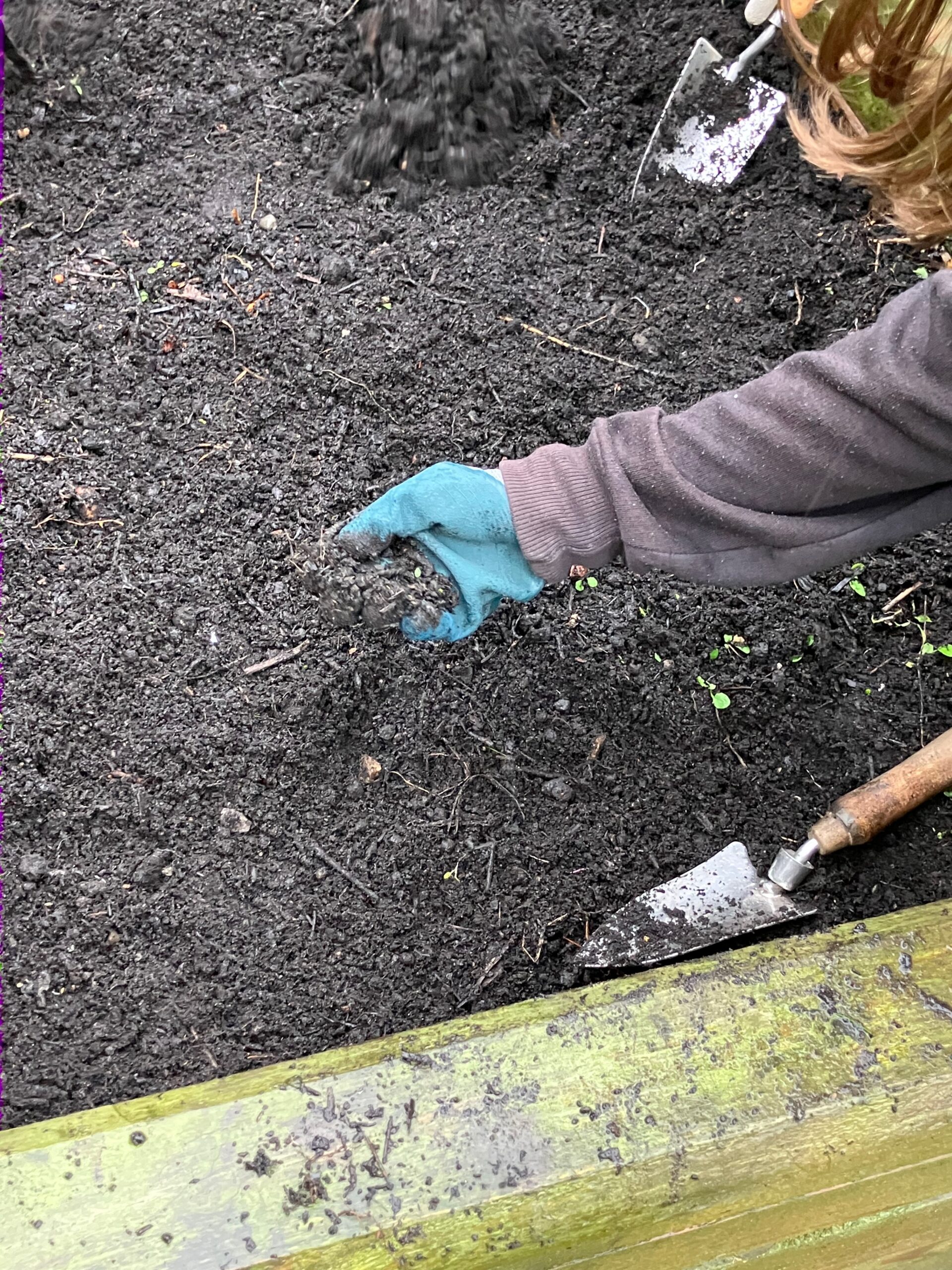
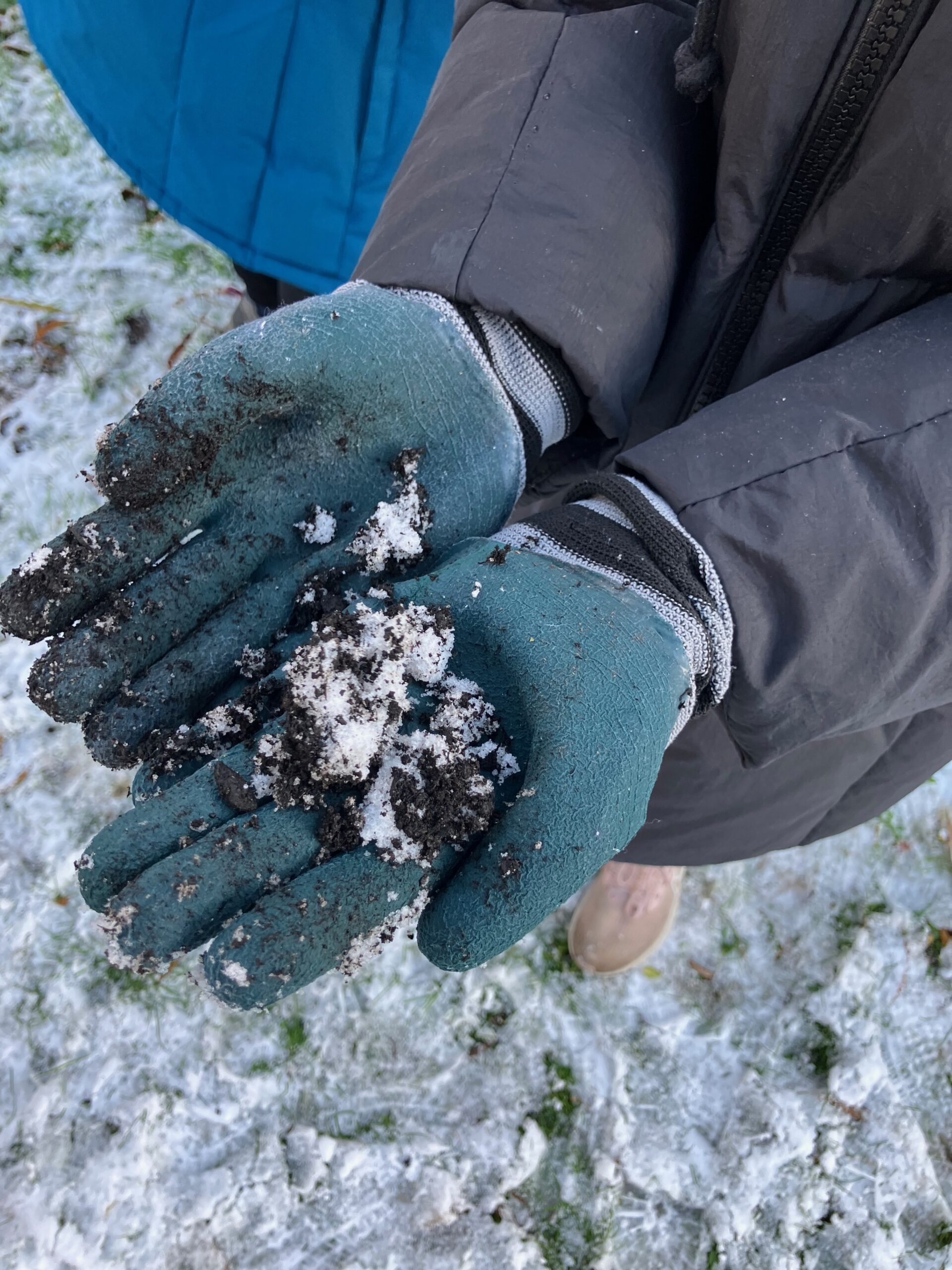
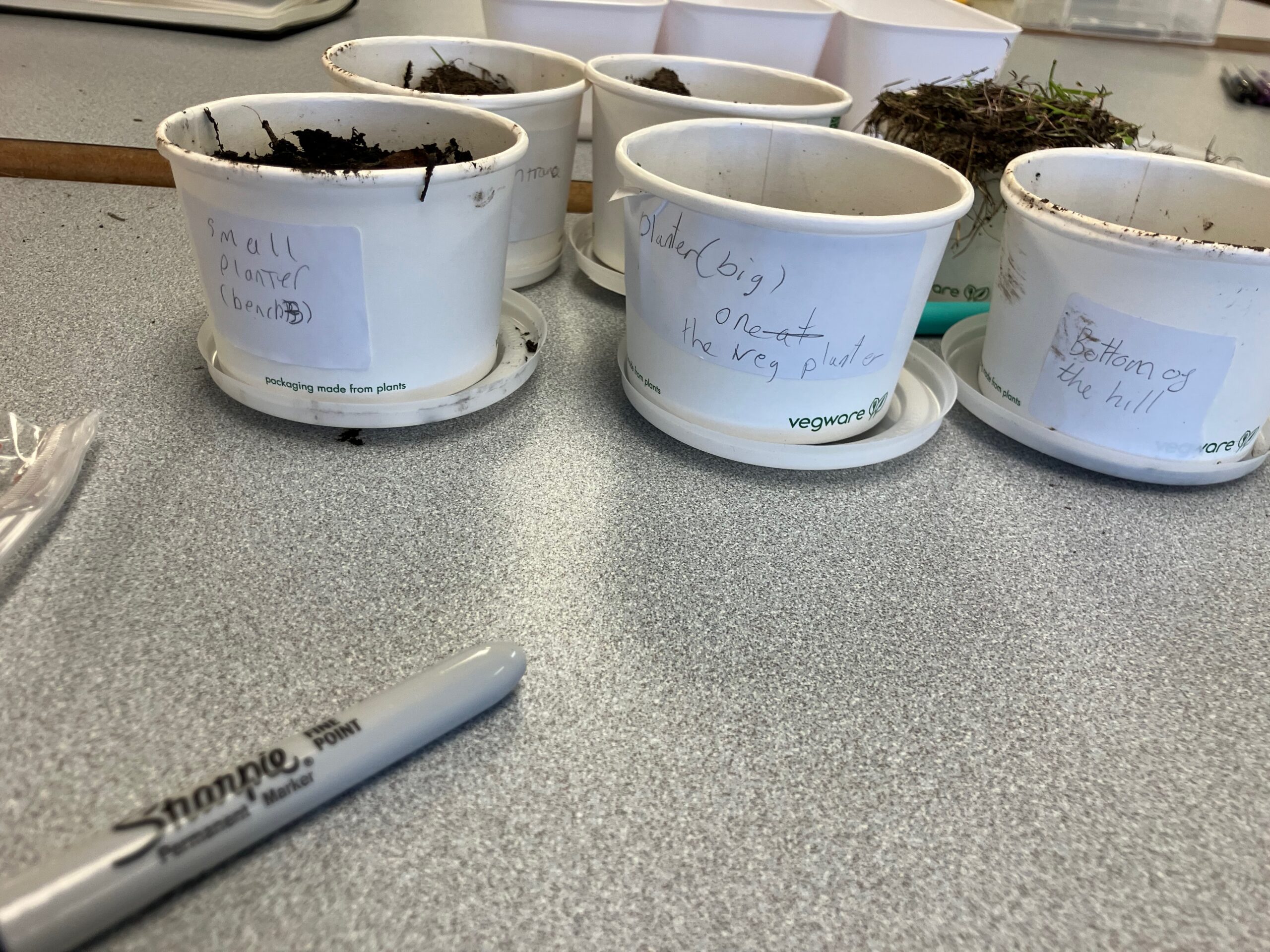
- Using a small container and either your hand, a shovel or large spoon, each participant on their own or in pairs, is invited to go outside to collect soil samples.
- Participants choose a place that they would like to explore, either because they have some connection to it, or are interested in learning more about it. They take a sample of the soil from this place and write on the jar the location where it was found.
- Modification – If necessary, teachers can provide all three samples to students and tell the students where the soil has been sampled from and why.
Sensorial exploration
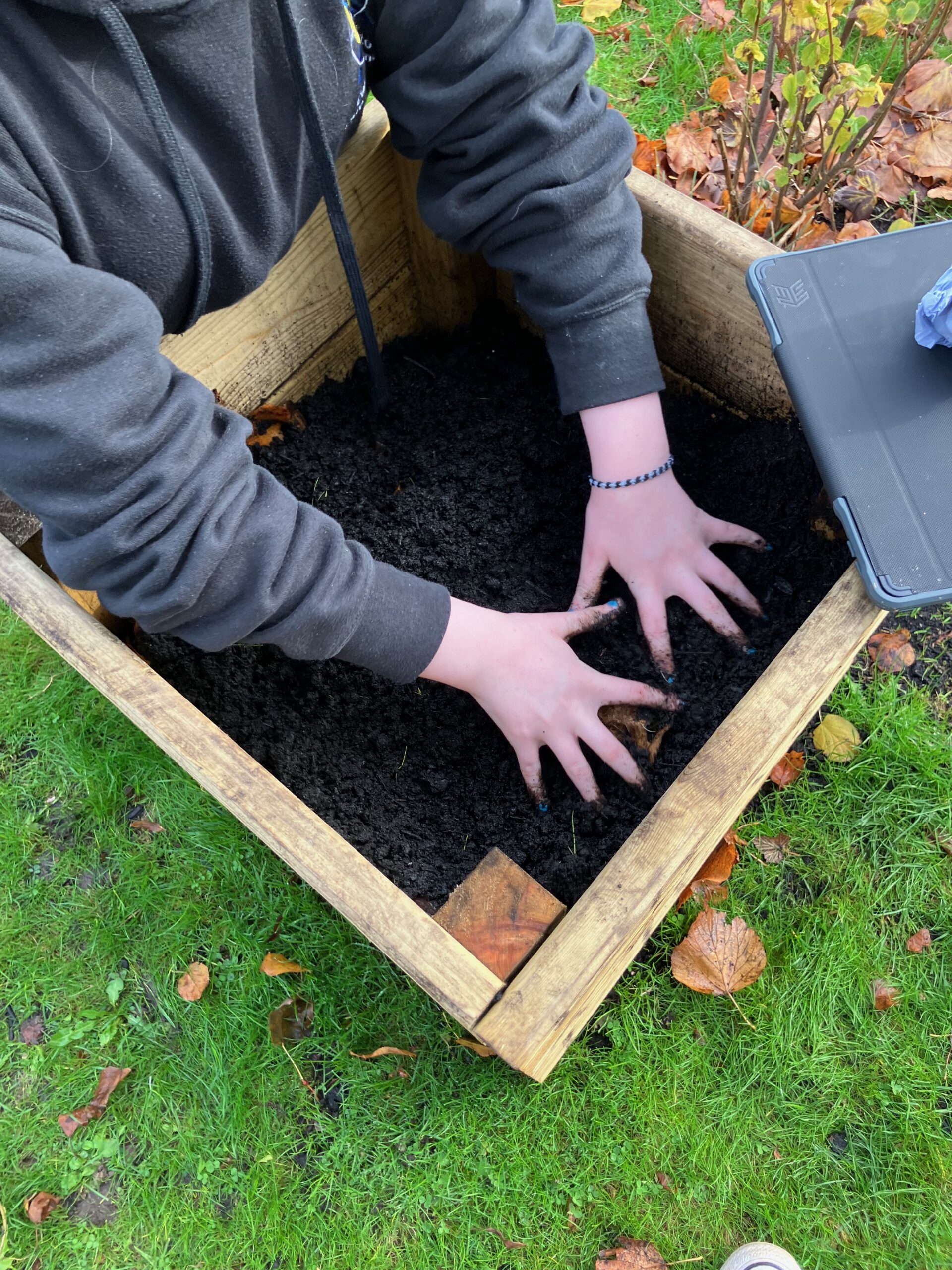
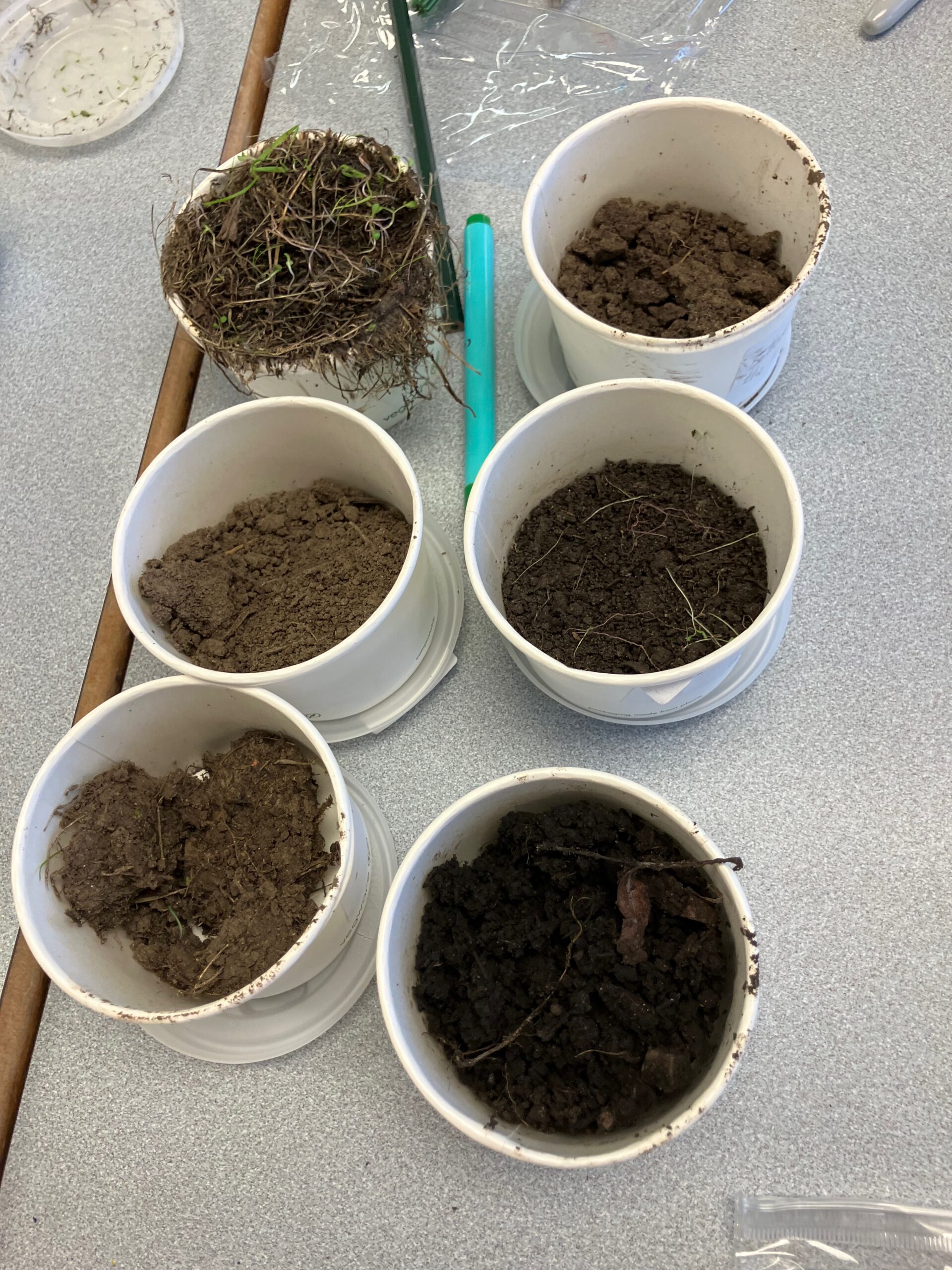
- Participants first explore and describe how the soils feel at the touch; their smells, colors, and textures; some questions may guide this initial exploration: does it make any noises? Does it have any associations for you? Does it bring about any memories?
Build vocabulary
- For each sample, participants are invited to write down descriptive words about each soil sample in their notebook.
Making soil paint
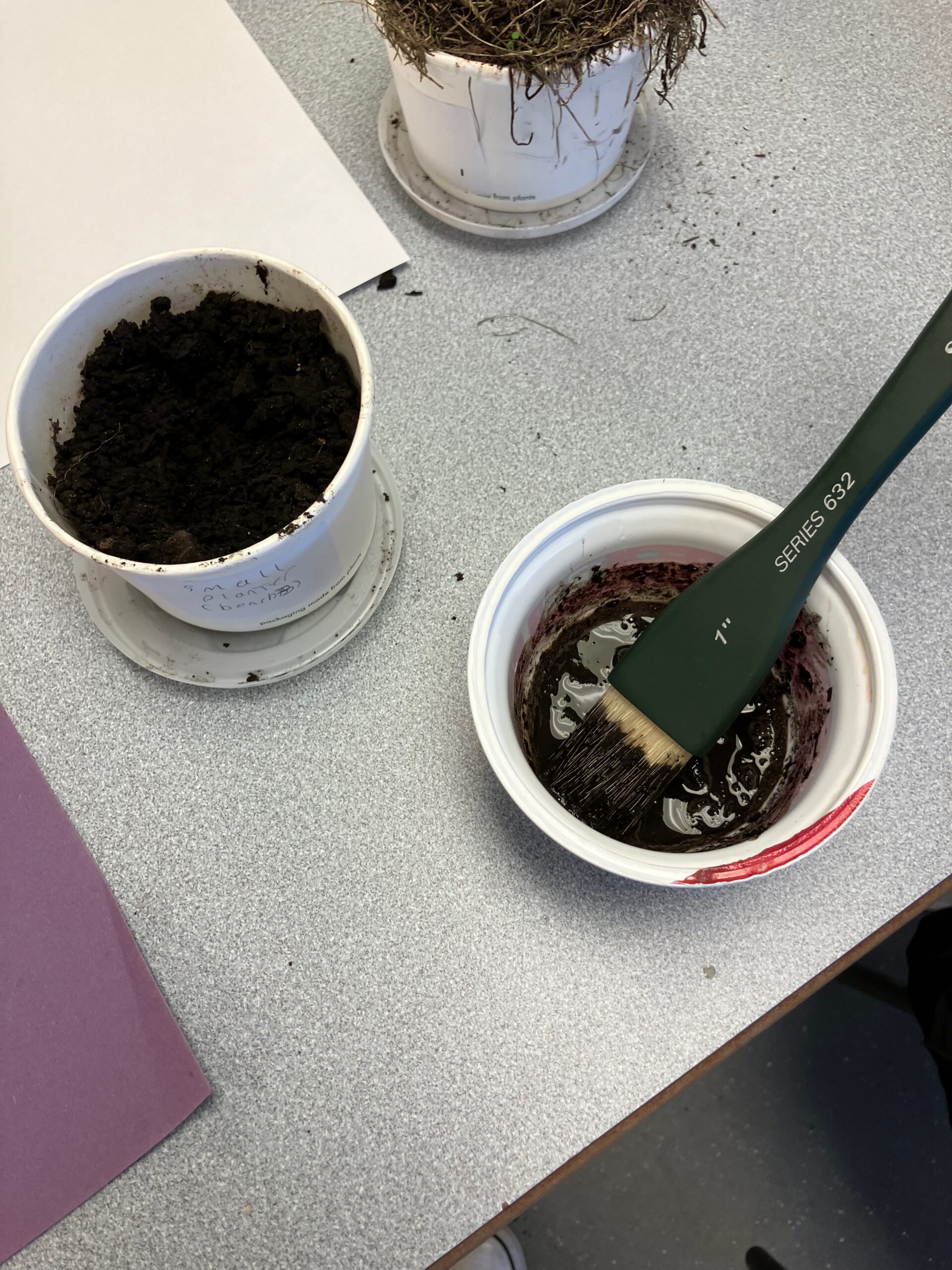
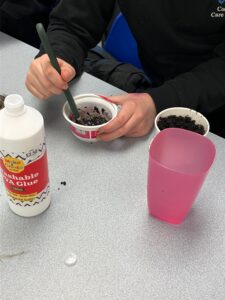
- Working with each sample, participants add water in a sample jar and explore the qualities of the soil again now that it is wet. They can shake the jars to fully mix the samples with water. The addition of PVA glue may help with making the mixture more consistent for painting purposes.
Paint a square of soil
- In order to focus on the observation of soil, participants can paint a square in the middle of their sheet of paper; in this way they can observe and feel the colour and texture of different soils; compare them with others and against a soil-colour chart.
Discussion of soil types
- The group discusses the words they came up with and build a common vocabulary about the soils. The facilitator will write them down on a board and include potentially new words that emerged during the observation of wet soil (stage 5 and 6 above).
Create – painting with soil (duo)
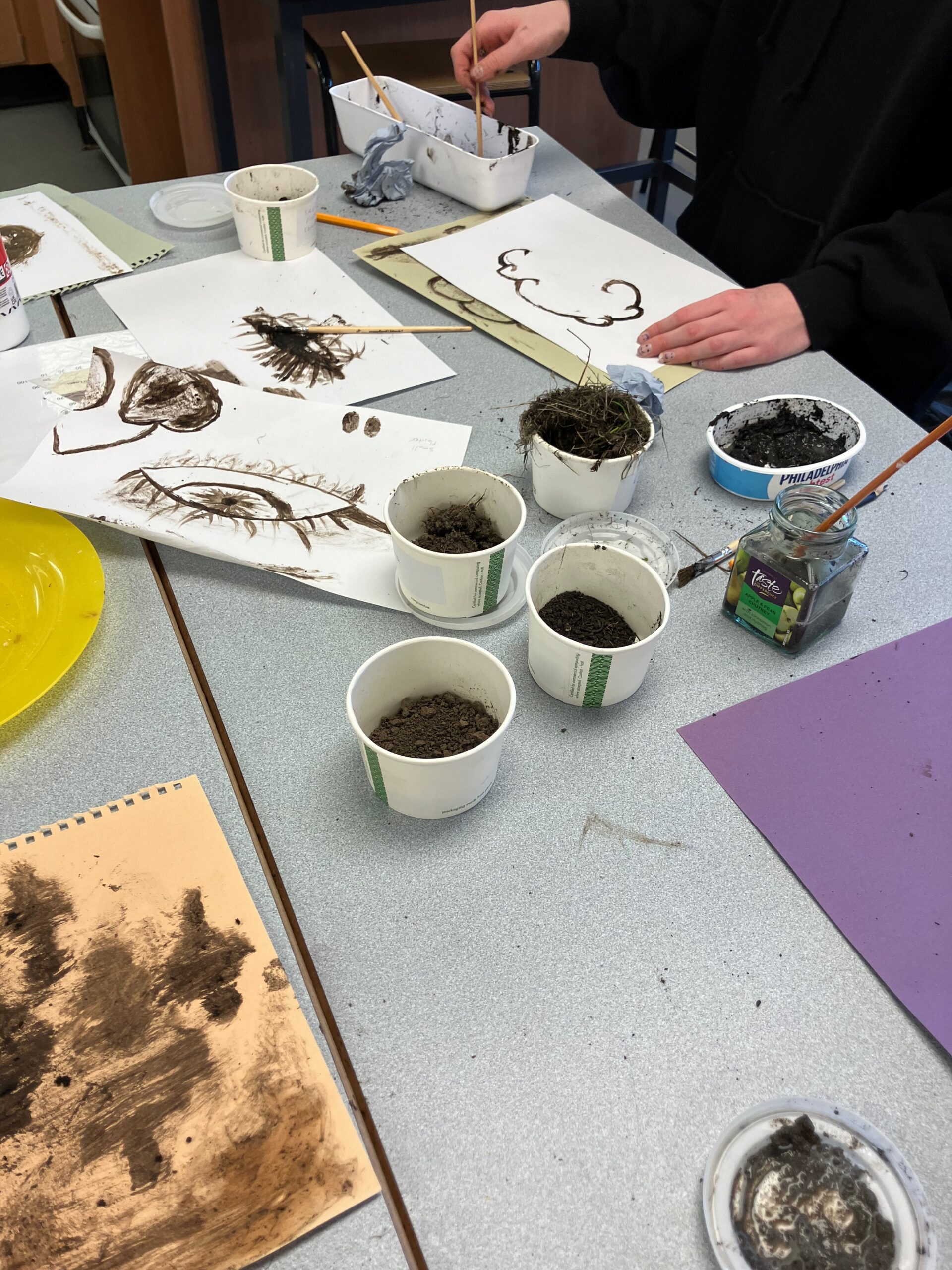
- Participants are given painting equipment with the invitation to paint with water/soil samples. They can draw freely or take inspiration from the place where soil samples were taken from. A well-lit room with large table, and a calm environment will be best suited for this activity.
- Modification: participants can work in pairs and switch roles at specific points. The reason for the partner paintings is to include a social conversation – without words – about the place and about the painting experience and subject.
Presentation of pieces
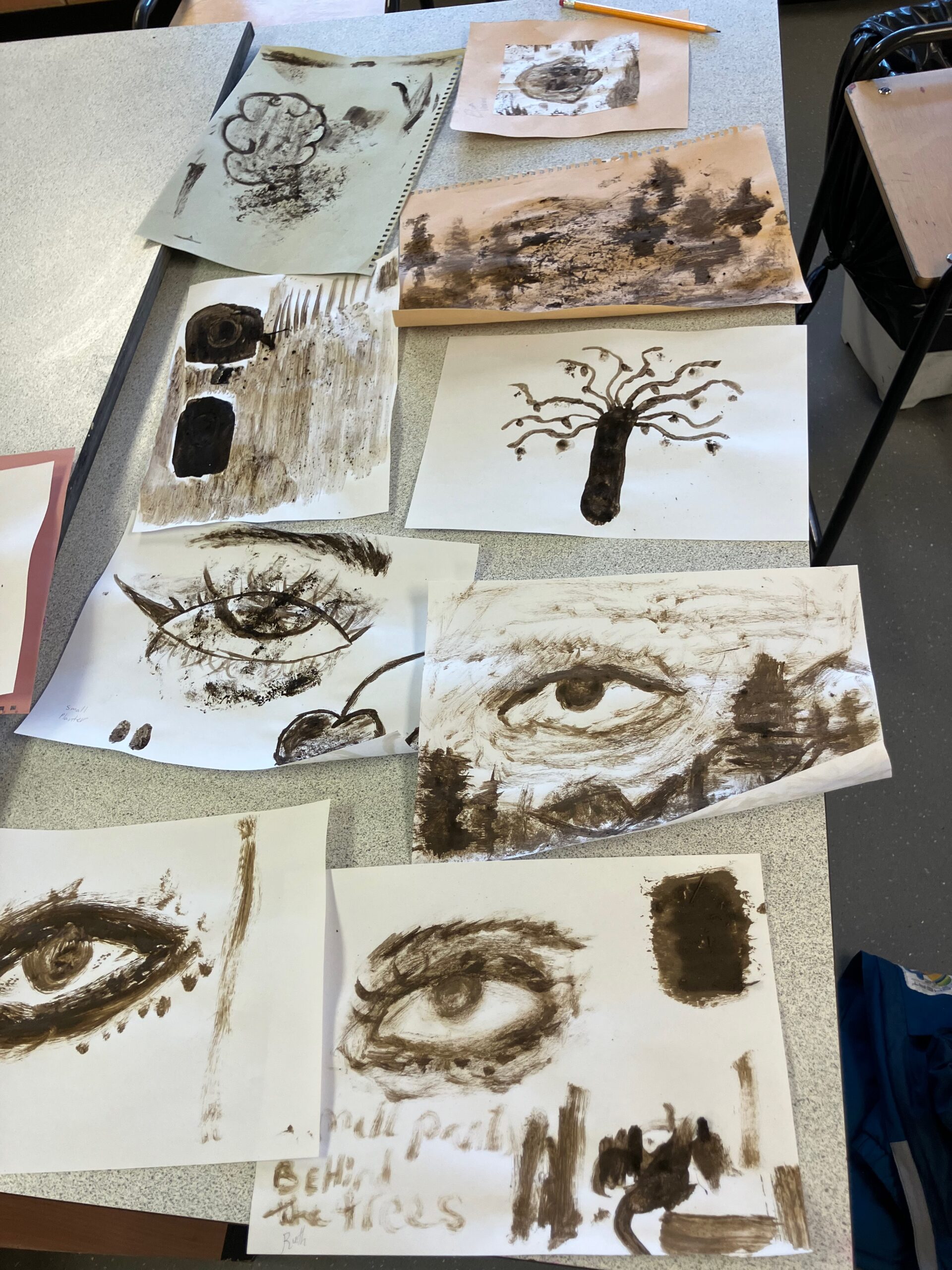
- When the painting time is over participants arrange the paintings in an exhibit for everyone to see. Then the pairs each take time to give a short presentation about their paintings and what they mean to them.
- Alternatively: If there is limited time, or a high number of participants, each pair can produce a short label for their paintings which communicates the inspiration and the process through which it was achieved.
Plenary
- At the end, facilitators can give a ten-minute summary of the reasons for leading the activity, and what its goal was.
Practical details
Duration
Between min 60 to max 120 minutes (if including collection of soil samples from outside and the mini exhibition).
Requirements for space
An accessible outdoor space for collecting soil samples (alternatively, participants can bring soil from their homes);
The activity is best conducted indoors or in a sheltered space outdoor with access to water and sufficiently large tables.
For whom?
This activity is suitable for groups of both children and adults, and it applies to generic audiences (schools, youth groups, adult workshops, and community programs)
Resources needed
- Small pots or lidded containers for soil samples
- trays
- magnifying glass
- empty jars
- water
- stirring rods
- notetaking equipment
- old paint brushes of different sizes
- various types of paper (ideally watercolours paper or card)
- tissues
- Glycerine or PVA glue may be added in small quantities to the water-soil mixture to improve consistency and allow the mixture to stick together.
Recommended Feedback tools
When working on taxonomies for soil or other materials, we have found that using a flashlight or fast networking as before-and-after feedback to identify what worked and what did not, is very efficient. We can also envision that a combination of this activity using different materials, which is done during a Gallery Walk, will create interesting results that will have a lasting impact.
Consider your participants
Sensitive materials: it is important to check beforehand about the risks of contaminants in the soil to make sure the activity is safe. Students should NOT eat the soil, but make sure that the soil is safe to be touched.
Accessibility: the activity is accessible to all; some people may require assistance with making soil mixtures and handling water-based mixtures.
Inclusivity: this activity is highly expressive and allows for personalization and choice.
Keep the conversation going
Encourage Questions: Regularly pause to invite participants to ask questions or clarify their understanding about the characteristics of the soil and anything that appear to be new or interesting to observe.
Invite Personal Stories: Prompt participants to share personal experiences related to gardening, farming, walking helping them make imaginative connections to their own personal experiences.
Keep It Moving: Soil activities can be extended to employ sedimentation or filtration techniques. This creates links to the crafts and sustainability science.
Related Case Studies
-
Falling leaves
STEAM Lab HVLAbout the case study The workshop was organized by the Western Norway University of Applied Sciences (HVL) in April 2024, and the Bergen Chamber of ... Read more
-
The Order of Things – Falling Leaves
STEAM Lab HVLCase Study in Brief Description We ask participants to collect or use a selection of leaves with different shapes. They release the leaves one at ... Read more
-
Soil painting in STEAM garden
STEAM Lab University of EdinburghCase Study in Brief Description This activity engages students to explore the diversity of soil in their local areas and to get close to it ... Read more
-
Order of Things – Soil and Compost
STEAM Lab WECFCase Study in Brief Description This activity invites students to explore the diversity of soil and organic matter while investigating their local environment. It combines ... Read more
Please note that this activity is provided for personal educational, informational and convenience purposes only, is general in nature and is not intended as a substitute for professional, legal, or medical advice.