
The following guide outlines ten “experiments” that should help explore how educational practitioners or indeed, anyone can use the physical environment as an active tool to carry out STEAM-inspired activities or to induce some STEAM spirit into traditional education practice. It is a loose guide that draws much of its contents from one year of experimentation across 10 Labs during the EU-horizon financed research project SENSE.STEAM.
10 Experiments
Space Matters. Physical environment has an impact on educational outcomes. The role of space while assessing the success of a STEAM practice is seen as crucial as the physical environment can greatly influence the designed activity’s results.

THINK DIFFERENTLY
“We don’t want to wait - for new curricula to be written, for new schools, community centres and science and arts institutions to be built. We want to start now, and we invite you to start with us.”
Hack the Space
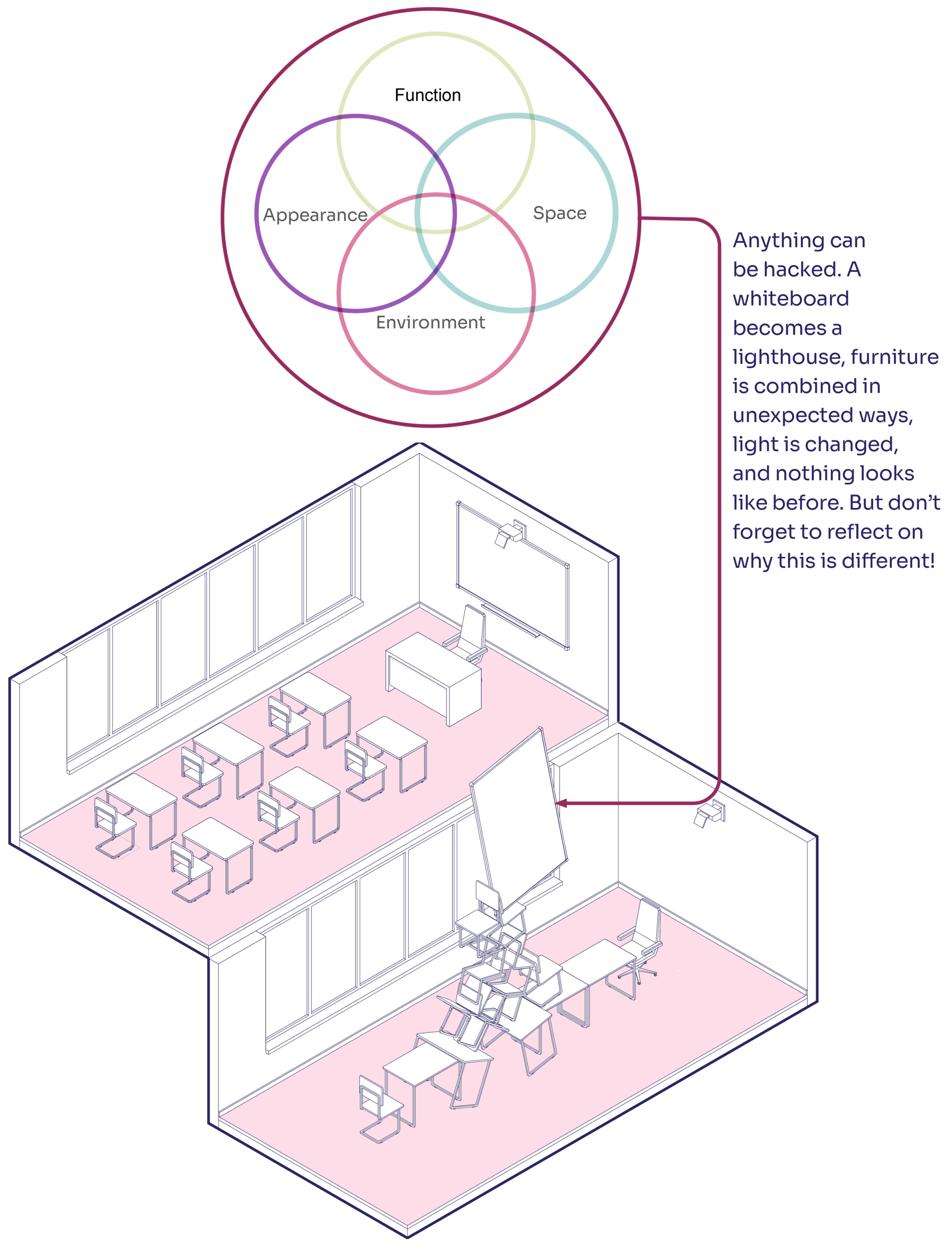
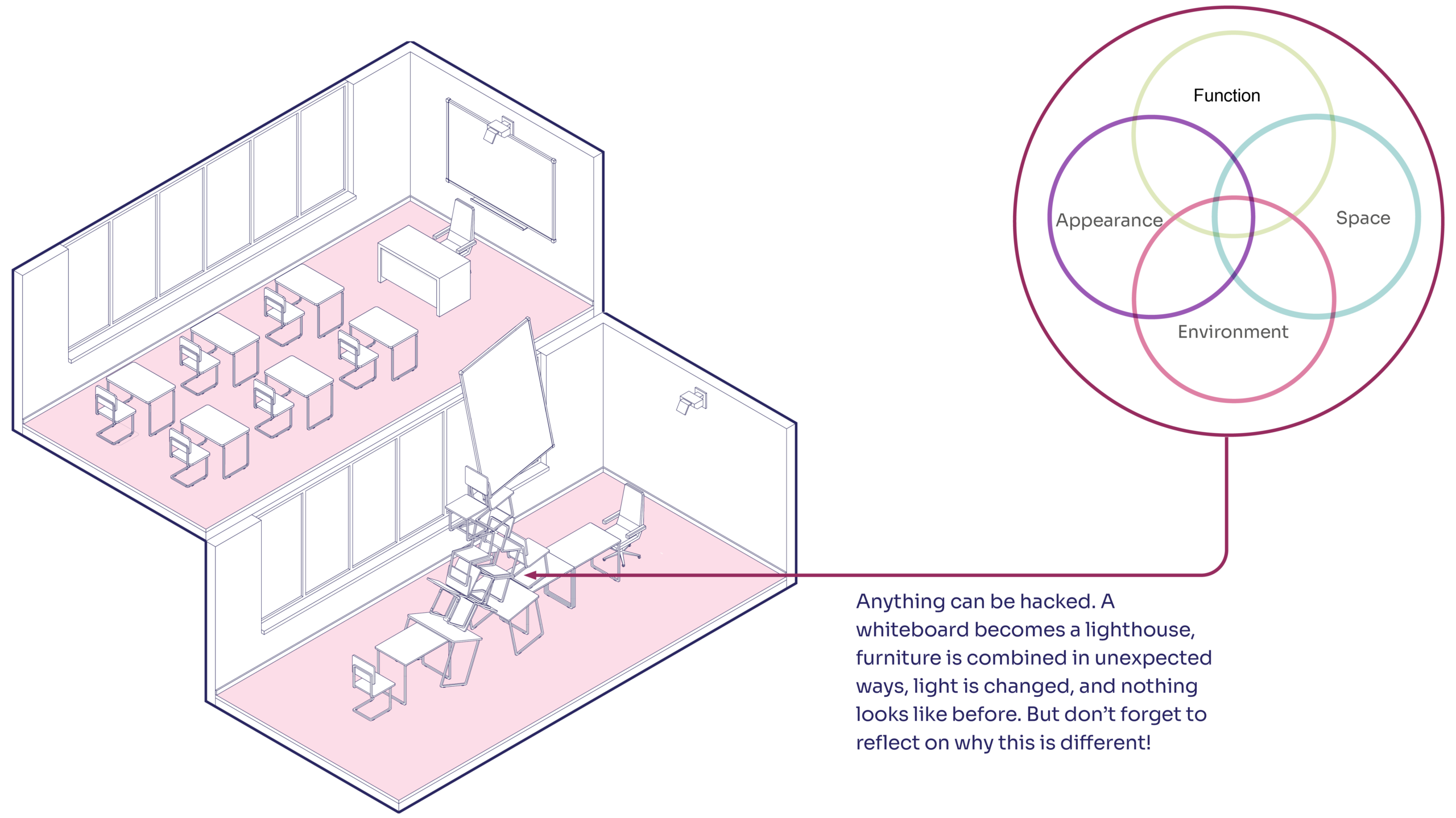
“Cambio ergo cogito”: I change therefore I know. In this experiment, we can either ‘hack’ a familiar into an unfamiliar space or ‘creatively adopt’ (with some mild spatial violence) an unsuitable space to our needs. The only rule is: don’t use anything as originally intended – and of course – go wild!
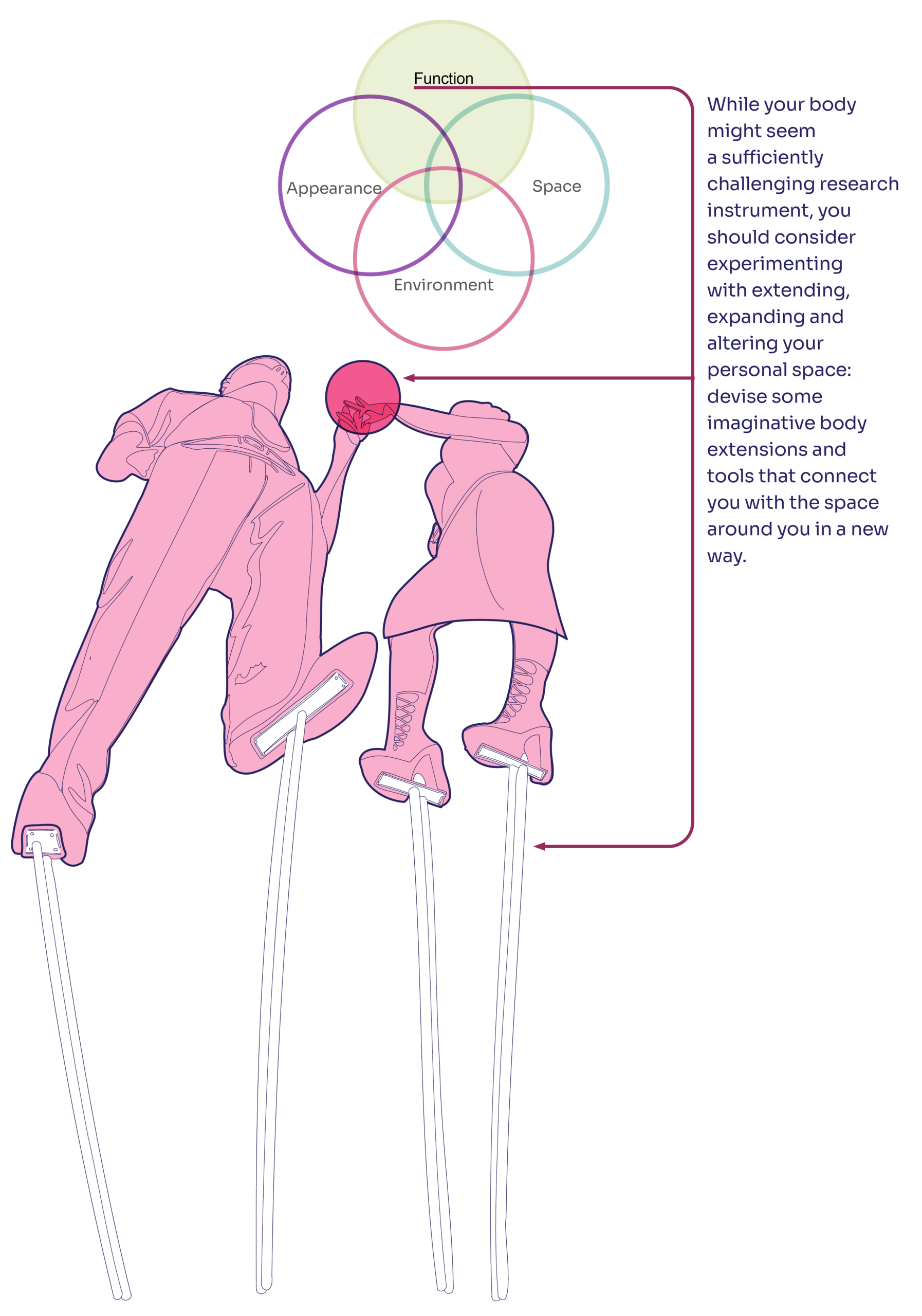
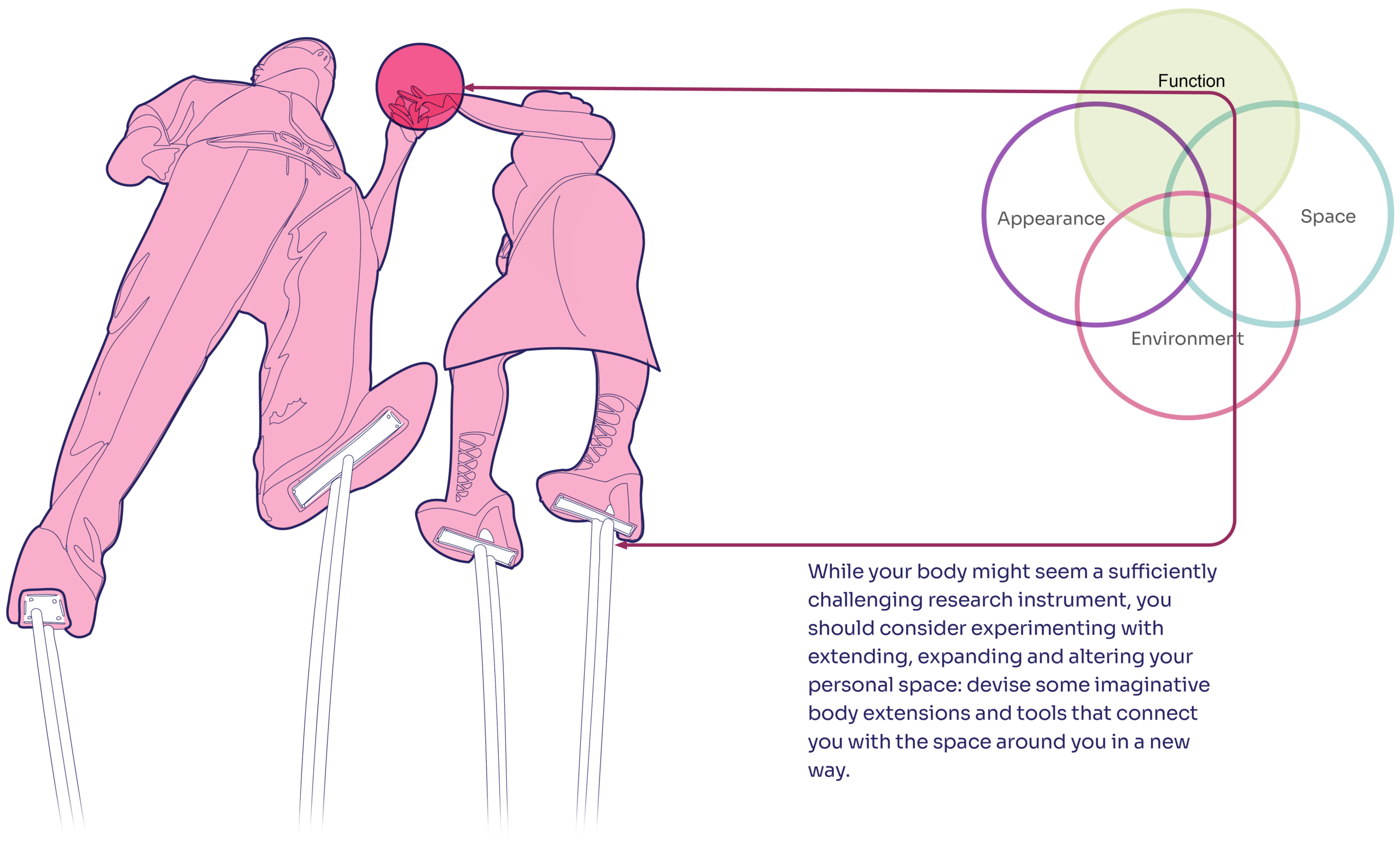
My Body Is My Space
In this experiment, we use our bodies to create a new, interactive, and highly personal experience space by moving, extending, exploring and expanding all our senses, and by doing so, reordering the reality around us. Feel and understand that reality is what your body makes of it!
Keep on Moving
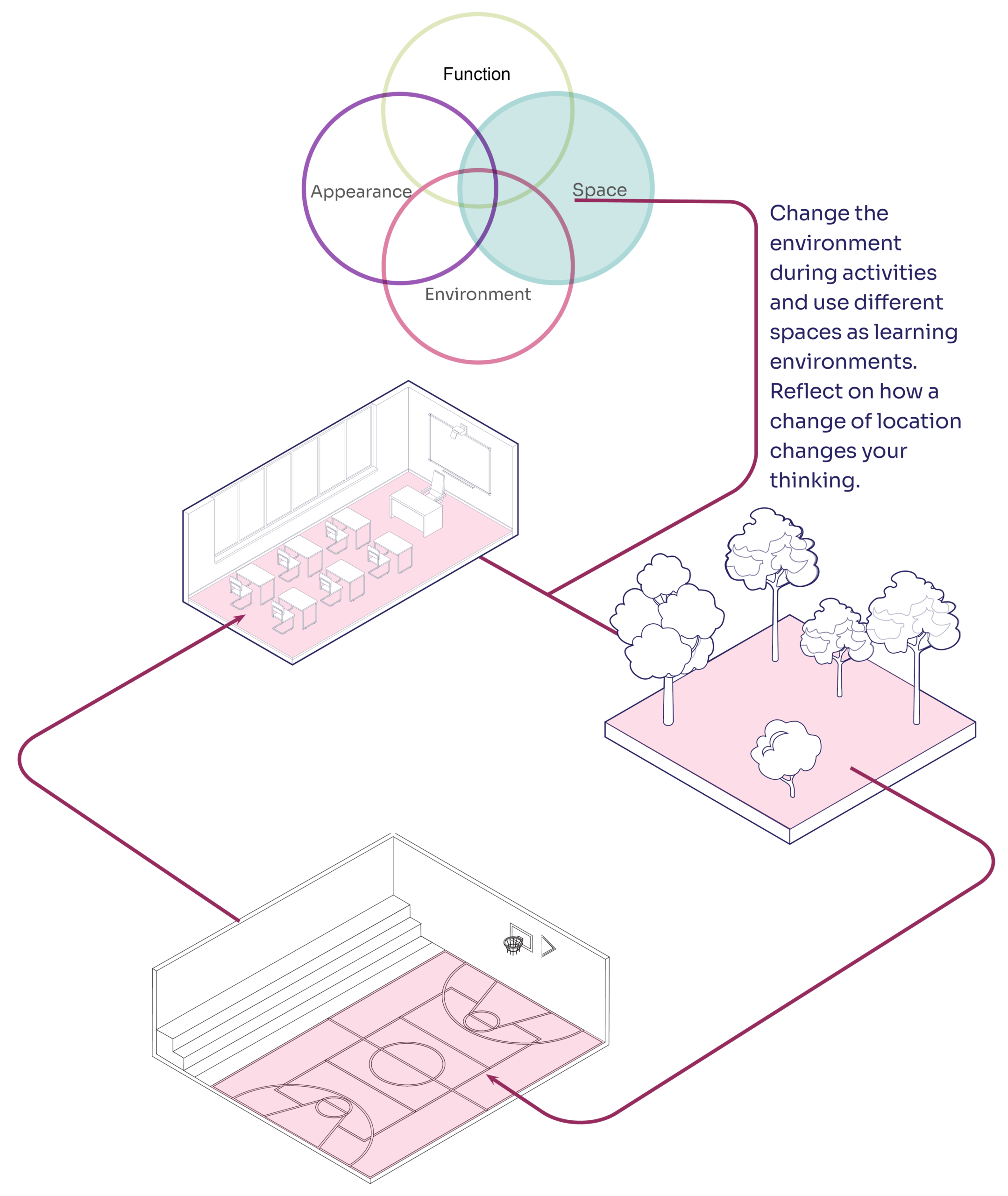
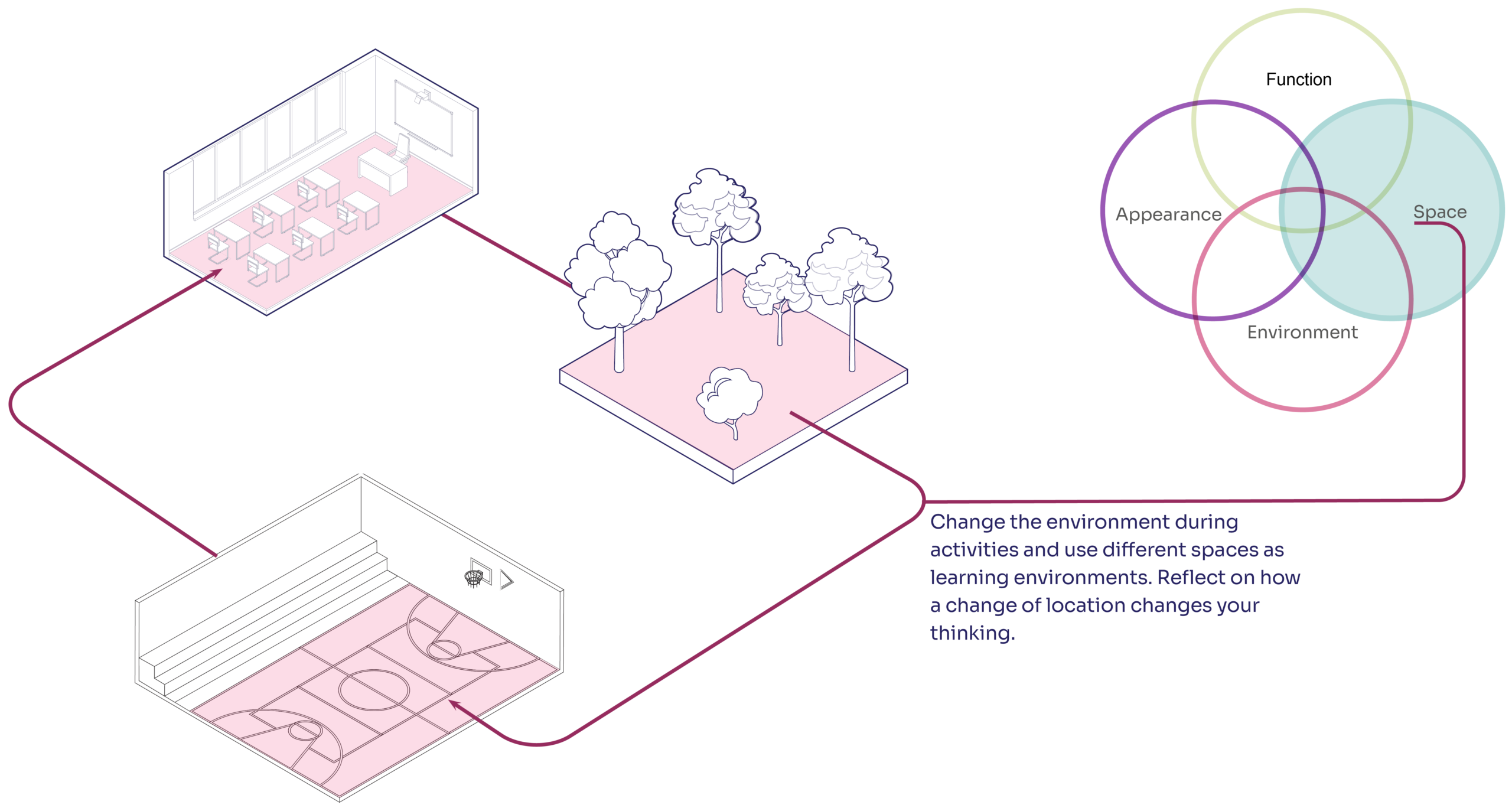
People think differently in different environments.
Let’s start by doing the same activity in different surroundings. It is simple: take the things we need and leave, move and reflect on the change: it is changing the way not the statice destination, that matters.
Space Without Walls
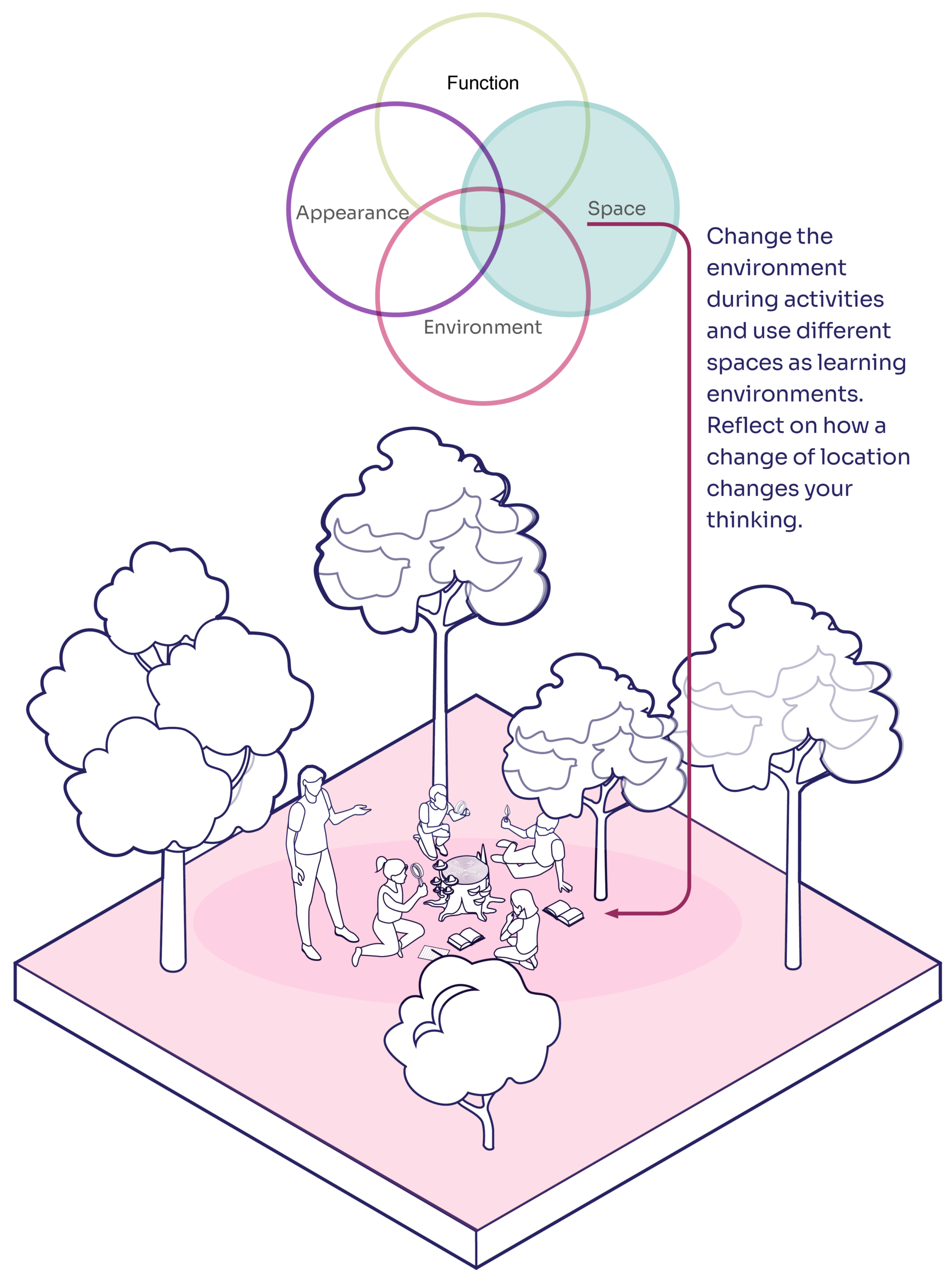
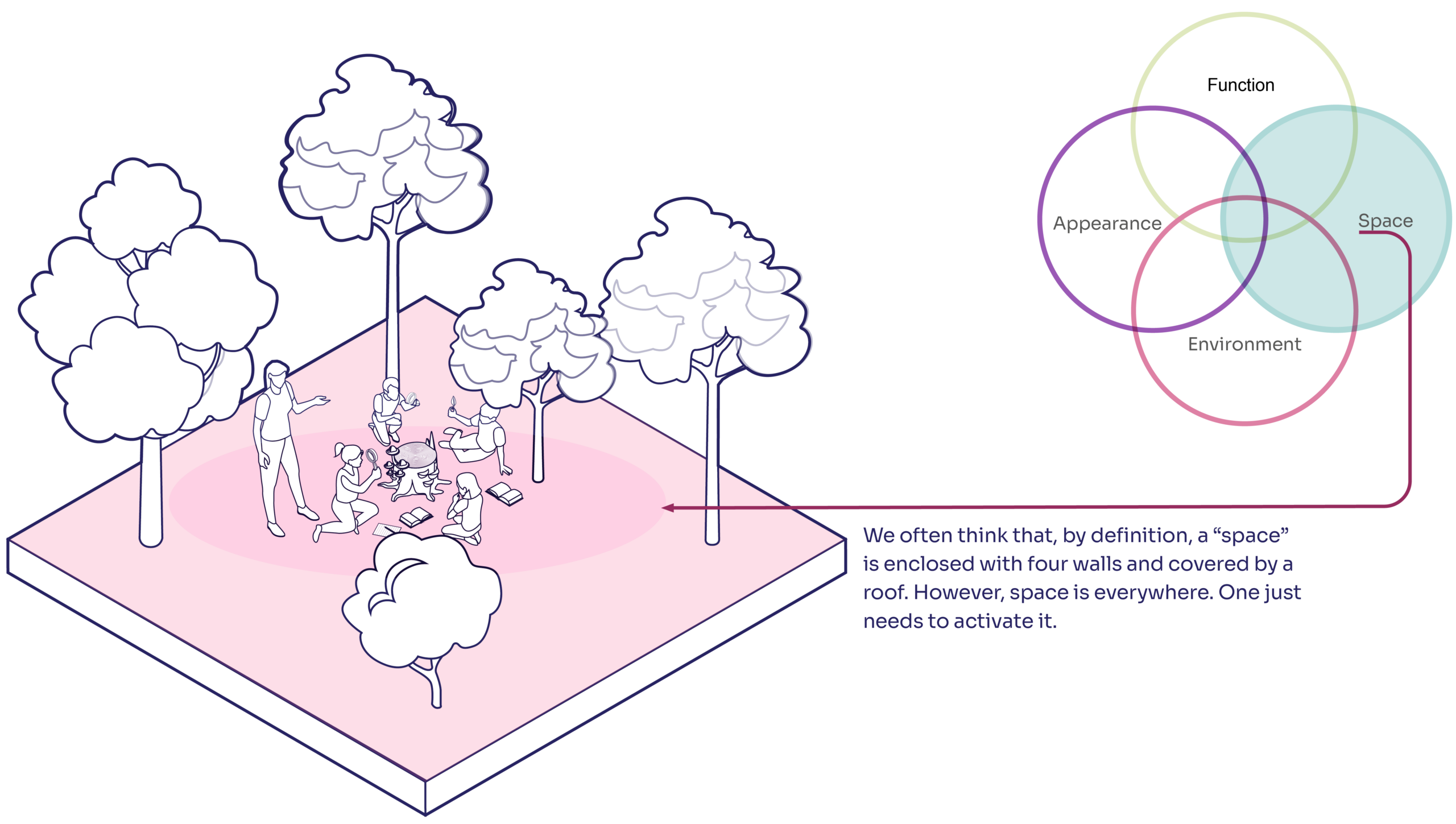
This experiment is straightforward: Swap an enclosed learning environment with a space without walls around – out in nature with all its sensory richness. The change will surprise you.
My Place is My Space
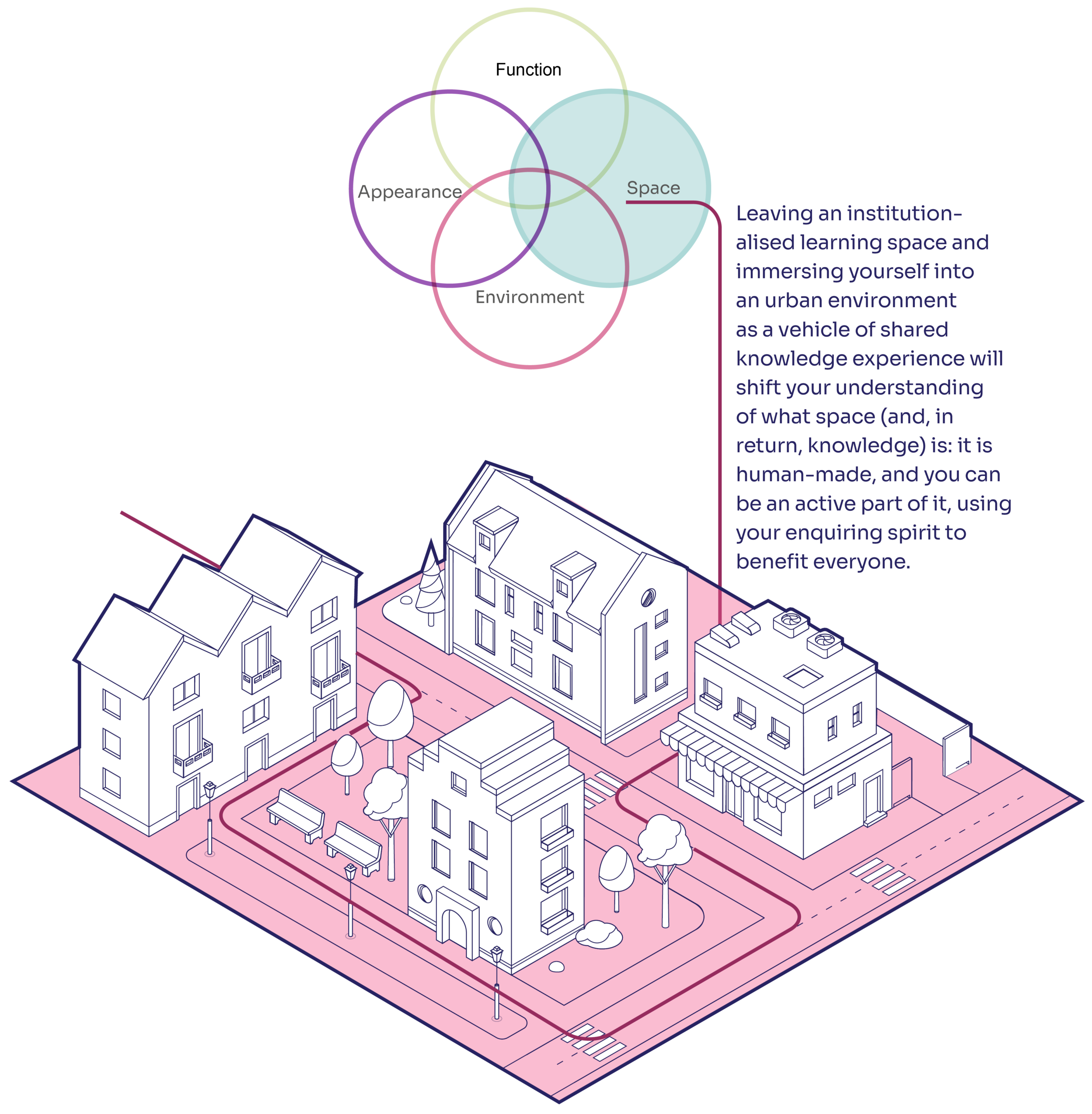
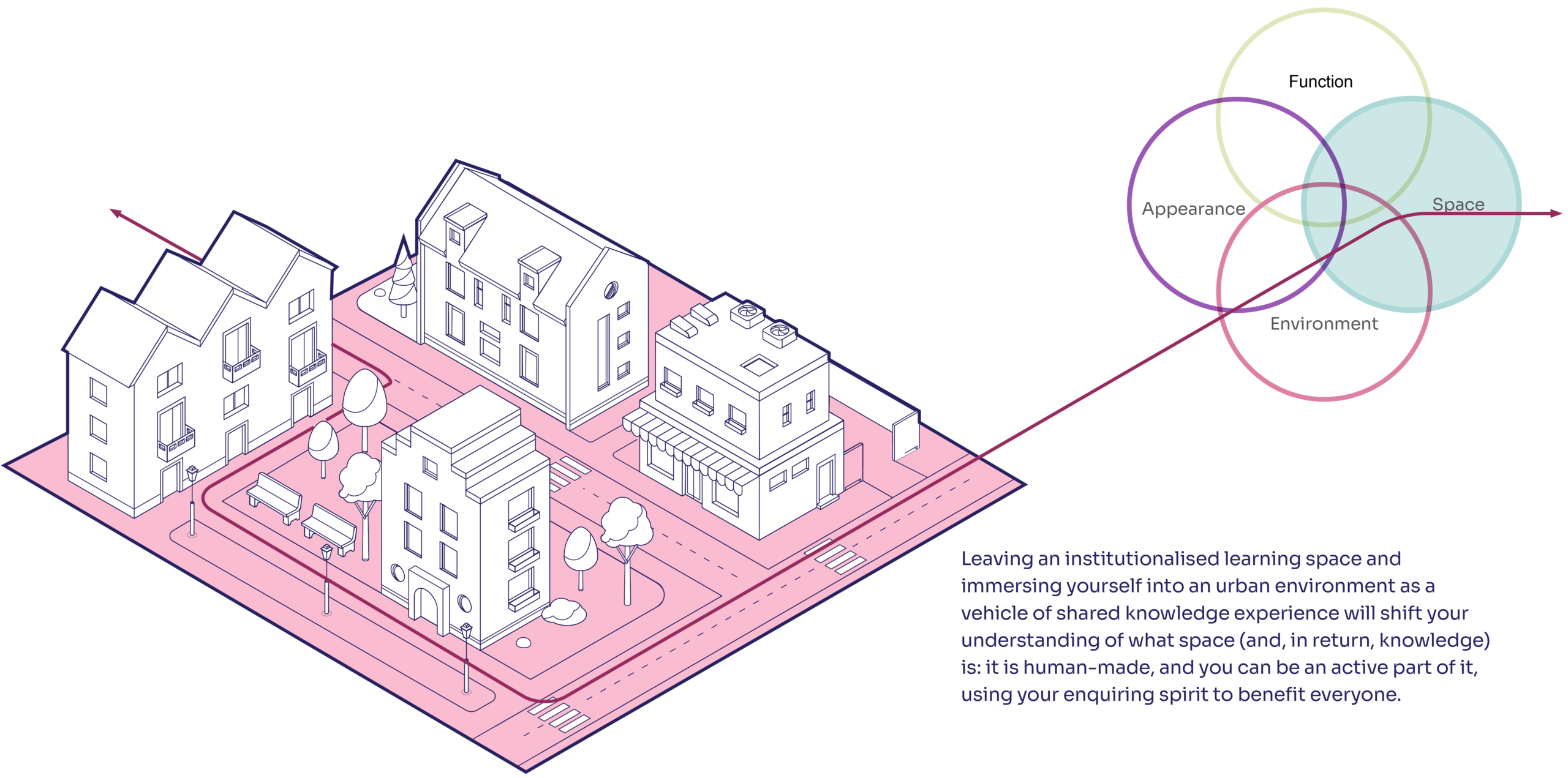
This experiment asks you to engage with your “place” – that is, your neighbourhood, your city, your community. You and your fellow citizens will turn it into a giant interactive “space” to explore, understand and co-create knowledge jointly.
Knowledge has Many Dimensions
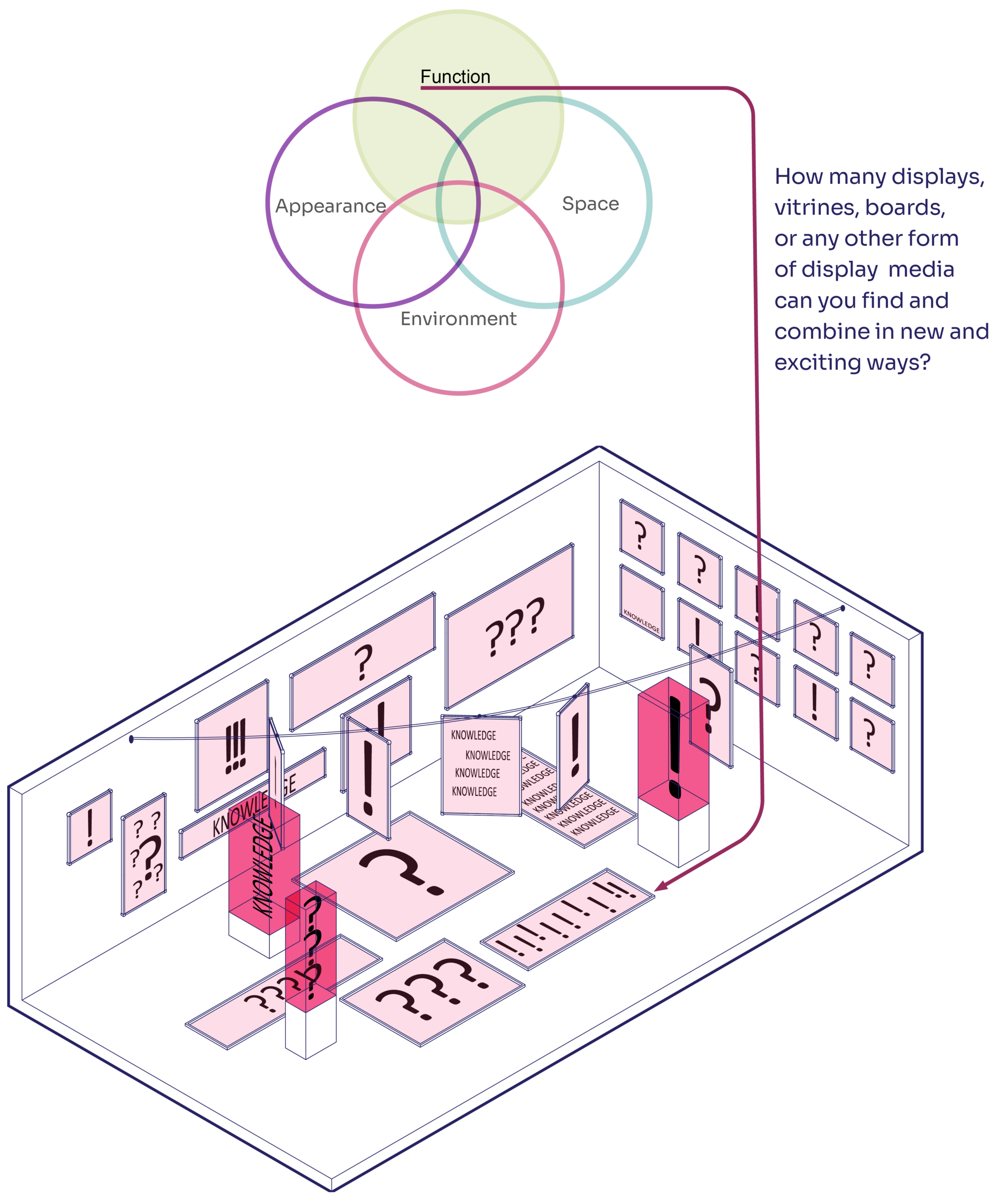
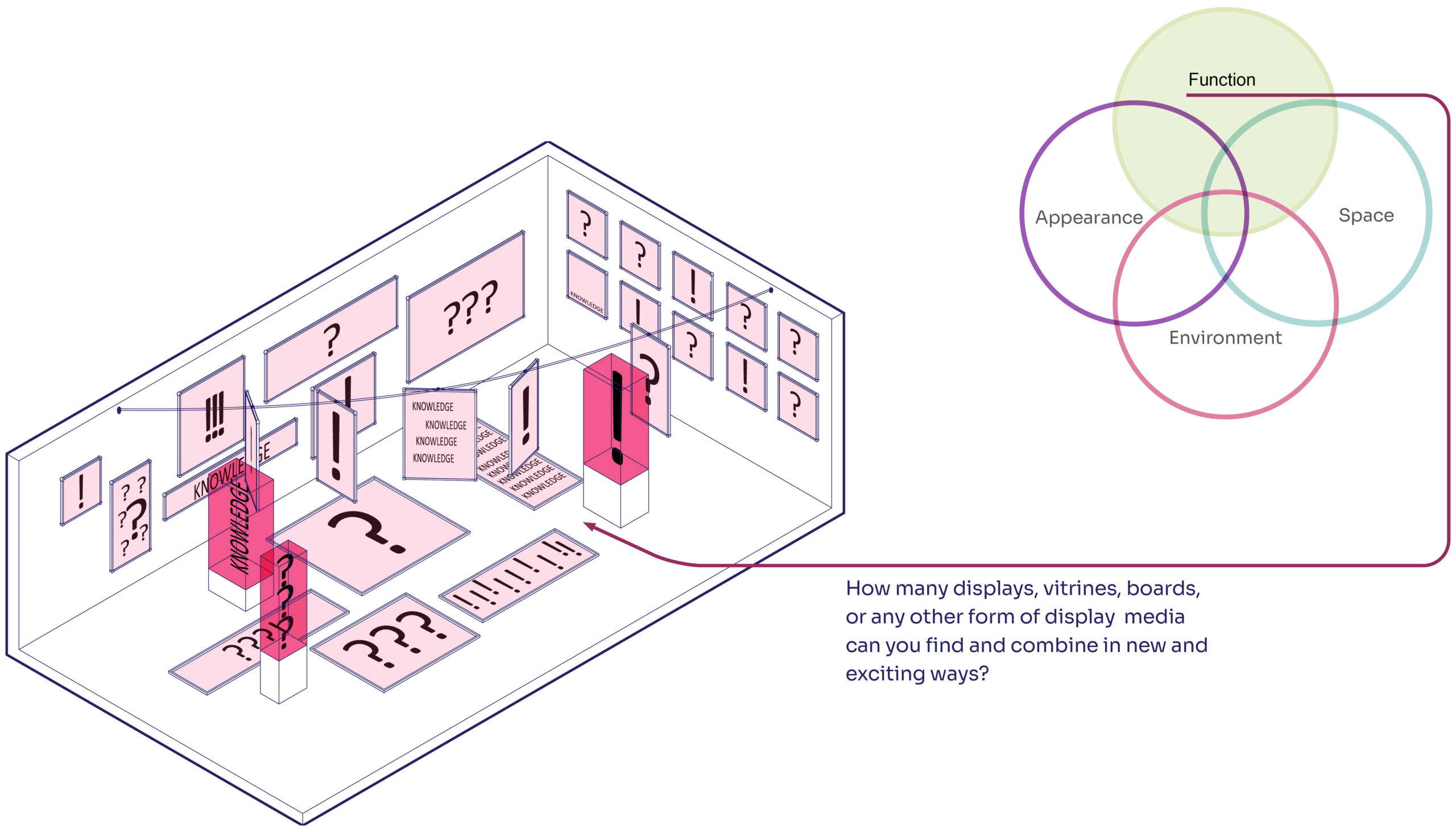
In this experiment, we utilise a space to present information in a three-dimensional arrangement, rather than confining it to a flat plane. We will become a spatial curator of our brains and observe how this will create new and unforeseen connections.
Sheltered but Never Alone: The Niche
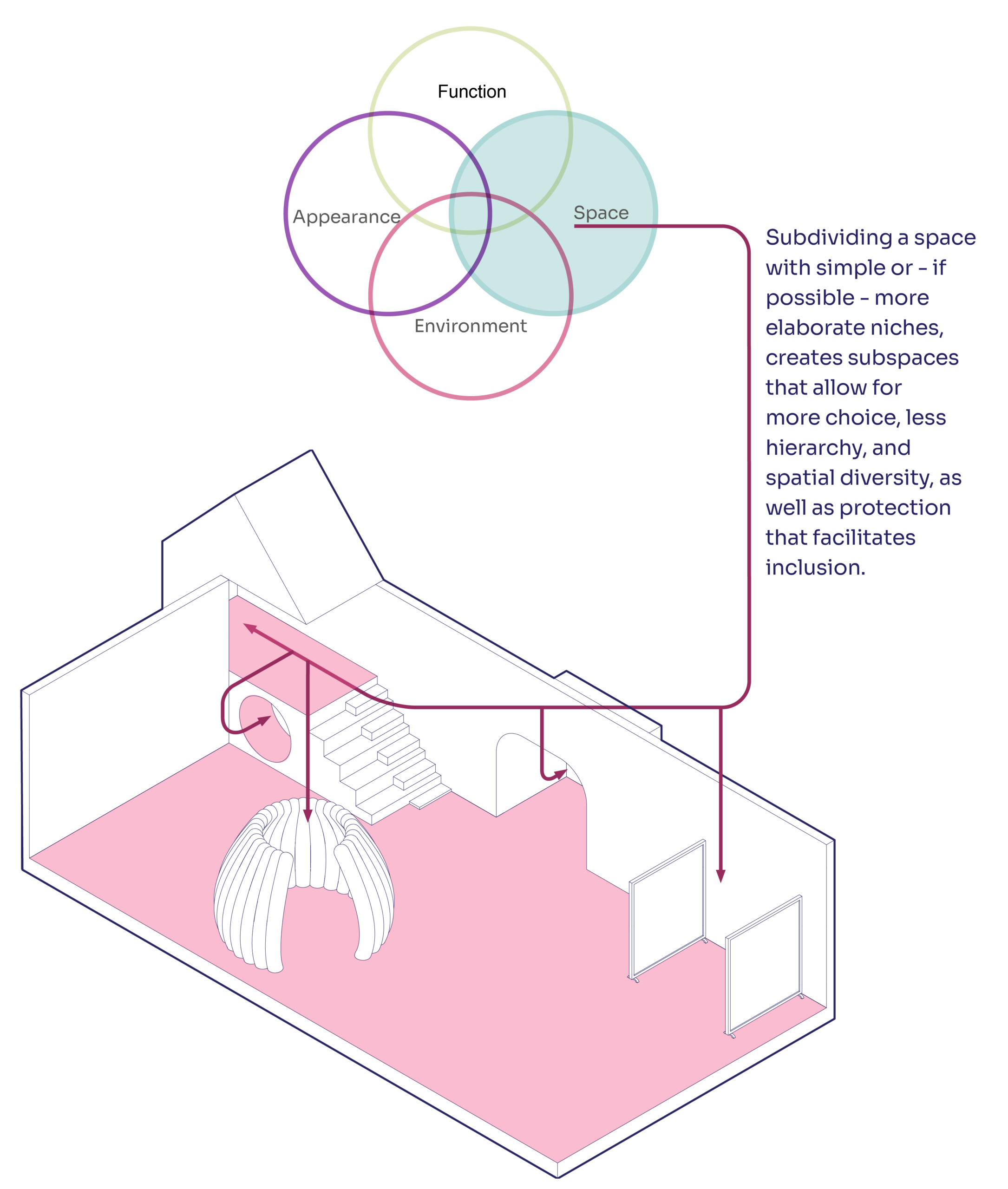
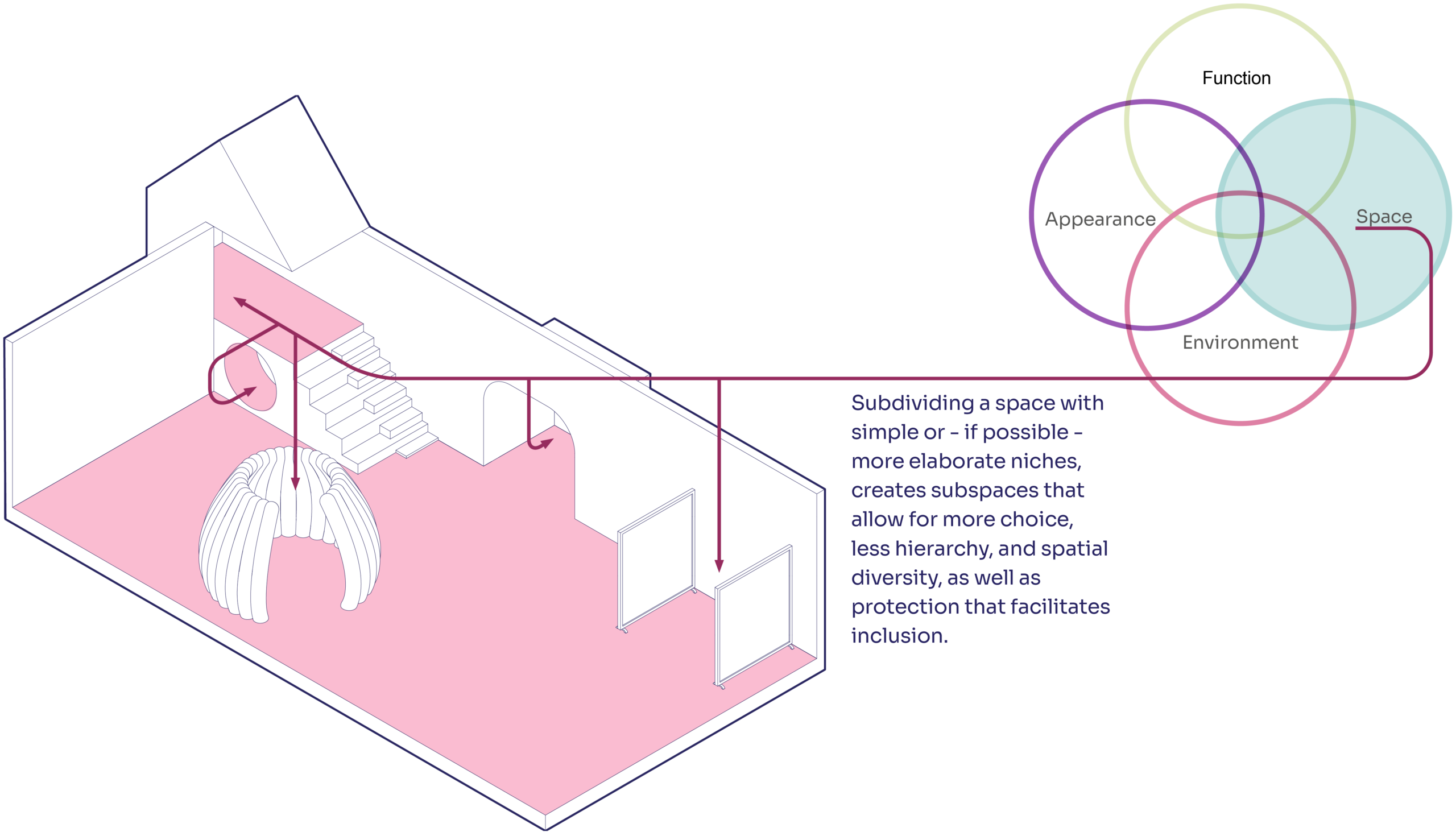
What if we could decide more flexibly if we want to do our practice all together or on our own / in smaller teams? In this experiment we change the spatial setup, for example, of a classroom. We add smaller spaces that shelter and subdivide but never loose connection.
The Stage
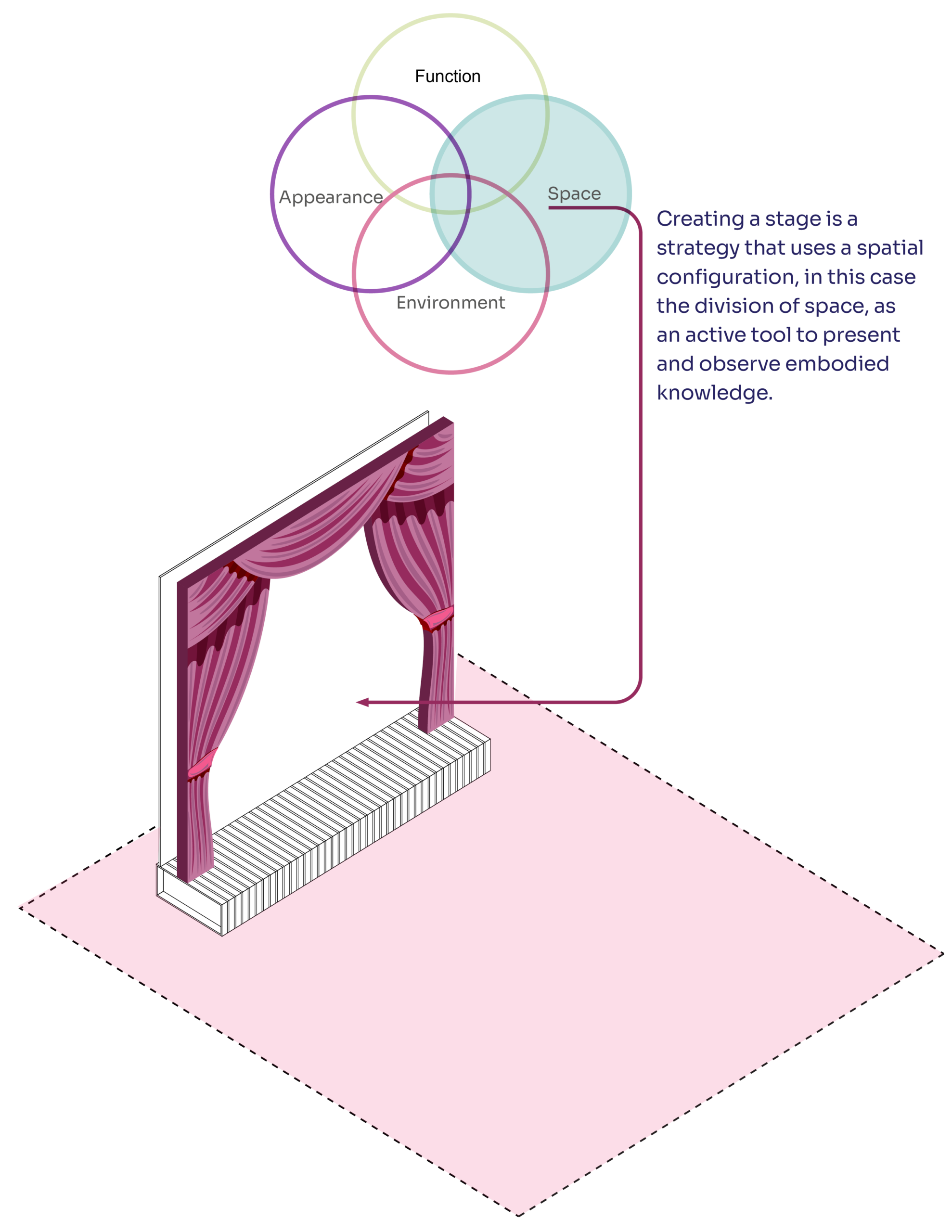
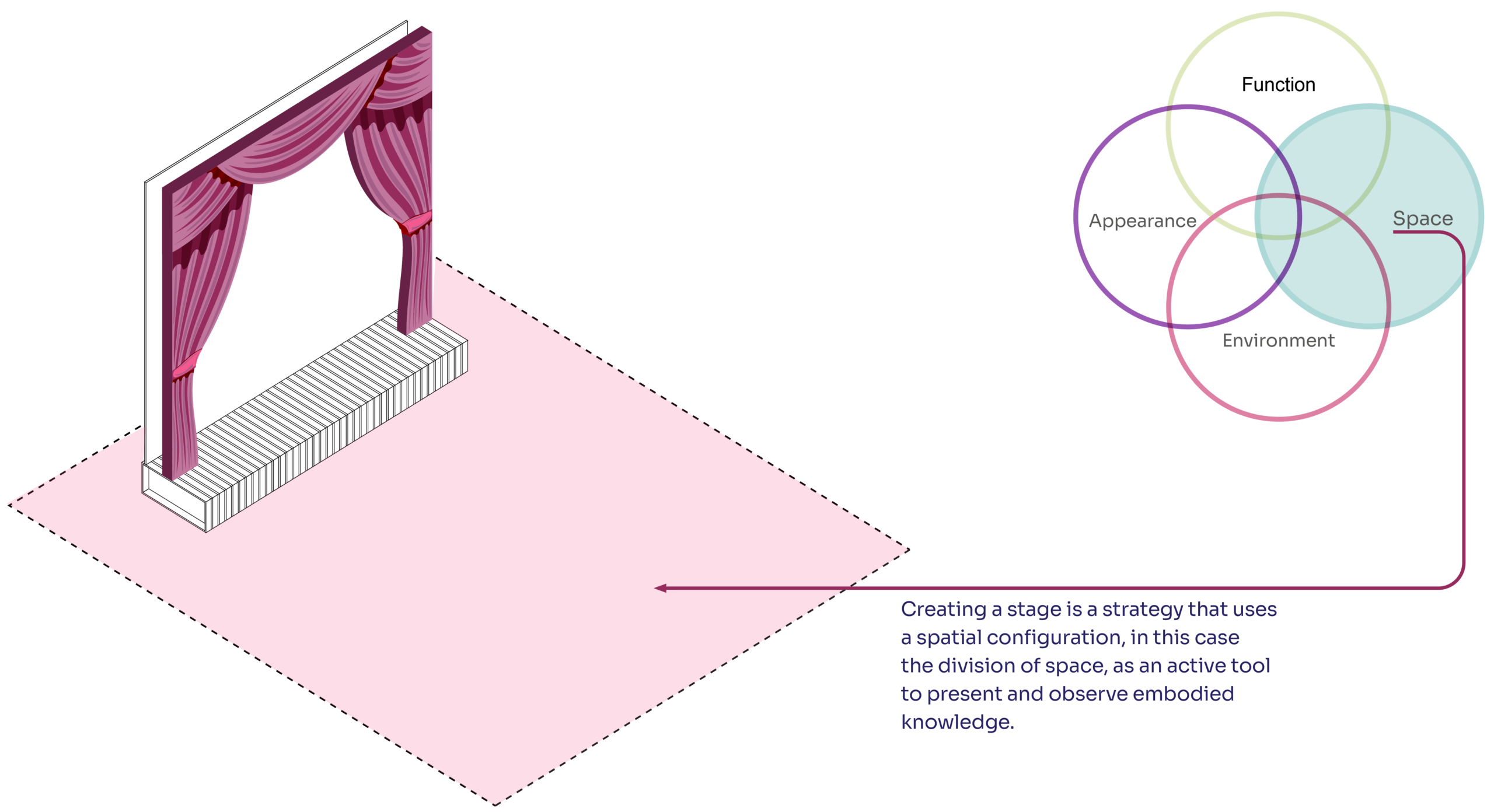
In this experimental sequence we demarcate a certain area as our stage and play with the spatial division of presentation vs. observation, as well as with the theatre of evidence, that’s always a part of learning.
The Sense Lab
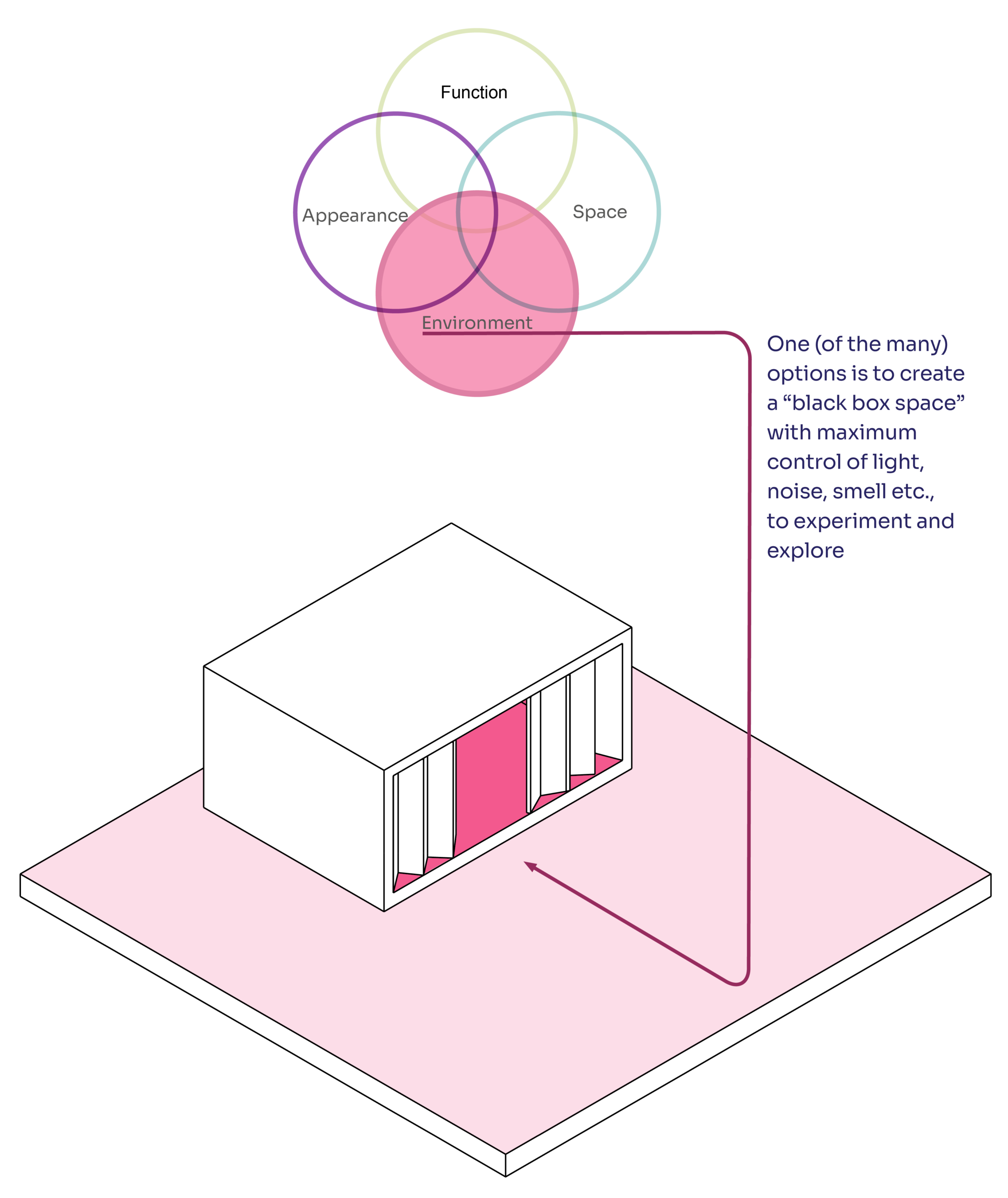
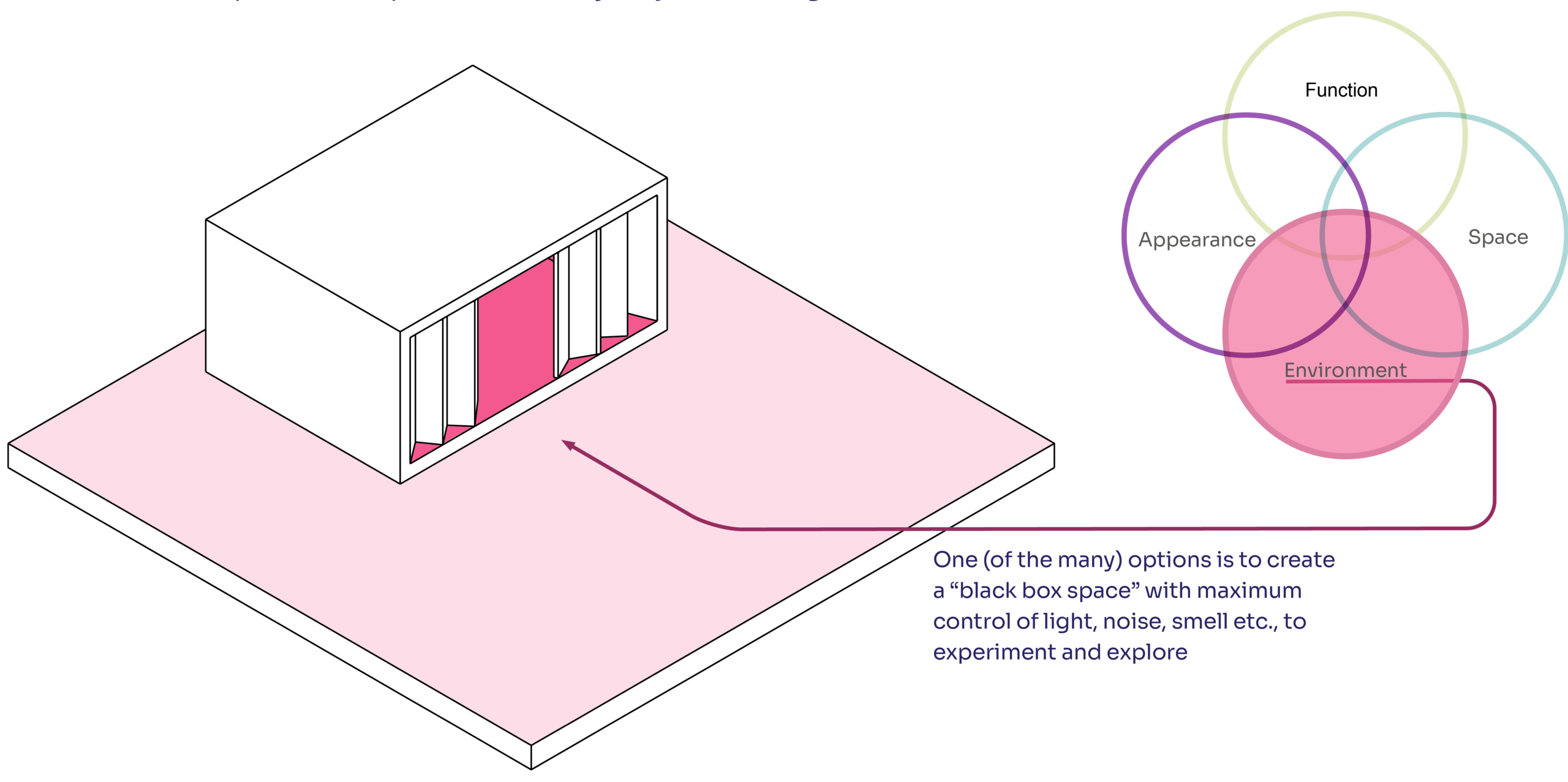
For this experimental series, we create spatial conditions that allow us to control environmental factors that impact our sensual experience of the world around us: light, air, sound, smell, etc. – similar to scientists who create lab spaces that enable maximum control.
The Da Vinci Studio
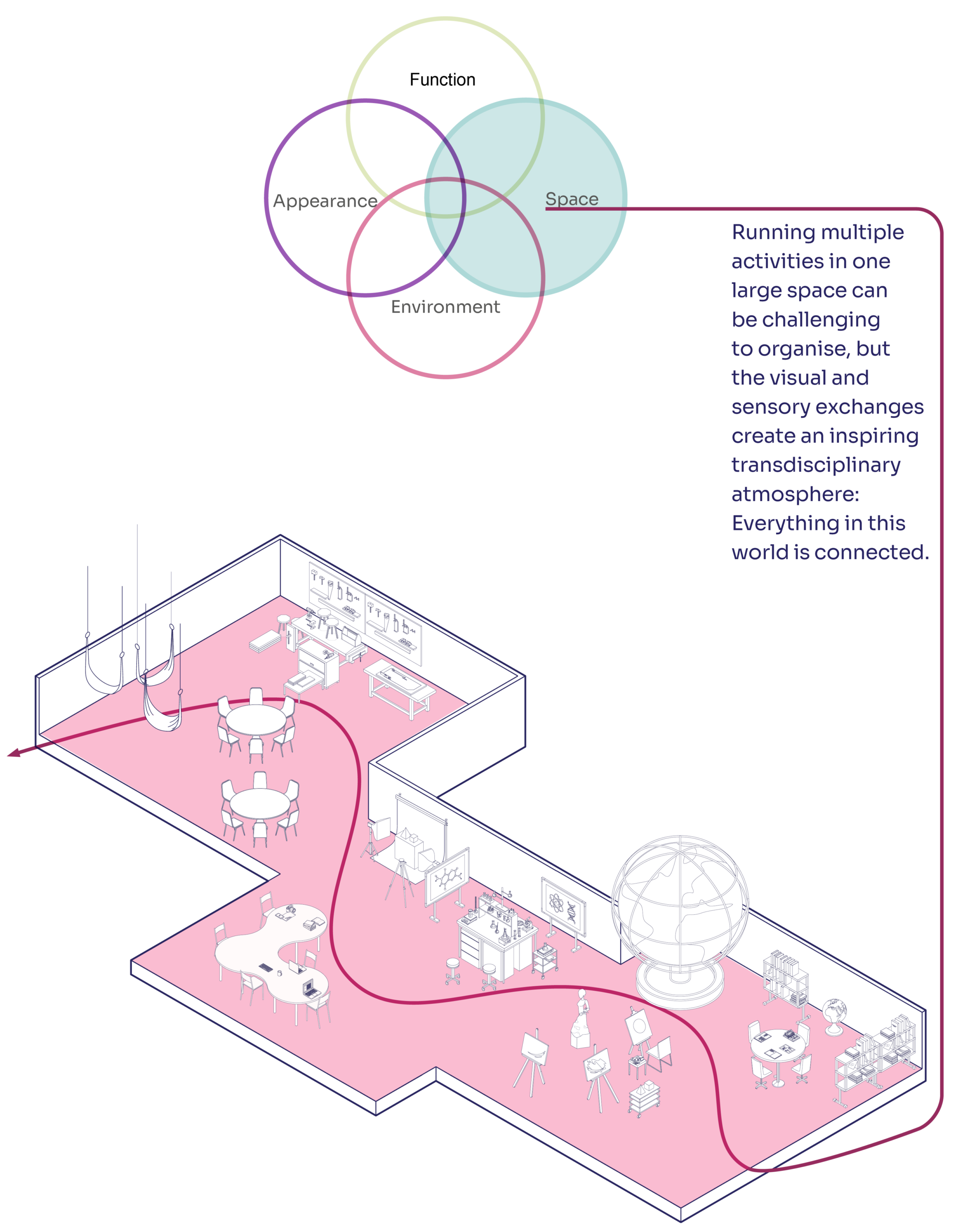
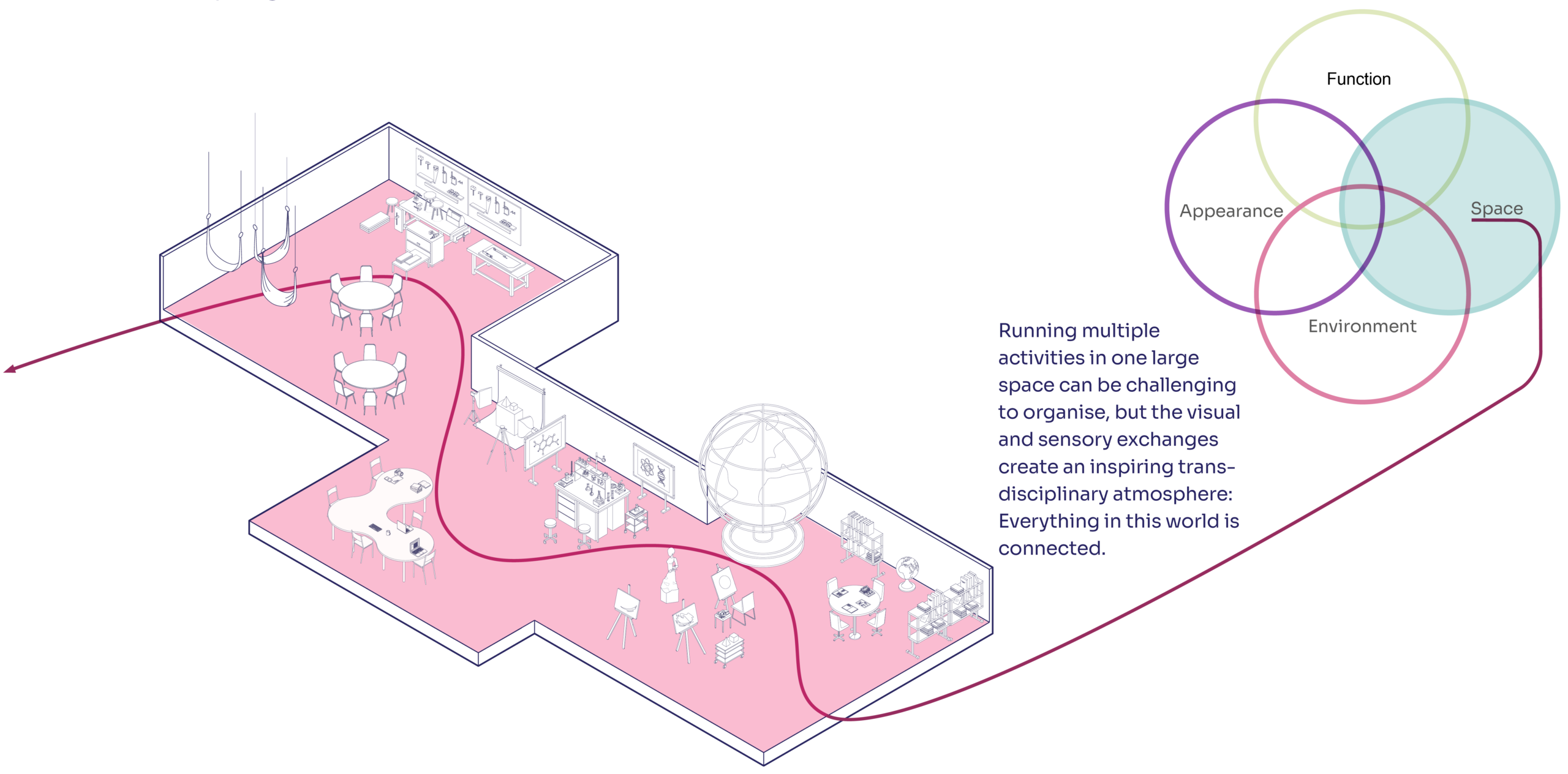
In this experiment, we will run a range of different activities deliberately in close proximity to each other in a large open space (such as the school hall or similar), with painting classes next to microscoping next to acting. This way, we want to tear down the walls between the disciplines and mix an inspiring cocktail of art and science.